The interesting thing about DRAFT was what happened before the game began. In an ordinary fantasy league, the draft is an occasion: friends gather, somebody reaches for a dubious running back, somebody else laughs. Then comes a season of appointments with the waiver wire. DRAFT took the occasion and made it repeatable. Pick players on your phone. Watch real athletes settle the argument. Come back and pick again.
- Mobile snake drafts replaced salary-cap lineup puzzles.
- Best ball kept the draft and removed weekly roster management.
- Sold in 2017, DRAFT closed as a standalone service at the end of the 2019 NFL season.
That makes this a company history with a useful product lesson. DRAFT served sports fans who wanted the pleasure of choosing without every administrative duty that fantasy could attach to it. Its eventual disappearance also makes the lesson less comfortable: an appealing game can lose its place inside the company that owns it.
The pleasure of taking someone else’s pick
Jeremy Levine and Nicolo Giorgi had already built StarStreet. After selling its daily-fantasy assets to DraftKings in 2014, they launched DRAFT on iOS that December. The new business was built for mobile play. In March 2015, it announced a $3.5 million Series A led by Upfront Ventures, with Advancit Capital, BoxGroup, The Chernin Group and QueensBridge Venture Partners participating.
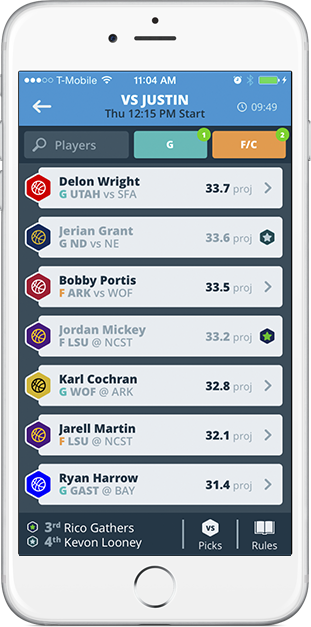
The distinction was in the rules. Salary-cap fantasy asks you to assemble a lineup within a budget. DRAFT asked you to take turns. An athlete selected by your opponent disappeared from your available choices. A snake draft reversed the selection order in the next round. Familiar to season-long players, it made each choice a small encounter with another person.
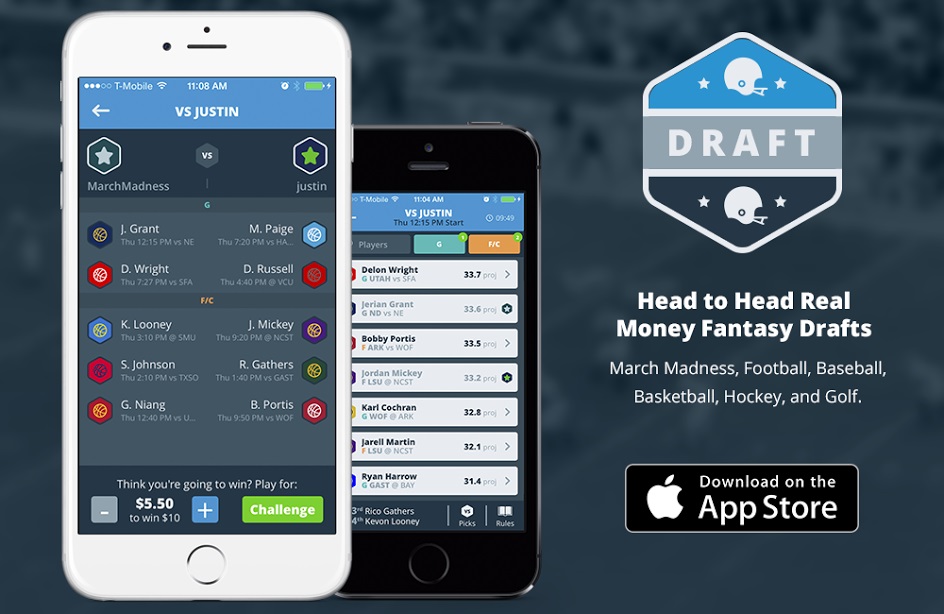
The historical head-to-head rules used five-player teams. Football asked for a quarterback, two running backs and two receiver-or-tight-end slots. Basketball used two guards, two forwards and a center. These were compact decisions, with outcomes attached to actual games. Players could challenge friends or meet an opponent through the service; free play provided a way to try the experience.
A lobby is only as good as its next opponent
The business collected contest entry fees and paid prizes. A launch-era screen offered a $5.50 entry for a $10 winner payout. With two players paying $5.50, the arithmetic leaves $1 for the operator before its costs. That is an illustration of the fee model, rather than a claim about every contest DRAFT ever offered.
Revenue, however, depended on something a tidy screen could not supply by itself: another player. In a 2017 interview, Levine said the previous football season’s average wait for a draft was under six minutes. He expected to bring it below one minute. The latter was a target. The distinction matters when a promise arrives wearing the clothes of a metric.
For someone opening an app during a spare moment, waiting is part of the product. Marketing therefore had two jobs: bring in the next customer and give the existing customer somebody to play. This is the practical lesson for any matching business. Count the time between expressing an intention and being able to act on it.
Pick once. Let the season do the work.
DRAFT later offered best ball, an existing fantasy format it helped popularize. You drafted a roster; software calculated your highest-scoring eligible lineup each week. No trades, no waiver claims, no Sunday decision about which bench player might embarrass you. The season remained. The weekly chores went away.
Its 2019 Best Ball Championship gave that proposition a substantial stage: a $25 entry, a $3.5 million advertised prize pool and $1 million for the winner. The format used 18-player rosters without kickers or team defenses. Players had to think about depth and upside because they could not repair the team through ordinary in-season transactions.
$3.5 million advertised prize pool. Prize money is not company revenue.
The customer could be a busy fan content to draft once, or an enthusiast building many teams. Less maintenance did not abolish expertise. Injury risk, roster balance and the sequence of picks still mattered. Removing work makes a game easier to attend; it does not make opponents easier to beat.
The buyer bought a different future
In May 2017, Paddy Power Betfair acquired DRAFT for $19 million upfront, with up to $29 million more dependent on performance over four years. Calling it a $48 million sale compresses a payment and a possibility into one handsome number. The buyer also forecast an approximately $20 million EBITDA loss for 2017 as it invested in marketing. That was a forecast, not a reported final loss.
“We will be here for a long time.”Jeremy Levine, discussing the acquisition in May 2017
The transaction offered resources and regulated-gaming experience. What followed was a change of corporate direction. Paddy Power Betfair bought into FanDuel in 2018. In later interviews, Levine described DRAFT being forced into a merger with FanDuel after the departure of the executive who had bought his company. His account explains his departure; it should not be mistaken for a complete boardroom record.
FanDuel closed the standalone DRAFT service at the end of the 2019 NFL season. Best-ball play appeared on FanDuel in 2020. The original product had lost its separate home, while the format continued elsewhere.
A smaller game, a larger lesson
DRAFT’s design suggests an exercise worth copying: identify the moment customers enjoy, then ask how much surrounding work is necessary. Here, that moment was choosing a player before somebody else could. The approach depends on enough opponents, rules that retain meaningful decisions and economics that can support the promised prizes.
It also has limits. Fans who enjoy trades and weekly management surrender those pleasures in best ball. A quiet draft room undermines immediacy. Ownership changes can undo a founder’s plans. Yet the knowledge travelled: seven DRAFT alumni formed Underdog’s founding team. The app closed; the people who had learned how to make choosing enjoyable went back to work.