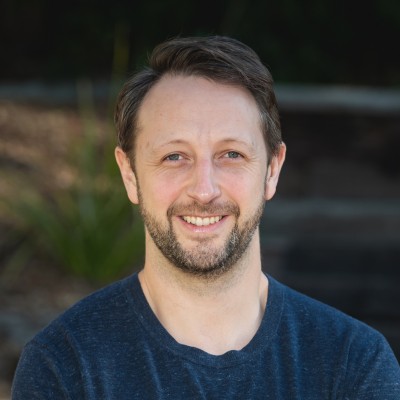
The encore nobody bet on
Today Tom Griffiths runs Hone, a company that drops working managers into small, live, video classrooms and makes them practice the awkward stuff: the feedback conversation, the layoff, the moment a star employee goes quiet. It is about as far from a sportsbook as software gets. Which is exactly the point.
Hone is an all-in-one talent development platform built on small-group, expert-led, live virtual classes. It deploys, manages, and measures training across manager development, inclusion, and employee wellbeing. The customer logos are not flashy startups but the kind of large, careful organizations that audit everything: Indeed, ConocoPhillips, Aramark. The pitch is quiet and stubborn. People are not born knowing how to lead other people, and the standard fix - a daylong workshop everyone forgets by Friday - does not work. So Hone runs cohorts, live, on a schedule, and then measures whether anyone actually changed.
Griffiths got here by a strange route. He has spent roughly seven years in the learning space, drawn in by a simple bet: every wave of technology brings a new way to teach, and most of education has not caught up. The Hone AI coach, layered onto live classes, is the latest move - and it is a homecoming of sorts for a founder who once studied machine learning before machine learning was a product category.
First, the part that made him famous
In 2009, in a small office at the University of Edinburgh that some describe as more classroom than headquarters, Griffiths and four others kept programming computers and trading startup ideas until one stuck. He left a PhD to do it. The idea became FanDuel, and the argument underneath it was legally radical: daily fantasy sports was a game of skill, not gambling, and therefore should not be regulated like a casino. That single sentence built an industry.
As co-founder and Chief Product Officer, Griffiths spent a decade turning the argument into a product. He opened FanDuel's first three US offices. He built the product and customer support operations. And when the legal storms came - and for a company like FanDuel they always come - he became the face, fielding questions on ESPN, CNBC, Bloomberg, Fox, and NPR. He pioneered the daily fantasy category and watched it grow into a billion-dollar business with millions of active users.
The clearest signal that something was real came early, and it was almost comically blunt. People were sending FanDuel money for a new game format before there was even a website to run it on.
When people were sending us money without even a website being there to run this new game format, we were like, okay, this is definitely something here.
Tom Griffiths, on the first proof FanDuel would workThe discipline behind the leap
It would be easy to file Griffiths under reckless-founder-leaps-from-PhD. The actual record is more careful. The FanDuel team did not bet the company on a hunch. They ran two products side by side for about a year before fully committing to the daily fantasy format, watching which one customers actually loved before jumping. He calls it the opposite of a blind pivot.
That tension - bold idea, patient execution - runs through how he talks about building. The job, he argues, is to ruthlessly cut the ideas that do not resonate, no matter how attached you are to them. And the further you get, the more the job changes from doing to enabling.
You are not the expert in every area. What you should be doing is surrounding yourself with people that can do things better than you can.
Tom Griffiths, on the evolution of a founderHis theory of leadership, in three words
Ask Griffiths what makes a leader and he does not reach for charisma or pedigree. He reaches for three Cs: conviction, competence, and caring. Vision, capability, and a real connection with the people you lead. Underneath it sits a belief that sounds soft but reads as engineering: behaviors flow from mindsets, not the other way around. Fix the mindset and the behavior follows. Drill the behavior alone and nothing sticks. It is, conveniently, the entire thesis of the company he now runs.
Conviction
A vision clear enough to follow when the data is still noisy.
Competence
The capability to actually deliver, not just describe.
Caring
A genuine connection with the people doing the work.
There is a line he repeats that captures the temperament. A leader, he says, has to see things how they are, but not worse than they are. It is a sentence about resilience disguised as a sentence about realism, and it sounds like a person who has run a company through regulators, headlines, and a global shift to remote work.
Why corporate training, of all things
When Griffiths launched Hone, one tech reporter framed it almost as comedy: the FanDuel co-founder closing a seed round for his decidedly noncontroversial new startup. After a decade defending a product engineered to be addictive, he chose a problem with no legal minefield and no obvious villain - just the unglamorous, universal fact that most managers are promoted for being good at their old job and then left to figure out the new one alone.
He frames the mission plainly: democratize access to world-class learning so everyone in the workplace can develop, not just the executives who get the expensive coaches. Bring the best of technology together with the best of live learning, and aim it at lasting behavior change rather than completion certificates. It is the same instinct that made FanDuel work - watch what people actually do, not what they say - pointed at a gentler target.
The machine learning footnote that became a headline
Here is the detail that ages well. Before any of this, Griffiths earned a first-class computer science degree at Cambridge and studied machine learning at Edinburgh - a PhD program he left, and a discipline almost nobody outside academia cared about at the time. Years later, AI became the most important thing in software, and Hone shipped an AI coach. The founder who walked away from a machine learning PhD to start a sports company ended up building an AI learning product anyway. The long way around turned out to be the way around.
The amplifier in the room
One idea shows up again and again when Griffiths talks about management, and it is the kind of thing you only learn by running a company through a decade of growth. Small leader behaviors do not stay small. They cascade. A manager's offhand comment, a moment of impatience, a habit of listening or not listening, gets copied down the org chart and multiplied. It is why he is so insistent that development cannot be a one-time event. If behavior is contagious, then training the people at the top is the highest-leverage move a company can make - and the easiest one to skip.
It also reframes what Hone is selling. The product is live classes, but the real argument is about leverage. Spend a little on the manager and you change the experience of everyone who reports to them. Griffiths has watched both sides of that equation. At FanDuel he built and oversaw a distributed team long before remote work was normal, learning in real time how culture travels - or fails to - across offices and time zones. When the rest of the world went remote, he had already spent years on the problem Hone now sells into.
The spokesperson years
There is a version of Griffiths that most of his learning-industry audience never saw: the operator who had to go on national television and defend a company under legal fire. Daily fantasy sports spent years in a gray zone, fighting state by state over whether it counted as gambling. As the public face, Griffiths sat across from anchors at ESPN, CNBC, Bloomberg, Fox, and NPR and made the skill-not-luck case under pressure. He has said, with some understatement, that disruptive companies always face legal challenges. The experience seems to have left him with a calm that interviewers notice - the bearing of someone who has already been asked the hardest possible question on live air and lived.
That calm now powers a podcast and a steady stream of writing. Hone produces a show, Learning Works, and Griffiths speaks and writes regularly on leadership development, equitable access to learning, manager training, and the future of work. The topics rhyme with his whole career: take something most people treat as innate - whether it is winning at fantasy football or leading a team - and prove it is a skill that can be taught, measured, and improved.
Off the clock, Griffiths lives in the San Diego area with his wife and young family, near Hone's Encinitas headquarters. He is a member of Founders Pledge, the commitment by entrepreneurs to give back from their success. Interviewers tend to describe him the same way: affable, reflective, and impossible to talk to for long without noticing the British accent. For a person who built one company on the argument that a game was serious skill, and a second on the argument that being human at work is a skill too, that mix of warmth and rigor is the whole story.