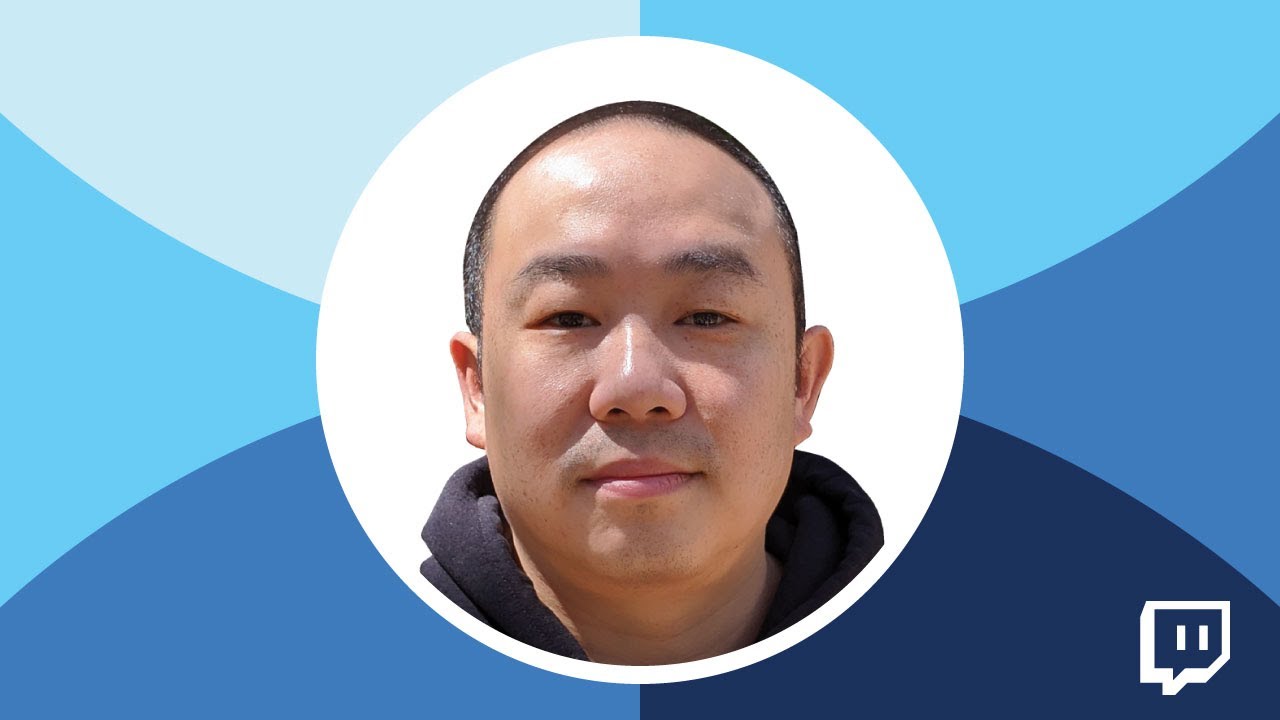
Nan Wang runs Sleeper from Las Vegas, but the product was really designed inside a 20-year group thread. Long before there was a company, there was a fantasy football league he kept running with childhood friends scattered across the world - the kind that survives marriages, moves, and entire careers because nobody wants to be the one who quits. That stubborn little league is the whole thesis. Sleeper is what happens when you take the thing friends actually do - check in, talk trash, brag, commiserate - and decide that is the product, not the side effect.
The competitors had the mechanics handled. ESPN and Yahoo could draft your team, score your week, and shuffle your roster. What they couldn't do was hold the conversation. So all the trash talk leaked out to texts, email, and group chats elsewhere. Wang's read was simple and a little contrarian: the spreadsheet was solved, the friendship was not. He set out to build the messenger first and bolt the sport on around it - closer to Slack or Discord than to a sportsbook.
We wanted to build a sports product that was social at its core.
- Nan Wang
Six hours outside Chengdu, then Pullman
Wang was born in a rural village about six hours outside Chengdu, in southwestern China, and raised largely by his mother and grandmother. His father had left to study in the United States - one of the first wave of Chinese students to go abroad after Nixon's Ping-Pong Diplomacy thawed the borders. At five, Wang and his mother joined him in Pullman, Washington, a small college town where his dad was finishing grad school.
Pullman is where the founding team quietly begins. There, Wang met Weixi Yen, another kid of first-generation immigrant students, who would grow up to become Sleeper's CTO and co-founder. The family moved away by third grade, but the friendship - and eventually the fantasy league - outlasted the zip code. The third co-founder, Ken Wang, rounds out a team that reads less like a recruiting effort and more like a reunion.
From a $20 billion balance sheet to an app
Before Sleeper, Wang's resume pointed somewhere far more conventional. He attended Dartmouth College, then helped build Neuberger Berman's private equity business across the Asia-Pacific region, working out of Hong Kong on a multi-billion dollar global platform - sourcing, executing, and monitoring investments. It was the sort of job people don't usually walk away from. He walked away from it, moved to San Francisco, and started building a fantasy sports app.
The early growth trick was not a growth trick at all. Sleeper seeded its first audience by being fast and useful: real-time sports news, curated and delivered quicker than the incumbents. Get people in the door for the alerts, then hand them a league. And leagues, it turns out, are the best growth engine ever designed - because they come pre-loaded with a referral mechanism.
Every time somebody creates a fantasy league, they invite 11 other people to join them.
- Nan Wang, on why Sleeper grew with almost no ad spend
The women who weren't supposed to be there
Fantasy sports has a reputation, and the reputation is roughly 90% male. Sleeper landed near 30% women - triple the category average. That number is not an accident of marketing; it traces back to product decisions. Mobile-first instead of dense desktop dashboards. Cleaner, more gender-neutral design. Self-help guides for people who have never set a lineup. When the on-ramp is friendlier, the room gets more crowded and more varied. Wang built for the casual fan and the curious newcomer, and they showed up.
A LAN center instead of a happy hour
When the pandemic stopped live sports, Sleeper needed something for its users to play with. The answer came from inside the building. Long before lockdown, the team's San Mateo office had a LAN center where staff played League of Legends together instead of going out for drinks. So when Sleeper added fantasy esports, it wasn't a pivot toward a trend - it was a hobby the team already lived. The League of Legends Championship Series named Sleeper its official fantasy platform. As Wang put it, the move came "from a deep knowledge of a space," not from chasing a phantom idea.
That instinct - build what you'd actually use, with the people you'd actually call - runs through everything. The investors got it. Sleeper's cap table includes a16z and General Catalyst alongside Twitch co-founder Kevin Lin and athletes Kevin Durant, Klay Thompson, Baron Davis, and JuJu Smith-Schuster. Money from people who understand both the product and the playground.
The patient empire
Wang isn't loud about any of this. The growth has been largely organic; in 2022 alone, Sleeper added roughly a million daily active users with virtually no ad spend. The company expanded from fantasy football into the NBA and esports, with the same channel-per-league architecture making each new sport a feature rather than a rebuild. There's also a civic streak: Wang founded the Oak Street Acorn Program, a nonprofit offering college-access mentorship to underprivileged kids in Boston - the same first-generation ladder his own family climbed, handed down.
The pitch underneath the company has never really changed from that original group thread. Sports are the excuse. The friendship is the point. Wang figured out that the most durable product in fantasy sports isn't the algorithm that picks your sleeper - it's the reason you keep showing up to lose to your friends, year after year, for twenty years and counting.