Company Dossier · Food & Beverage

PlantBaby

The Hawaii startup that built the plant milk it couldn't buy - then put it on the shelf next to yours.

PlantBaby's Kiki Milk plant-based milk product
Exhibit A A carton that started as a problem. The Abelins couldn't find a clean plant milk for their allergic son, so they poured one - oats, sprouted seeds, marine-algae calcium, and a conspicuous absence of everything else.
The Story

A company that sells you what it took out

Here is a fun thing about the plant milk business. Most of the innovation, for years, went into addition - fortify it, thicken it, emulsify it, sweeten it, stabilize it so it survives a year on a warm shelf and still pours like something a cow made. PlantBaby, a small company founded in 2020 on an organic farm on the North Shore of Kauai, went the other way. Its pitch to parents is essentially a list of things that are not in the carton: no gums, no seed oils, no synthetic vitamins, no refined sugar, no protein isolates. This is a strange way to sell a food, because you are advertising absence, and absence is hard to taste. But it turns out that if you are a parent standing in a grocery aisle at 7:45am, "we removed the stuff you were squinting at" is a remarkably effective sentence.

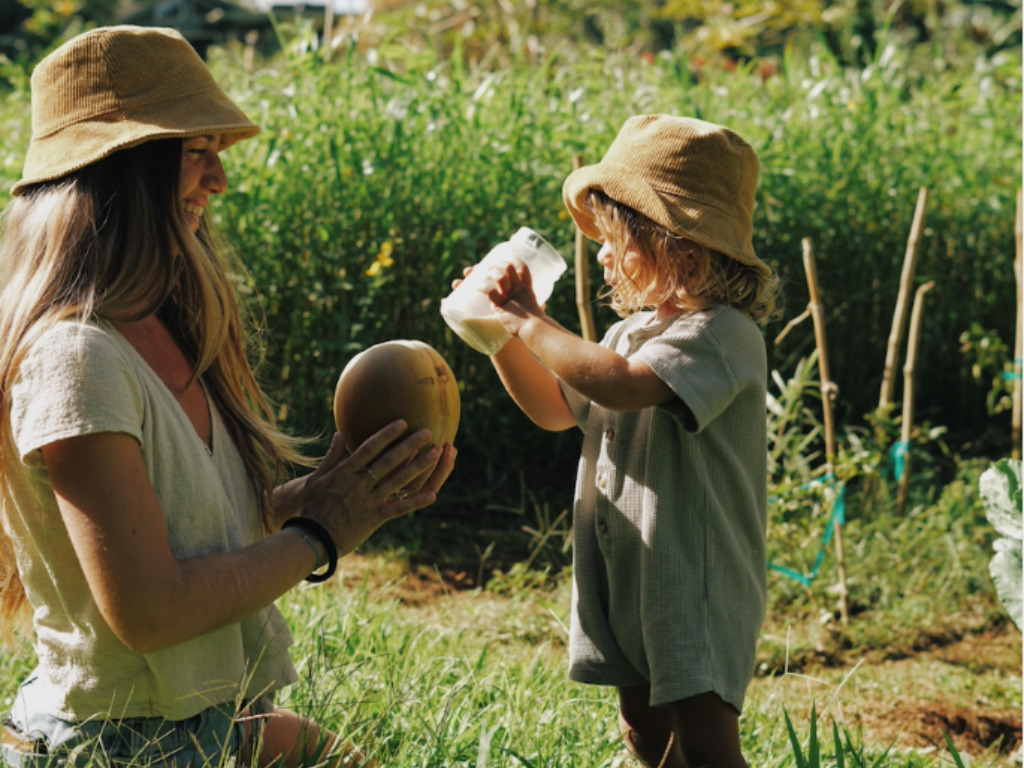
The origin story is the kind investors love because it is both true and useful. Alex and Lauren Abelin moved from New York City to Kauai in 2019. Days after landing, Lauren was pregnant. Their son, Alakai, turned out to have dairy and soy allergies, which knocks out most of the beverage aisle and a good chunk of the plant aisle too. They went looking for a nutrient-dense, clean-label plant milk designed for a child, could not find one, and did what a certain type of person does when they cannot find a product: they made it, incorporated it, raised money for it, and got it certified. The result is Kiki Milk, which PlantBaby bills as the first organic plant milk built specifically for kids.

The interesting question is never "did they make a plant milk." Anyone can make a plant milk. The interesting question is what they decided to make hard for themselves, on purpose.
2020
Founded, Kauai HI
$20M
Valuation (2025 seed)
~$7M
Total raised
4
Kiki Milk flavors
The Expensive Choice

Doing the costly version on purpose

The thing PlantBaby made hard for itself is testing. The company says it triple-toxin tests every ingredient for mold, heavy metals, and pesticides. If you have never run a consumer-goods supply chain, that sentence sounds like a nice-to-have. If you have, it sounds expensive, slow, and occasionally like a reason to reject a shipment you already paid for. Alex Abelin, to his credit, does not pretend otherwise.

We triple-toxin test every ingredient for mold, heavy metals, and pesticides. These choices made production more complex and costly.

- Alex Abelin, Co-Founder & CEO, PlantBaby

This is the actual moat, and it is a slightly boring one, which is why it works. Anyone can print "clean label" on a box - the phrase has no legal teeth. What is harder to fake is the operational cost of proving it, ingredient by ingredient, batch by batch. When a claim is cheap to assert and expensive to verify, the company willing to eat the verification cost gets a defensible position that a competitor cannot copy with a marketing budget. PlantBaby is, in a sense, selling the receipts as much as the milk.

The formulation was done with people whose names carry weight in the room where parents make decisions: pediatrician Dr. Joel Warsh and nutritionist Vicki Kobliner helped build the recipe. The milk is USDA Organic and certified glyphosate-residue-free. Calcium comes from Aquamin, a mineral complex derived from red marine algae, rather than a synthetic additive dropped in at the end. None of this is glamorous. All of it is the sort of thing that, done before you scale rather than after a recall, keeps you out of the news for the wrong reasons.

What's In (and Pointedly Out)

The label, as a bar chart

Kiki Milk, roughly

// illustrative composition of the clean-label pitch, not a nutrition panel
Whole-food base
high
Plant protein / serv.
5g
Marine calcium
Aquamin
Gums
none
Seed oils
none
Refined sugar
none
Synthetic vitamins
none
The Lineup

Four cartons and a bigger idea

Flagship

Kiki Milk - Original

Oats, pumpkin and hemp seeds, 5g plant protein, and marine-algae calcium. The one that started the category.

Flavor

Kiki Milk - Chocolate

Same whole-food base plus cacao, sweetened without refined sugar - the version that wins over the skeptical five-year-old.

No added sugar

Kiki Milk - Unsweetened

A rice, pumpkin and hemp base for families who want the plainest possible pour.

Nut-forward

Kiki Milk - Mac Nut

Macadamia, cashew and Brazil nut blend - a richer, Hawaii-appropriate entry in the range.

Roadmap

Plant-based infant formula

The company's stated next frontier - the hardest, most regulated product in the category, which is presumably the point.

Extras

Kiki Straws & Kids Cup

Drinkware built for small hands, because a great product that spills everywhere is a mediocre product.

The Business

Small team, enormous room

PlantBaby is roughly 16 people. It sells direct-to-consumer through kikimilk.com, with the standard subscribe-and-save mechanics that turn a one-time buyer into a recurring one, and wholesale through a retail roster that reads like a health-conscious parent's weekend errands: Sprouts Farmers Market for the national launch, plus Wegmans, Erewhon, Amazon, and Thrive Market. The company reported roughly $4.8 million in revenue in 2024. It is aiming at the overlap of two large numbers - a dairy-alternative market worth around $10 billion and a children's food-and-beverage sector worth tens of billions more.

The advantage of being 16 people against markets that big is not speed, whatever founders like to say. It is that a tiny team can afford to care about one carton more than a multinational ever will, and can make the expensive, unscalable-looking choices - testing every ingredient, sourcing from regenerative and climate-friendly crops - that a larger operator would value-engineer away. PlantBaby operates out of Hawaii, which is an unusual place to run a nationally distributed packaged-goods brand, and that geography is part of the strategy rather than an accident of where the founders happened to live.

It is also worth noting how PlantBaby raised its money, because the cap table is a kind of thesis statement. The 2022 seed round was led by Big Idea Ventures, an investor built around alternative-protein and food-tech bets. The 2025 round that carried the company to a $20 million valuation was led by B2 Partners and included Babylist - a company whose entire business is knowing what new parents buy. When a baby-registry platform puts money into your kids' plant milk, that is a distribution signal as much as a financial one. The people writing the checks are, in several cases, the people closest to the shelf you are trying to reach.

The non-dairy space is highly competitive, but the team has created a unique product that appeals to the most precious consumers of all - our children.

- Tom Mastrobuoni, CIO, Big Idea Ventures
The Paper Trail

How it got here

2019 · Kauai

The Abelins move from NYC to an organic farm on Kauai's North Shore. Son Alakai's dairy and soy allergies kick off the search that becomes the company.

2020-2021 · Launch

PlantBaby launches Kiki Milk in Original and Chocolate, formulated with a pediatrician and nutritionist.

June 2022 · Seed

Raises $4M led by Big Idea Ventures, with early backers including actor Daniella Monet and Athletic Greens' Kat Cole.

2024 · Traction

Reports ~$4.8M revenue across DTC and retail - Sprouts, Wegmans, Erewhon, Amazon, Thrive Market.

Feb 2025 · $20M

Closes Series Seed led by B2 Partners at a $20M valuation, with Everywhere Ventures, X Factor Ventures, Women's Equity Lab Silicon Valley, and Babylist.

Oct 2025 · On the record

Alex Abelin talks healthy growth on the Venture Everywhere podcast; brand picks up Vogue coverage.

The Bet

Subtraction, at scale

The whole PlantBaby thesis rests on a wager that runs against a decade of food-industry instinct: that parents will pay a premium for a shorter ingredient list rather than a longer one, and that "we tested it and left things out" beats "we added twelve vitamins." It is a bet on transparency as a product feature, which is easy to say and expensive to actually deliver, because transparency only means something if the thing you are being transparent about survives scrutiny.

What people can actually do with PlantBaby is narrow and concrete, which is a compliment. If you have a kid with a dairy or soy allergy, or you have simply spent too long reading the back of a carton, you can pour Kiki Milk into a cup with a reasonable belief about what is and is not in it. That is a small, specific promise. The company's harder, more interesting move - a clean-label plant-based infant formula - would extend that promise into the most scrutinized corner of nutrition there is. Whether PlantBaby can pull that off is genuinely unknown. But it is the right kind of hard problem to point a small, stubborn company at, and it explains why investors keep writing checks for a plant milk from a farm in Hawaii.

Marginalia

Five things worth knowing

01

The company was born days after the founders moved to Kauai - and learned they were expecting.

02

Kiki Milk is built around the founders' son, Alakai, whose allergies started the whole thing.

03

The calcium comes from Aquamin, a mineral complex made from red marine algae - not a synthetic drop-in.

04

Early private investors include actor Daniella Monet and Athletic Greens president Kat Cole.

05

Running a national CPG brand from Hawaii is unusual on purpose - it keeps sourcing close to regenerative crops.

Spread The Word

Share & follow PlantBaby

Watch & Listen