There is a sentence on an old PKA Marketing company page that explains the firm better than a polished capabilities deck ever could: the team knows how to run a skid steer loader. Not everyone, presumably. But enough people have stood near the machine, ridden with the salesperson and listened to the customer that the claim feels less like a gag than an operating principle. PKA is a marketing agency, yes. It also knows that the person considering a new attachment would rather hear what happens in hard ground than admire an adjective.
That distinction has kept the Mequon, Wisconsin, business in motion since 1989. The agency specializes in B2B and B2B2C markets where products are technical, purchases are considered and a glossy promise can collapse under one informed question. Manufacturing, construction equipment, agriculture, outdoor power equipment and recreational vehicles are not categories that reward bluffing. The customer may know the machine bolt by bolt. The marketer must at least know where to look.
The research department wears work boots
Most agencies say they study the audience. PKA gives the phrase physical detail. Its version can mean walking a trade show, visiting a job site, comparing a client's product with a competitor's or riding along with a salesperson. Over the years the team has described learning to press a fitting, install a water heater and handle a welding torch. This is research with dirt under its fingernails.
The practical payoff is compression. A writer who understands why a contractor cares about hydraulic flow needs fewer rounds of translation. A producer who has watched an operator work knows where to put the camera. A media planner who recognizes the trade publications, creators and seasonal rhythms of the category wastes less money introducing the wrong message to the wrong crowd.
“We’re not afraid to get our boots muddy.”PKA Marketing's plainest statement of strategy
This is PKA's actual competitive difference. Plenty of agencies can offer a logo, a paid-search campaign or a video crew. Plenty of specialist firms know an industrial niche. PKA tries to combine the two: category memory on one side, an integrated production line on the other. Its public client list has included CASE Construction Equipment, Topcon Positioning Systems, Navien, Thunder Creek Equipment, Enerpac, Valley Agricultural Software and Blue Diamond Attachments. A nonprofit, Mel's Charities, says its relationship with the agency has lasted two decades.
One visit, several lives
PKA calls the demand for constant material the “Content Beast.” The name is playful; the economics are not. Industrial companies often have experts, dealers, customers and impressive equipment in one place for a painfully short window. The costly part is getting everyone there. Once the camera is rolling, the sensible move is to capture enough useful material to feed several channels.
The PKA content machine
A customer interview can become a full video, short social clips, a trade-media pitch, a sales testimonial and the spine of an email. A bylined article can return as a blog post and a speaking idea. This reuse is not glamorous, but it answers the question every marketing director eventually asks: what else can we get from the thing we already paid to make?
The line that best reveals PKA's grasp of its market appears on its content page: people preparing to spend $500,000 will watch a five-minute product video. In consumer media, five minutes can feel indulgent. In capital equipment, it can be due diligence. The format works because the purchase carries enough risk to justify attention. Copying the length without the purchase context would miss the point.
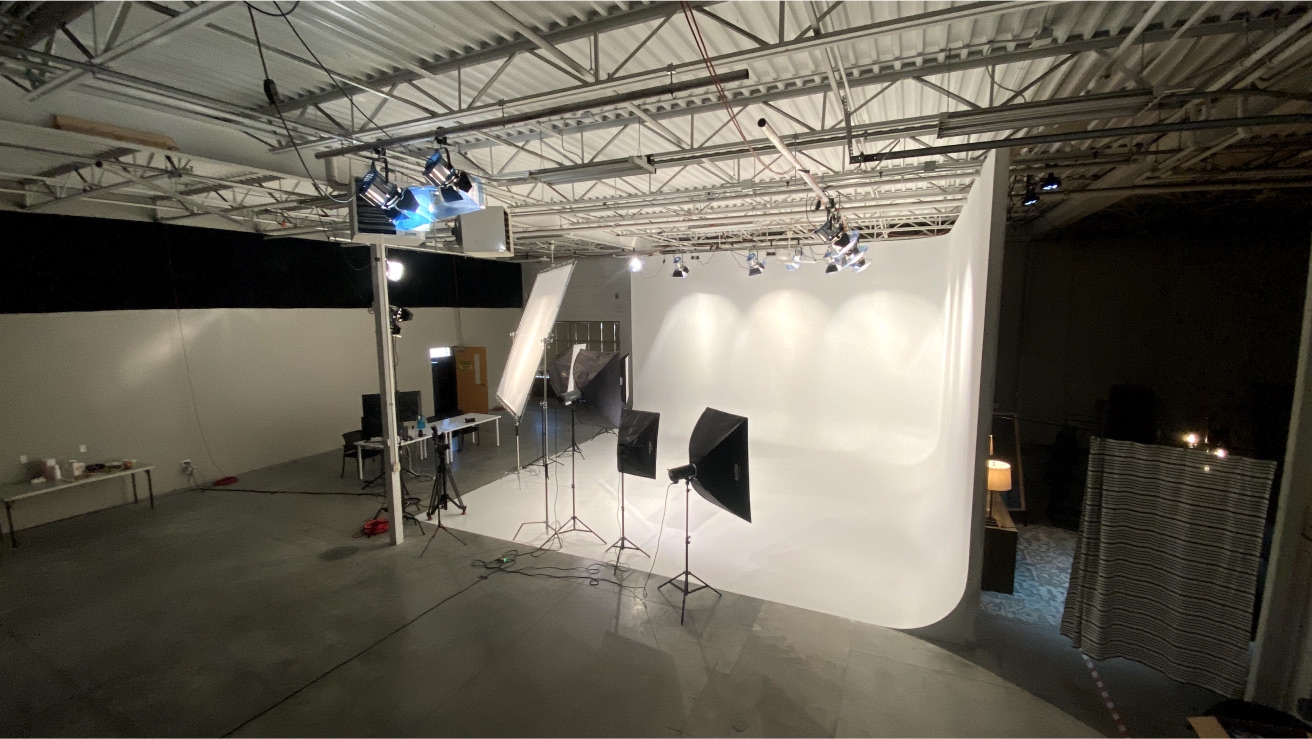
A small agency with a large loading door
The production end of the system is True North Stage in Kenosha. The facility has more than 3,000 square feet, a large overhead door, a 25-by-25-foot cyclorama, an 11-foot-8-inch video wall, a voiceover booth, tabletop space and a virtual set. Those measurements matter. An agency serving equipment makers needs to think about load-in before lighting.
Production is kept in-house across video, photography, editing, motion design and 2D and 3D animation. The last category is especially useful when the thing worth showing sits inside a machine. A CAD model can be textured, lit and moved to reveal an assembly no camera could sensibly reach. During the pandemic, PKA also expanded live broadcast and virtual production, then kept the capability as viewing habits changed.
What broke first was the handoff
PKA does not publish a grand founding myth. Its history points to a more ordinary problem: marketing work breaks when the people making the message are too far from the people, product and channel. The firm's answer was to bring more of the chain together. Strategy can walk down the hall to creative. Creative can involve production early. PR can turn coverage into owned material. Media buyers can tell the studio which variants a campaign actually needs.
The company has changed with the available channels, but not by discarding the unfashionable ones. Its offer still includes print beside social ads, connected TV beside earned media, and trade-show content beside SEO. That is sensible in markets where a dealer magazine and a YouTube creator may reach overlapping parts of the same buying committee. Integration here does not mean using every channel. It means not treating a channel as a religion.
Choose a category where accumulated knowledge reduces friction. Put researchers close to users. Capture a core story once, design its later forms before the shoot, and measure each form by the job it was meant to do.
There are limits. The model depends on access to customers, operators and subject experts. It works best when the product has enough complexity, margin or purchase risk to support careful education. A low-cost impulse product may not need a five-minute explanation or a crew that can animate a CAD model. An organization that cannot make knowledgeable people available will blunt the very advantage it hired.
PKA's scale creates another tradeoff. A team of roughly 16 can be close, senior and fast, but capacity is finite. A buyer choosing between PKA and a large network agency is really choosing between different machinery. The network offers breadth across offices and markets. PKA offers a shorter distance between the person who stood on the job site and the person shaping the campaign.
The next useful question
In 2026, the agency has been filming with Blue Diamond Attachments, working with equipment creators and recruiting a design intern while rebranding itself. The tools keep moving. The durable part is the habit behind them: resist pretending that a channel is a strategy, learn what the customer is trying to do, and stay near the product long enough to notice what outsiders miss.
PKA began as the initials of Prom, Krog and Altstiel. Decades later, the abbreviation has outlived the need to explain itself. The more interesting legacy is a way of paying attention. Anyone can say “audience insight.” It takes a particular sort of agency to climb into the cab.