Pieter Omvlee spent time playing with a library app even though he had very few books worth cataloguing. He explored an outlining app without having much to outline. The software itself was enough to hold his attention. Long before Sketch became his business, using a well-made Mac application was an activity he could enjoy for its own sake.
His uncle’s iMac G4 had helped attract him to Apple’s computers: a screen suspended from a swivelling arm, a machine that resembled a desk lamp. Once he saved enough to buy his own Mac, the independent software caught him. Small teams were making applications with details that rewarded attention. He wanted to join them.
There was a practical objection at home. Could selling software for a platform like the Mac become a living? Omvlee remembers showing his parents an account of Delicious Library’s commercial success. Somebody had already demonstrated the possibility. An unlikely apprenticeship, conducted in programs he scarcely needed, had acquired a business case.
A chat button and a useful introduction
Among his early projects was DrawIt, a graphics application. Designer Laurent Baumann found it while looking for alternatives to Photoshop and thought he could improve its interface. Omvlee’s website offered an unusually direct route to making that suggestion: an AIM button that showed him available to chat.
Baumann clicked. They worked together on DrawIt, and later on Fontcase, a font manager released in 2009. Fontcase won that year’s Apple Design Award for Best Mac OS X Student Product. The young developer was beginning to make the sort of software he had once explored out of curiosity.
When Baumann joined Apple and could no longer contribute, he introduced Omvlee to his friend Emanuel Sá. It was a consequential handover. The relationship that would shape Sketch grew out of a designer seeing an application, offering help, and eventually knowing somebody else who could help too. The early network was small enough to fit inside a chat window.
The discipline of taking something out
Sketch’s original release arrived in 2010. As Sá and Omvlee developed it, the intended user became unusually specific: Sá himself, doing his work as a designer. A useful tool for him might also serve people with similar frustrations. “We built Sketch because Emanuel needed it,” Omvlee later recalled.
That premise gave the pair a way to choose. A drawing application can expand in almost any direction; a working designer has particular things to finish. Their different skills overlapped, rather than arriving in a neat sequence with design at one end and development at the other.
In a public talk, Omvlee described a less tidy detail of this process. Symbols, a way to reuse elements, existed in an early version, were removed for version two, and returned in version three. The first implementation had not satisfied them. A feature could be valuable and still need to leave while they worked out how to do it better.
The same talk included his temptation to rewrite the application from scratch. He resisted. Improving the existing code gradually allowed the product to keep moving. It is an unglamorous kind of engineering judgment: accepting the thing you have, with its awkward history, and making the next change carefully.
“We built Sketch because Emanuel needed it”
Pieter Omvlee
When your customer is bigger than you
Success complicated that closeness to the original user. Omvlee recalled a period when Sketch had perhaps ten people, while some customers had design teams of more than a hundred. Their problems were larger than the ones the founders had encountered themselves. A tool made around one person’s needs was being asked to coordinate many people’s work.
He described the company as running behind the application’s popularity. That reverses the usual picture of a founder pushing a reluctant market forward. Here, customers were already using the product, and the organization had to catch up with the responsibilities they brought.
In March 2019, Sketch announced a $20 million Series A from Benchmark, its first outside funding. The announcement said more than a million paying users were using the software. Omvlee explained that the appeal included an investor’s experience of scaling companies and connections in the industry. There was a company to build around the application.
Apple Design Award
Apple Design Award
$20m from Benchmark
When he later looked back at passing a million customers, he said the milestone had gone unnoticed at the time. The team discovered it retrospectively. Their stated aim had been to improve the product and trust that the rest would follow. It is a pleasantly awkward anecdote for a company anniversary: first achieve the round number, then find out you have something to mark.
The company becomes part of the work
The partnership had also established a working arrangement. Sá and Omvlee were living in different countries, so they collaborated remotely. Omvlee recalled in 2023 that they first met about ten months into working together, after an initial version of Sketch had already appeared. Sharing an office had never been a prerequisite for sharing a project.
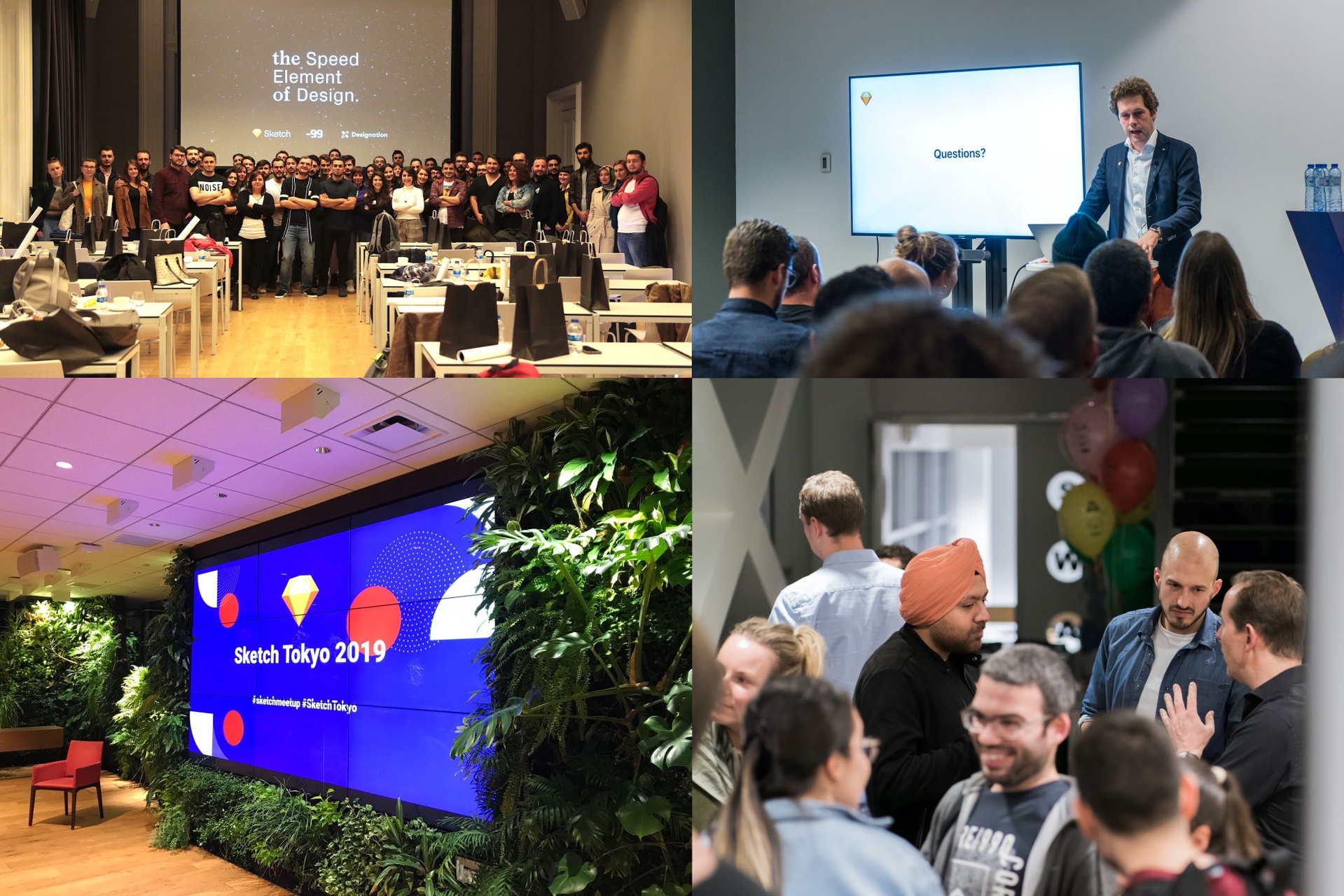
As the company grew, that practical beginning required deliberate habits. Written communication mattered enough to test during hiring conversations on Slack. People had flexibility over their schedules, indicated availability through their status, and tried to avoid needless interruptions. Annual gatherings gave colleagues time together that everyday online work could not provide.
For Omvlee, growing the team changed the substance of the job. He could no longer hold the application’s whole codebase in his head. Decisions required other people’s knowledge. The early developer’s intimate relationship with every line of code gave way to the less solitary work of helping a team make decisions.
His approach to product testing remained practical. Sketch’s team used development versions in its own work, put rough ideas into usable form, and tested them. Customer requests needed examination too. Asking why someone wanted a feature could reveal a problem better solved another way. That makes listening a demanding activity: the request starts the conversation.
Somebody has to edit the ambition
Omvlee’s reading offers a clue to how he understands this role. Reflecting on Tripp Mickle’s book After Steve, he considered product leadership as a meeting point between technology and design. What people want, what engineers can build, and what can be achieved in the available time all have to meet somewhere.
He objected to a process in which designers arrive late and are handed something to beautify. He also saw a problem when design ambitions drift away from the realities of making a product. His interest was in the person who could keep these forces working together.
This is a useful lens for reading his own career, rather than an assertion that every decision worked. The engineer who helped build Sketch is drawn to questions that code alone cannot settle. Which problem deserves attention? How much should the team attempt? When has a promising idea earned its place in a tool somebody needs tomorrow?
A different sort of test drive
A small Dutch carmaker gave those interests another outlet. After taking a test drive in a Carice convertible, Omvlee made a small investment and preordered a car from its next series. He followed the founders, Niels van Dril and Richard Holleman, as the project progressed, and spoke at the TC2’s unveiling in Noordwijk in 2023.
In March 2025, he wrote that he had received the first production TC2. His account dwelt on the driving position, the low weight, the polished dashboard and its manual switches. He cheerfully admitted he could not be impartial. After years of watching the car take shape, a detached road test would have required an unlikely change of character.
He photographed it near The Hague, where he lives. Dutch windmills supplied a setting for a Dutch car. The pictures also suggest why a software biography benefits from the occasional excursion outdoors: the same interest in how something feels to use can attach itself to a steering wheel.

The camera bag has other ideas
Photography brings a less economical version of his taste for tools. Before a wildlife trip to Andalucia, he wondered whether hours in a hide would bore him. Unsure which lenses to take, he took practically the lot. At Malaga airport, the equipment prompted an exclamation from the woman at security.
The week supplied a thorough education. Vultures appeared before he had the settings right. A planned photograph of cranes at sunrise produced the sunrise and no cranes. Later, after days of adjustments and advice, he enjoyed four hours photographing smaller birds from a hide. He finished the trip with close to ten thousand photographs.
There is something companionable about his willingness to record the missed pictures alongside the successful ones. Even someone who makes tools for a living still has to learn the controls, choose what to carry, and wait for the subject to cooperate.
Another file, another beginning
By October 2026, Omvlee was publicly associated with Elyx, a new design project, with an upcoming Utrecht demonstration announced for November. Its proposition brings designers, developers and AI agents into a workflow built around local files. A design language, an editor and command-line tools are intended to make design information usable alongside code. The website is inviting private-beta registrations.
The ambition has a familiar concern at its center: keeping design useful as the work around it changes. The tools are different from the early DrawIt application, but the question of how people work together remains close by.
His personal website offers a quieter expression of independence. He established it as a home for pictures and writing, away from the pressure to chase likes or adapt everything to a platform’s changing formats. “I don’t share photos to gather likes and build an audience,” he wrote.
There is room there for piano, architecture, cameras and photographs of Porto. It is a modest ending to a story involving a million customers: a developer keeping a little space where the things he likes can simply stay.