Clark Valberg had a useful piece of software and a reason to keep it to himself. His agency had built a way to show clients what a digital product might feel like before committing to the expense of making it. Other agencies might want it. That was precisely the difficulty. Why hand over an advantage?
This is an awkward opening for a startup story. The future founder needs persuading to let anyone buy the thing. Yet it gets closer to Valberg than the familiar tale of someone hunting for a billion-dollar idea. He was trying to improve a working relationship. The company arrived after the irritation.
At Epicenter Consulting, the New York design and development business he co-founded, client feedback could arrive after too much work was already done. A written specification might look reassuringly complete while concealing several incompatible pictures of the finished product. Everybody had agreed to the document. Agreement about the actual experience was another matter.
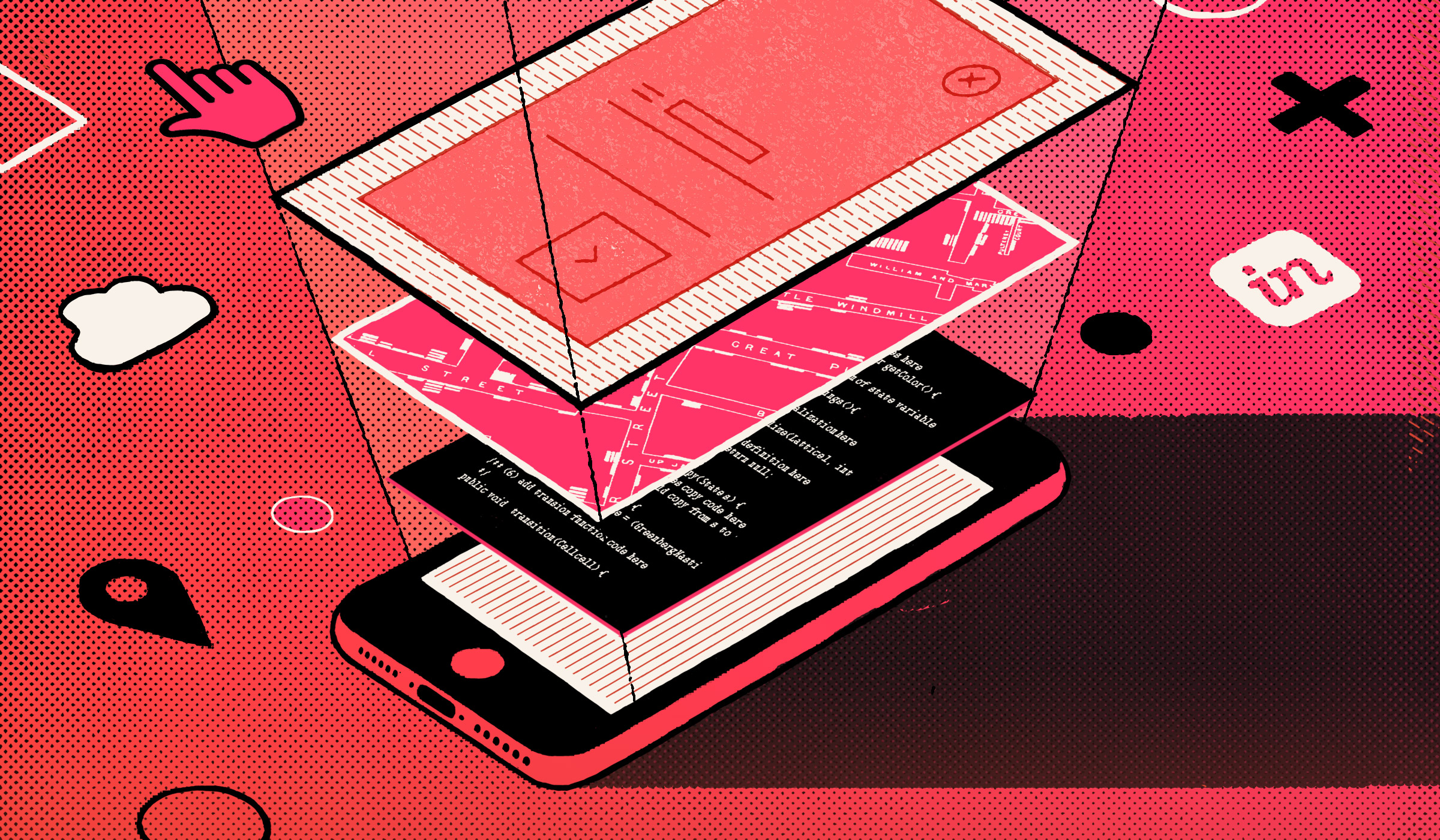
His team began using prototypes to bring those pictures into view. Eventually, designs from Photoshop could be linked into a simulation, reducing the work required to invite a useful response. A client could react to something tangible. A designer could change it. The conversation had an object in the middle of the table.
“I wanted to be on the same side of the table.” That was his explanation for the impulse behind InVision. It is a modest ambition with expensive consequences: fewer arguments about what somebody meant, more chances to discover what they need.
Two launches, one wedding
InVision, co-founded with Ben Nadel in 2011, escaped the agency. Valberg had been reluctant to commercialize the internal tool; colleagues kept pushing. An introduction to angel investor Daniel Wolfson led to FirstMark Capital. A $1.1 million seed round helped turn a useful side project into the work that would occupy his next decade.
The paid product launched on his wedding day. Most people aim to avoid competing announcements at a wedding; Valberg managed a second long-term commitment. His wife subsequently took over the agency, allowing him to concentrate on InVision. The domestic detail matters because the business story is so often told as if the rest of life had politely left the room.
By May 2012, InVision had crossed 26,000 signups, with 19,942 projects created. The New York City Entrepreneurial Fund committed $200,000. Valberg was already making the case that designers needed more control over how software took shape. An interactive prototype let them demonstrate an experience without waiting for an engineer to construct the finished application.
The proposition was easy to recognize if you had ever tried explaining a screen over email. A picture could show appearance. A clickable sequence could show intention. InVision sold the distance between the two.

A company without the commute
Then there was the question of finding people to build it. New York offered a large hiring market and a formidable collection of employers competing in it. Valberg and Nadel were spending time courting engineers while the product needed attention. A small startup could consume its week explaining why it was a small startup worth joining.
They knew capable contractors elsewhere. Hiring those people without requiring a move offered another route. Remote work began as a practical recruiting decision, years before it became an everyday boardroom argument. Geography was a constraint the founders could change more easily than the city’s competition for engineers.
David Cancel supplied an important condition: avoid creating an office that leaves everybody elsewhere at a disadvantage. The founders gave up their own office and worked from home. The point was equal access to colleagues and leadership. A headquarters with a few privileged occupants would have undermined the arrangement.
By late 2019, InVision was approaching 900 remote employees. That scale did not make working together automatic. Valberg distinguished focused individual work from the time spent exchanging ideas. He also valued meeting in person to know colleagues better, so that subsequent online interactions carried a fuller understanding of the person behind the message.
The arrangement asked an unusually concrete question of a design company: could it design the way its own people worked? The office lease was the easy part to remove. Habits required more attention.
A recruiting constraint became a company design decision.
Permission to offer the bad version
Valberg had a small verbal device for a stalled creative discussion: announce a “bad version.” Someone could offer an imperfect thought and ask the group to improve the useful part. It lowered the price of speaking before an idea was ready for inspection.
The naming of Craft, InVision’s plugin for Sketch and Photoshop, supplied a neat example. A group working on the name was stuck. Someone proposed Craft under that permission to be wrong. The supposedly disposable suggestion became the name. Even an idea introduced with an apology can turn out to have excellent stationery.
He described using the same approach with his wife. Its appeal reaches beyond brainstorming: a tentative proposal can invite help rather than a verdict. There is a family resemblance to the original prototype. Both let people respond while change is still possible, before pride or production costs make revision harder.
In public conversation, he could be similarly playful about his own familiarity. Designers knew the sender of InVision’s emails as “Clark from InVision.” In a 2015 podcast, he recalled introducing himself at a panel through that inbox connection and getting a laugh. A software company’s correspondence had given its founder an accidental recurring role.
The screen goes to the cinema
InVision also made a feature-length documentary. Design Disruptors brought together people shaping products at companies including Airbnb, Netflix, Facebook and Spotify. Valberg served as executive producer. Its announced 2016 premiere venue was San Francisco’s Castro Theatre, a rather larger screen than the ones his customers were usually discussing.
The film made visible a profession whose work is often noticed only when something goes wrong. A convenient interface can disappear into the activity it enables. The designers behind it rarely get a curtain call. A documentary gives them the time to explain the choices, disagreements and experiments hidden inside a few ordinary taps.
Writing about the project in 2016, Valberg connected product design with changes in how people relate to each other and imagine new services. A familiar digital experience could alter expectations elsewhere. Once a convenient interaction exists in one part of life, people begin asking why another part remains so cumbersome.
His public work around design included writing, interviews and the company’s design publishing. These were different ways to advance the same business argument: decisions about an interface belonged in a broader conversation about the customer. The conversation could include finance, marketing and leadership, alongside the people drawing the screens.
In a 2016 Mixergy interview, a more personal piece of decor appeared: a poster cataloguing logical fallacies. Valberg joked about identifying them during calls. One can appreciate the potential efficiency. One can also imagine how warmly a meeting receives the announcement that its argument has just been classified.
The numbers, and the harder ending
By December 2018, InVision had surpassed five million users and reported adoption at 97 of the Fortune 100. It raised $115 million in a Series F led by Spark Capital. The reported valuation was $1.9 billion. Valberg’s original problem had found a place inside companies far larger than the agency that produced it.
The product range expanded too. InVision Cloud handled collaboration, Studio addressed design creation, and Design System Manager organized reusable assets. The ambition stretched along the design process. More of the work that surrounded a prototype might happen within the same company’s tools.
Valberg left the CEO role in July 2022, handing operations to Jeff Chow and saying he would remain on the board. The announcement accompanied layoffs. He described a business that had reached $100 million in annual recurring revenue and seven million users, while thanking the people affected. Those figures belong to that point in the company’s history.
The ending complicates any easy portrait of the founder. Miro acquired Freehand, InVision’s visual collaboration product, in 2023. In January 2024, Miro confirmed that InVision’s design services would be discontinued at the end of that year, with Freehand capabilities moving into Miro. A product that had helped teams imagine their future was reaching its own closing date.
Valberg also pushed back publicly against the suggestion that InVision’s publishing success meant engineers had been diverted into making content. In a reply to designer Cameron Moll, he explained that product development and marketing had separate teams. He acknowledged why an outside observer might question the contrast between polished marketing and a product failing to keep pace. It was a specific response to a specific criticism, rather than an attempt to make the outcome disappear.
Another unfinished idea
Valberg’s current work sits at Transformative, where he is managing partner. The firm builds and backs AI-native companies. Its team includes former InVision colleague Stephen Olmstead, alongside partners with experience in product, legal work and finance. The company-building conversation has acquired another set of participants.
He has also invested beyond his own operating company. His 2019 investor profile included Algolia, Voiceflow, Unsplash and BentoBox; Transformative now describes a record of more than 200 early-stage startup investments. These are separate activities from InVision’s fundraising, and a different way of encountering the problems founders choose to work on.
There is continuity here without requiring a tidy redemption story. The agency tool, remote recruiting experiment and invitation to offer an imperfect idea all exposed an assumption to other people. Could clients respond earlier? Could colleagues work somewhere else? Could a rough thought survive being said aloud?
InVision’s shutdown belongs in the account, just as surely as its adoption does. Neither supplies a complete description of Valberg. Look at the smaller working habits and the picture becomes more particular: a founder initially protective of his tool, willing to be persuaded, interested in how people reach agreement, and amused that half the design world seemed to know him through email.
The unfinished idea has been useful company for him. It gives the next person something to question. And, occasionally, something to click.
Keep the conversation going
Follow the work, revisit the interviews, or watch the film trailer.