Marek Sotak flew across the Atlantic to pitch Microsoft, and came home without the contract. He remembers the trip fondly. Evan Chaki’s team was exploring in-app tours for Microsoft Dynamics and had invited his small European company to present. A remote presentation would have done. Sotak chose the plane. It was his first visit to the United States, and an opportunity to put work he believed in before people who might use it.
He later described the excitement of being noticed, even though the meeting did not produce a sale. There is something refreshingly uncommercial about remembering a commercial disappointment with such pleasure. A spreadsheet would have filed the trip under expenses. Sotak kept a different account: the invitation made the company feel real. Recognition could count as progress without being mistaken for revenue.
That distinction makes a useful entrance to his working life. The founder and CEO of Inline Manual builds ways to help people navigate software. His own route has involved making things, explaining things and reconsidering how much explanation people actually need.
“We did not win the contract.”
Marek Sotak, remembering his Microsoft pitch
A notebook before a keyboard
His early programming education was self-directed. He began with a Commodore 64, moved from BASIC to assembler, and, at fourteen, went to the State Technical Library to get online. He carried a notebook of code to type into the computers there. He was younger than the library’s admission age. Access involved getting in and staying until somebody sent him out.
In 2005, while working on his own content management system, he encountered Drupal. Its modular design persuaded him to abandon the solitary version and join the open-source community. He became Drupal.org user number 37,679. The decision had a practical elegance: other people were already doing the work, and together they could do more.
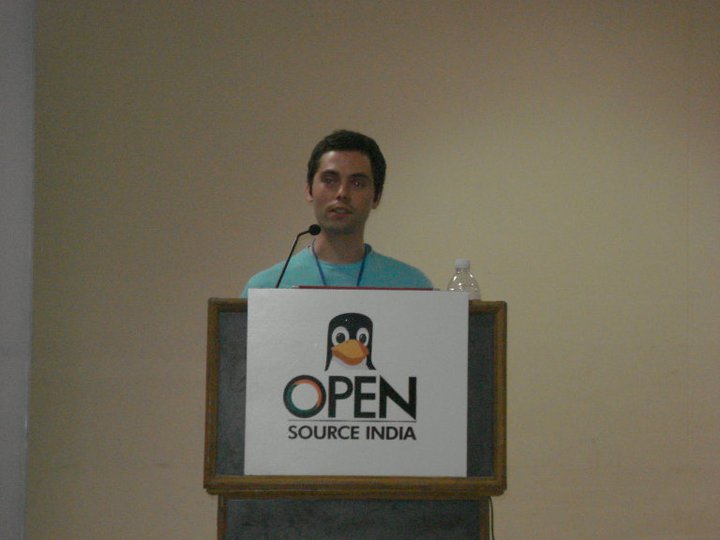
Community then became part of his career. He worked on an administrative interface that he said reached roughly 8,000 websites, and travelled to speak at conferences. The photograph of him at Open Source India captures that public side of the programmer: microphone, lectern, an audience to help. Code had brought him into a room full of people.
The screenshot that would not stay current
Inline Manual’s origin was an ordinary maintenance problem: PDF documentation and screenshots had to be kept up to date. Sotak describes starting with that pain and eventually arriving at interactive walkthroughs, onboarding and product analytics. A manual can be accurate when somebody finishes it and frustratingly out of date when somebody needs it. The problem lives in the interval.
His retrospective advice is to speak with potential users before writing code. Short conversations, without a pitch or a presentation, establish what people already struggle with and what they have tried. He recommends revisiting assumptions after every five interviews. He also admits that, early on, he pushed feedback toward his own preferred answer. That admission makes his advice more useful than a polished origin myth.
A founder who can program has an especially convenient escape from an awkward conversation: build something. Sotak’s lesson asks the builder to remain with the awkwardness a little longer. Listen for the problem in the customer’s language. Then decide what deserves to be built. The first deliverable may be a better question.
- ListenShort customer conversations
- RevisitCheck assumptions after five interviews
- BuildLet the problem shape the solution
Help belongs beside the task
The company says Inline Manual began in 2012; Sotak’s professional résumé dates his founder role to May 2013. By August 2013, he was publishing an update about organizations: clients and colleagues could share ownership of documentation, rather than adjust permissions separately for every topic.
It was a modest release with a recognisable human purpose. Somebody had to hand work over. Somebody else had to continue it. Group ownership made the documentation less dependent on one person’s account. Even at that early stage, the product was concerned with the small administrative obstacles that interrupt an otherwise straightforward job.
Today, Inline Manual provides walkthroughs, tooltips, checklists, announcements and in-app help. Its website reports that its products are trusted by more than 500 companies worldwide. Guidance can be placed in the application where the task happens. The user gets an explanation near the moment of uncertainty, instead of having to translate a separate document back into the screen in front of them.
The company’s stated approach includes gradually releasing features and developing the roadmap through customer feedback. That makes explanation an ongoing activity. An application changes; people’s needs change with it. A guide earns its place by helping the next person complete something.
A company without the constant summons
Sotak calls himself a maker and founder building a distributed, asynchronous and calm company. These are choices about the working day as well as about where desks are located. His personal site describes Inline Manual as self-funded and profitable, with customers around the world. He also lists a collection of smaller products, suggesting that the urge to make has survived the responsibilities of running a business.
EngageKit concerns customer engagement, including task lists and badges. ScreenDust addresses the chore of updating knowledge-base screenshots. Inline Help brings AI into customer support. Different products, related concerns: someone needs to understand a system, maintain its explanations or get an answer. The recurring subject is the effort required after software has been delivered.
His writing about developers takes the same concern inside the company. In April 2021, while interviewing product leaders, he asked whether they could let a development team work for two cycles without talking to it. Some candidates described engineers as people who required tightly specified directions. Sotak objected to the distrust behind that description.
He had also made a related mistake himself. Trying to protect developers from everything except coding had gradually cut them off from the business. As scope expanded, misunderstandings followed. He traced the problem back to his own management choices, rather than simply blaming the latest interaction. His proposed remedy was to let engineers understand the commercial context and contribute as technical partners.
That is a demanding form of independence. A team given context has more to think about than a team given tickets. It also has a better chance of recognising why a decision matters. For a company built around explanation, withholding the explanation from its own developers would be a peculiar economy.
The maker asks for directions
Kairo, his time-tracking project, offers a smaller and more playful view of his process. In June 2021, early feedback said it was unclear where to start. Sotak used Inline Manual to add an introductory walkthrough for anonymous visitors. He reported that building it took five minutes. Here was the founder of a guidance product needing guidance in his own new product.
Later updates followed the fiddly, absorbing work of making an interface feel right. He learned canvas techniques, revisited sine functions and worked on particles and waves. He also spent a day choosing music for a Product Hunt launch video. A launch involves decisions that are almost comically distant from the original feature list. There is always one more small thing to get right.
Kairo launched on Product Hunt in July 2021, followed by Notion blocks later that month. His progress notes make room for excitement and uncertainty, alongside the implementation details. They show a person testing an idea in public, watching reactions and adjusting. Even with an established business, a new project can put its maker back at the beginning.
Another project, Eventhunt, grew out of the world of events and encounters. At a London digital nomads meetup in February 2015, Sotak was scheduled to share his experiences. The event listing reported that the recently launched platform already covered 38 cities, with 27 curators and 573 published events. The numbers describe an early network built around helping people find a room worth entering.
Finished is a smaller promise
His more recent product thinking has a particular adversary: work put aside with a promise to return. Sotak is comfortable releasing something before every detail is polished. The troublesome part is allowing the unfinished detail to become permanent. Reducing the scope, he argues, can make it possible to release something the team is prepared to live with.
He describes using AI and agents for a first pass at interface copy, including empty states and error messages. The team can accept the result or explicitly record the need for human revision. Guidelines make the output accessible and reviewable. His stated ambition for 2026 is to remove more bottlenecks and spend more time on enjoyable work.
That approach puts the decision back with the team. Faster generation still leaves somebody responsible for deciding whether the words make sense. An empty state is where a user discovers that nothing has happened yet; an error message is where something has gone wrong. Both deserve more attention than their modest size suggests. Sotak’s approach treats those sentences as part of finishing the product.
The paperclip gets another audition
On April 1, 2014, Sotak announced that Inline Manual would acquire Microsoft’s Clippy. It was an April Fools’ joke, complete with a fictional recruitment story for the animated assistant. A company making inline help had found a mascot with relevant experience and a rather complicated employment history. The timing supplied the necessary due diligence.
In September 2026, the paperclip returned in a working experiment. Sotak demonstrated a real-time Clippy built with Jev, describing an assistant that watches product use and responds when it thinks the user is struggling. The reactions, too, are controlled by Jev. It is a demo with a specific design question: when should help interrupt?
The old joke and the new experiment sit comfortably together. One plays with the history of software assistance; the other tests a way to make assistance more sensitive to what a person is doing. Sotak is still interested in the difficult moment between a feature being available and a user knowing how to proceed.
He has built a career in that small gap. It offers no shortage of work. Every new application arrives with somebody, somewhere, wondering where to click. A founder who keeps returning to that person has a useful compass. Sometimes it leads to a profitable product. Sometimes it leads to a paperclip with another chance.