Phind is shut down. This is a retrospective and migration guide, not a recommendation to subscribe.
Phind was for the moment when a programmer knew enough to be stuck. You had the error message, the framework version, perhaps one suspicious line of TypeScript, but not the patience to referee six Stack Overflow answers and three stale documentation pages. Phind searched, read, synthesized and cited. The promise was refreshingly concrete: ask a technical question and get something closer to a researched answer than a pile of blue links.
That distinction mattered in 2022, when founders Michael Royzen and Justin Wei launched the company from Y Combinator’s summer batch. General chatbots could produce code, but current package docs and recently changed APIs were a weak spot. Phind put retrieval at the center. It showed the links beside the answer, invited follow-ups and learned the rhythms of technical troubleshooting. People used it to decode errors, compare frameworks, sketch an implementation and understand why the fix worked.
Now for the awkward buyer’s-guide detail: there is nothing to buy. Founder Michael Royzen told users that January 16, 2026 would be the last day of search operation. Paid accounts were promised prorated refunds. Users had until January 30 to download their histories, after which the company said the data would be permanently deleted. Y Combinator lists Phind as inactive. The website no longer behaves like a working search product.
Who it was for, and who should care now
Phind’s natural customer was a working developer with a narrow, messy question: “Why does this package fail only in production?” or “Show me the current way to authenticate this SDK.” Students liked the explanations. Technical leads could use it to compare approaches before a design meeting. The citation trail was useful for anyone who wanted to check the answer instead of accepting confident prose on faith.
Good fit then
Debugging with an exact error, learning an unfamiliar API, and collecting implementation options with source links.
Weak fit then
Deep repository-wide edits, polished autonomous agents, or decisions where a generated citation list could substitute for verification.
Useful now
The public model weights remain a piece of coding-model history and can still be run by people with capable hardware.
The larger lesson
Export valuable conversations. A clever cloud tool is still rented infrastructure, even when it feels like a notebook.
If you are choosing a tool today, use Phind as a requirements document. Do you need fresh web research with citations? Try a search-led service such as Perplexity or a current general assistant with web access. Do you need an assistant that can inspect and edit a repository? Cursor, GitHub Copilot, Claude’s coding workflows and Sourcegraph Cody sit closer to that job. The distinction between “answer engine” and “coding agent” saves more time than any benchmark chart.
The trick was bigger than a chat box
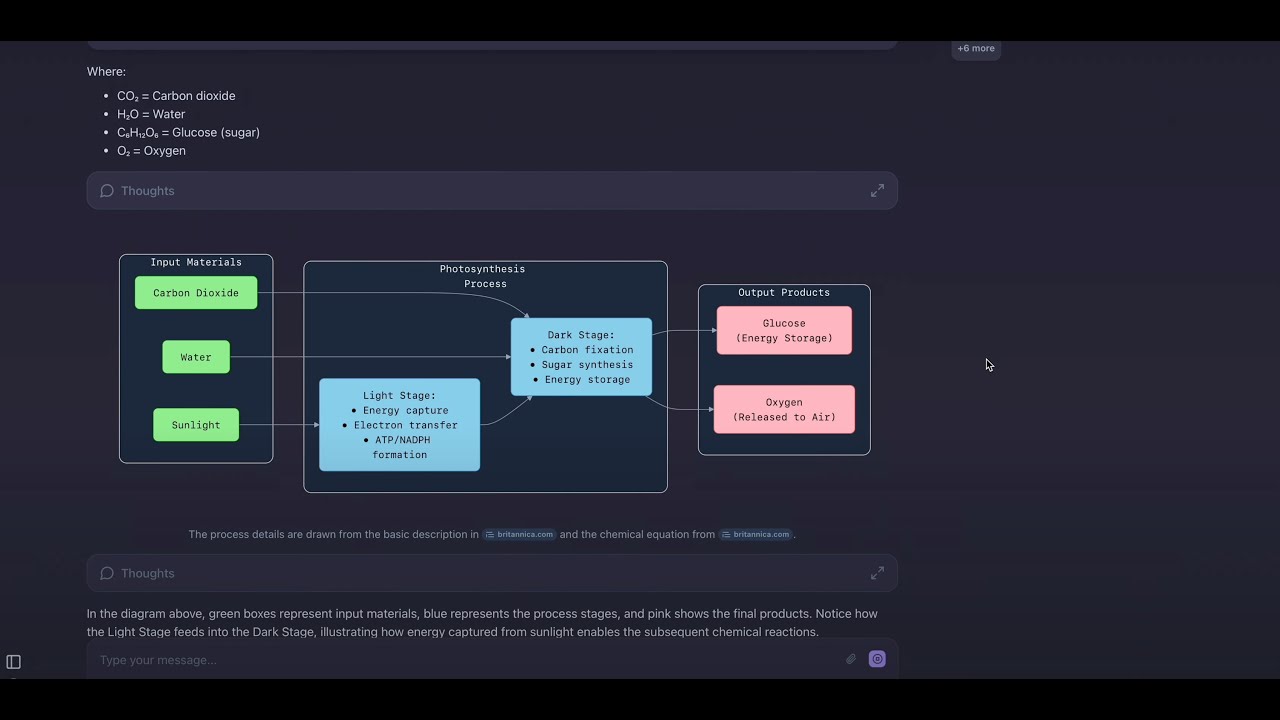
The February 2025 rebuild, called Phind 2, pushed beyond cited paragraphs. When a question needed more evidence, the system could launch additional searches. It could perform calculations, check them in a Jupyter notebook and graph the result. Answers could contain inline images, comparison cards, tables and generated diagrams. Conversations were stored as trees, so users could revise a follow-up and move between branches instead of surrendering the whole thread to one bad prompt.
This “generative interface” was Phind’s most interesting bet. A question about photosynthesis might deserve a process diagram; a restaurant query might deserve cards; a probability experiment might deserve a graph. The interface tried to choose the right shape for the information. That was more ambitious than painting markdown beneath a blinking cursor, and it anticipated a direction that mainstream assistants continue to explore.
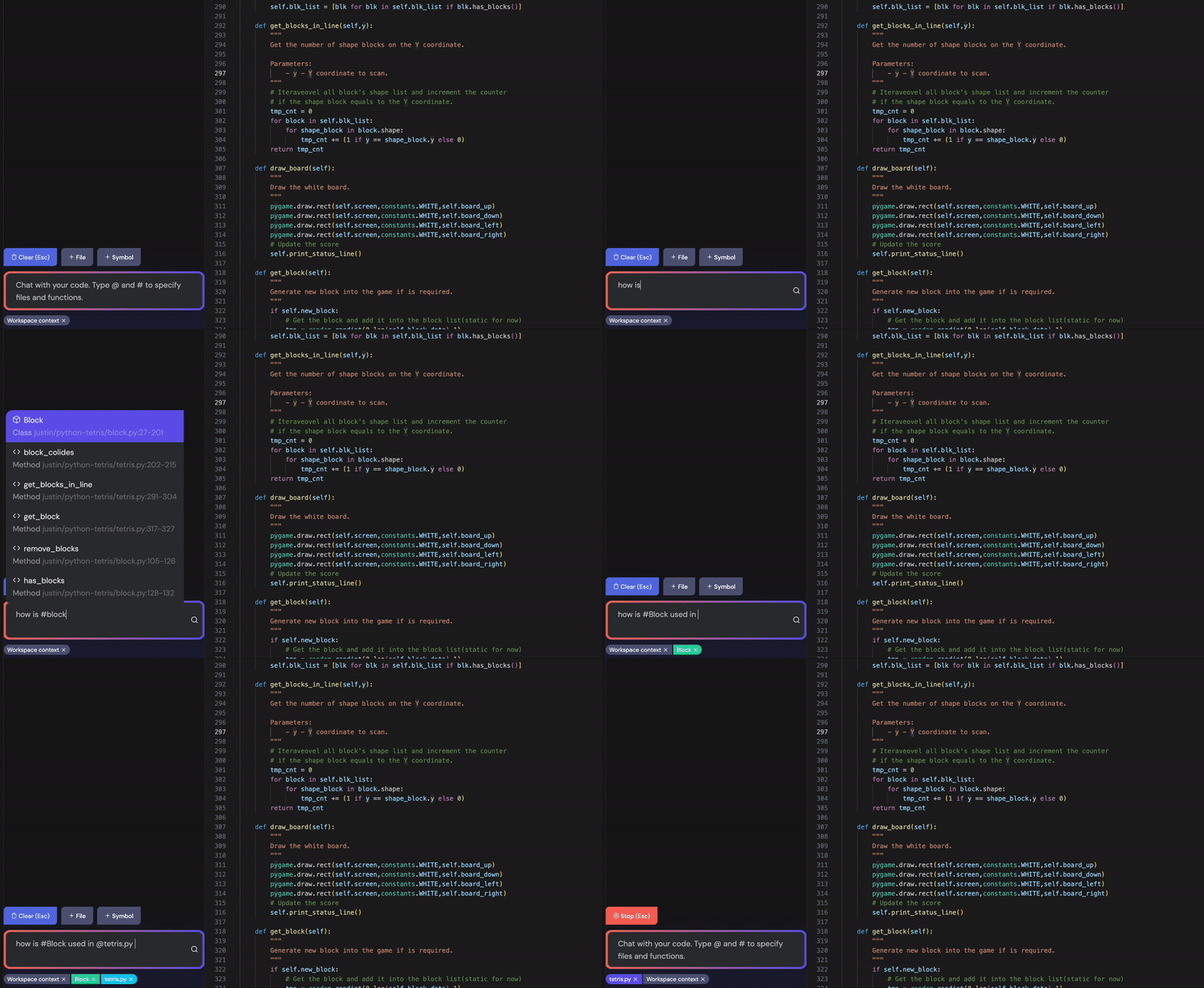
The editor extension carried the idea into VS Code. It could use codebase context, accept explicit @file mentions, bring selected code into a conversation, rewrite a selection and inspect terminal output through keyboard shortcuts. There was tab completion too. This was useful plumbing, though it never made Phind feel as deeply native to the repository as the coding agents that followed.
Fast models, real machinery
Phind was not merely wrapping one commercial API. It trained and released code models, beginning with CodeLlama-34B variants in 2023. Its v2 model posted a reported 74.7 percent on OpenAI’s HumanEval coding benchmark. Founder Royzen says a Phind model held the top open coding-model rank on Hugging Face for six months. Benchmark claims always need context, but open weights gave developers something tangible to test.
The last downloadable general model, Phind-70B, is a fine-tune of Meta’s Llama 3.3 70B Instruct. Its model card lists a 128,000-token context window and aims at code generation, technical reasoning and instruction following. Running the full-precision weights asks for roughly 140GB of VRAM; a four-bit version still needs about 35GB. The hosted Phind 2 family also offered a 405B option, but the 70B weights are the practical artifact that survives.
Underneath, the company used NVIDIA A100 and H100 GPUs on Amazon EC2 P4d and P5 instances for training and serving. In an AWS case study, Phind reported that moving to the newer setup cut time to first output by 75 percent and completed answers eight times faster. Speed was part of the product. A research assistant loses its charm when the answer arrives after you have already fixed the bug.
What users loved, what made them sigh
The affectionate reviews were specific. One developer said Phind was better than Copilot for “fix this problem” questions because it annotated answers with sources. Another described reaching for it before Google because refinement could turn a vague “how do I connect Y to Z?” into a serious answer. A VS Code user called it a good companion for learning to code. The common thread was not magic. It was less tab management and a visible path back to the evidence.
“Phind gives better answers than GitHub Copilot on ‘fix this problem’ and… annotates its results with sources.”A developer comparing daily coding tools on Reddit, November 2023
The complaints were equally instructive. Some people found Phind 2 verbose, especially when a simple query sprouted a flowchart. Others reported UI roughness, generation limits, region availability problems or links that Phind failed to read. One Hacker News commenter said the generated diagrams drowned out the point; Royzen directed them to an answer-profile setting that could request plain text. That exchange captured the central risk of generative UI: choosing the wrong presentation is another way to give the wrong answer.
Accuracy remained the non-negotiable problem. In the Phind 2 launch discussion, one user praised a timely market analysis while another found invented dates in an economic calendar. Visual polish can make a claim easier to understand and easier to trust. It cannot make the claim true. Code still needed tests, citations still needed opening, and high-stakes facts still needed primary sources.
The crowded scoreboard
| Need | Phind’s old answer | Current direction | Watch for |
|---|---|---|---|
| Cited technical research | Search-first synthesis with visible sources | Perplexity or web-enabled general assistants | Citation quality and stale docs |
| Repository work | VS Code context, file mentions, inline rewrites | Cursor, Copilot, Claude, Cody | Permission scope and unintended edits |
| Visual explanation | Generated diagrams, cards and graphs | Assistants with artifacts or interactive canvases | Decoration posing as clarity |
| Local experimentation | Published 34B and 70B model weights | Hugging Face plus a local inference stack | VRAM, quantization and no built-in search layer |
Before closing, Phind’s familiar price was free for basic use, with limited daily access to the strongest model. Pro was commonly listed at $20 monthly, or roughly $17 a month on annual billing. A Business tier was listed at $40 per user. Historical prices are useful only for comparison now. No plan restores the service, and sites that still publish a live “buy” button are working from an old catalog.
Phind launches from Y Combinator’s S22 batch with a developer-search focus.
CodeLlama-34B fine-tunes arrive on Hugging Face and climb the open coding-model charts.
Phind 2 debuts after a six-month rebuild, adding multi-search, diagrams, cards and notebook calculations.
Search operations stop on January 16; the window to download user data closes two weeks later.
The verdict: keep the habit, lose the bookmark
Phind got the unit of work right. Developers rarely wanted “AI” in the abstract. They wanted a current answer to a fussy technical question, code they could inspect and links they could open. Its visual experiments were occasionally clever and occasionally a marching band hired for a doorbell. The source trail was the steadier innovation.
YesPress take
Do not plan new work around Phind’s hosted service. Do borrow its best workflow: state the environment, ask a precise question, demand sources, test the code and save important results somewhere you control.
The surviving open weights are for experimenters, not a drop-in replacement for Phind search. They lack the retrieval, interface and hosted infrastructure that made the product useful.
Why did it disappear? The shutdown note offered logistics and thanks, not a detailed postmortem. The market supplies a plausible context, but it remains inference: by 2026, general assistants had web search, coding competence and huge distribution, while editor-native products owned the repository workflow. Phind’s once-sharp middle ground had become crowded. A focused product can teach the giants what matters and still struggle to charge for the lesson.
That leaves a surprisingly durable contribution. Phind helped normalize the expectation that an AI answer should arrive with receipts, understand a developer’s vocabulary and reach for fresh documentation. Its ending adds one more requirement: the answer should be portable. The smartest assistant in your week can become a dead URL in the next.