If your first question is “Should I install Continue?”, the short answer is: probably not for a brand-new work setup, but absolutely study what it tried. Continue was built for developers who wanted an AI helper without surrendering their editor, model choice, or configuration to a single vendor. It worked inside VS Code and JetBrains, later arrived in the terminal, and could talk to a hosted frontier model or a local machine humming under a desk. Then, in July 2026, Continue announced its acquisition by Cursor. The hosted service shut down. Recurring billing was disabled. The repository became read-only after one last polish.
Sept. 2026
installs
181 reviews
That ending changes the buying advice, but it does not erase the product’s usefulness or its influence. Continue’s strongest idea was simple: a coding assistant should be a workbench, not a sealed appliance. You chose the model. You chose the context. You could write rules and prompts, connect tools through MCP, and keep the arrangement in configuration files. In a market fond of all-in-one editors, Continue respected the slightly stubborn programmer who had already spent years arranging the furniture.
Who Continue was for
Continue made the most sense for developers with a reason to care about the plumbing. Perhaps company policy required a self-hosted model. Perhaps you wanted cheap autocomplete from one provider, hard reasoning from another, and local embeddings for repository search. Perhaps you liked JetBrains and had no interest in moving into an AI-first editor. Continue turned those preferences into a system instead of a pile of browser tabs.
It was less convincing for someone who wanted a polished account, one bill, and a model that “just works.” Flexibility has a cover charge, usually paid in YAML, API keys, context-window arithmetic, and time spent discovering that the model good at chat is a sleepy autocomplete partner. The 3.3-star Marketplace score hints at that bargain. Four million installs prove the idea traveled; the middling rating says the trip could be bumpy.
What it actually did
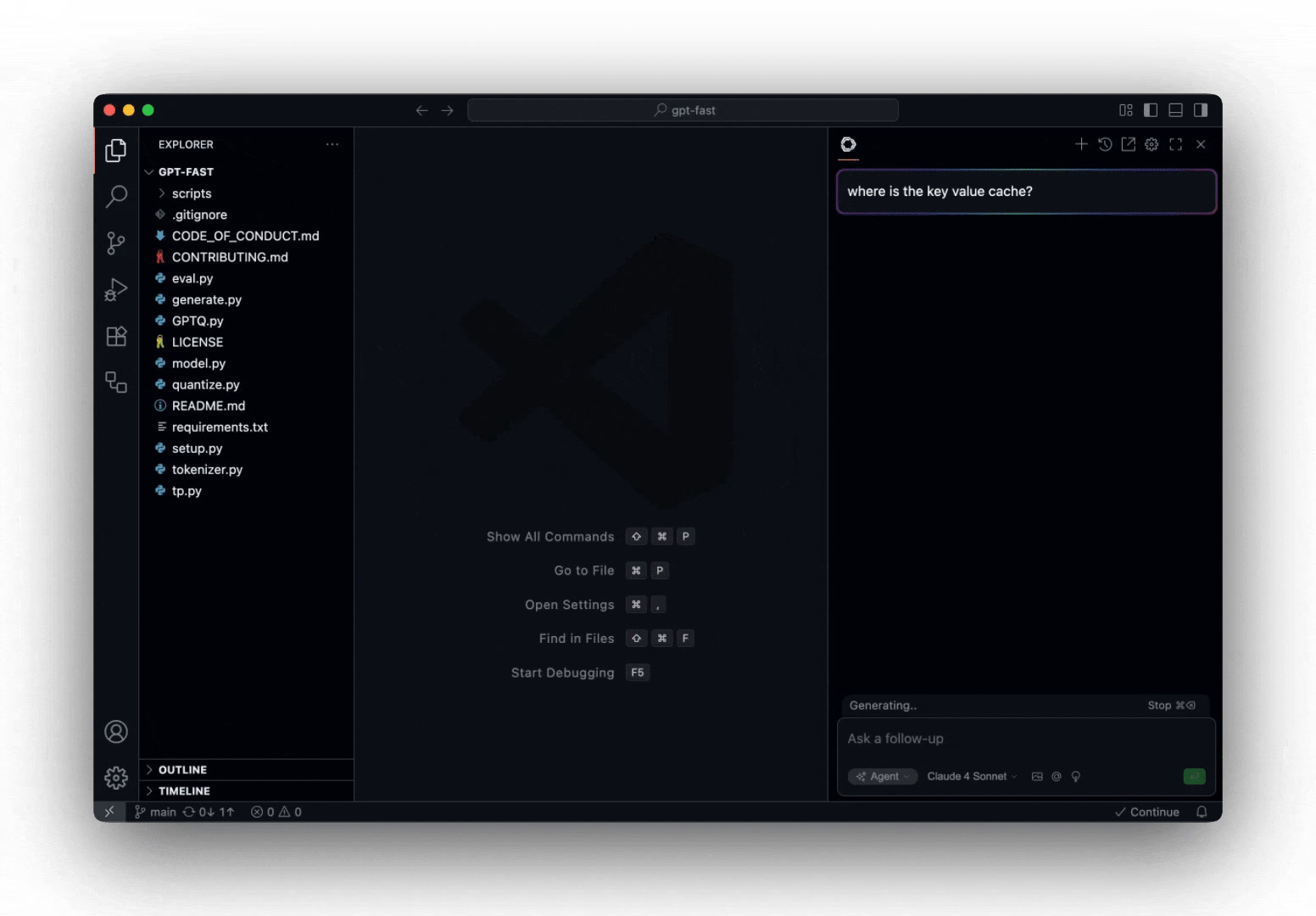
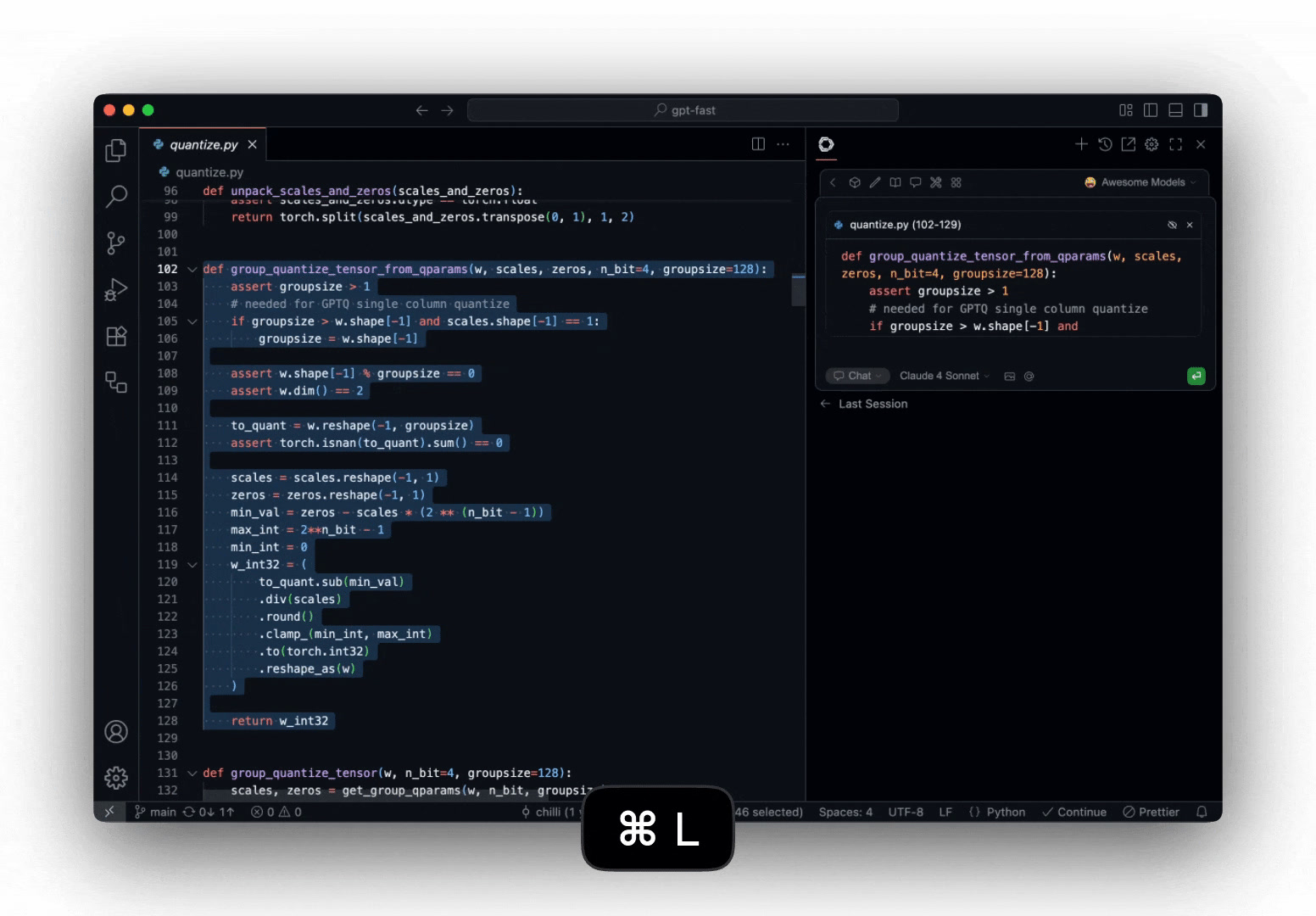
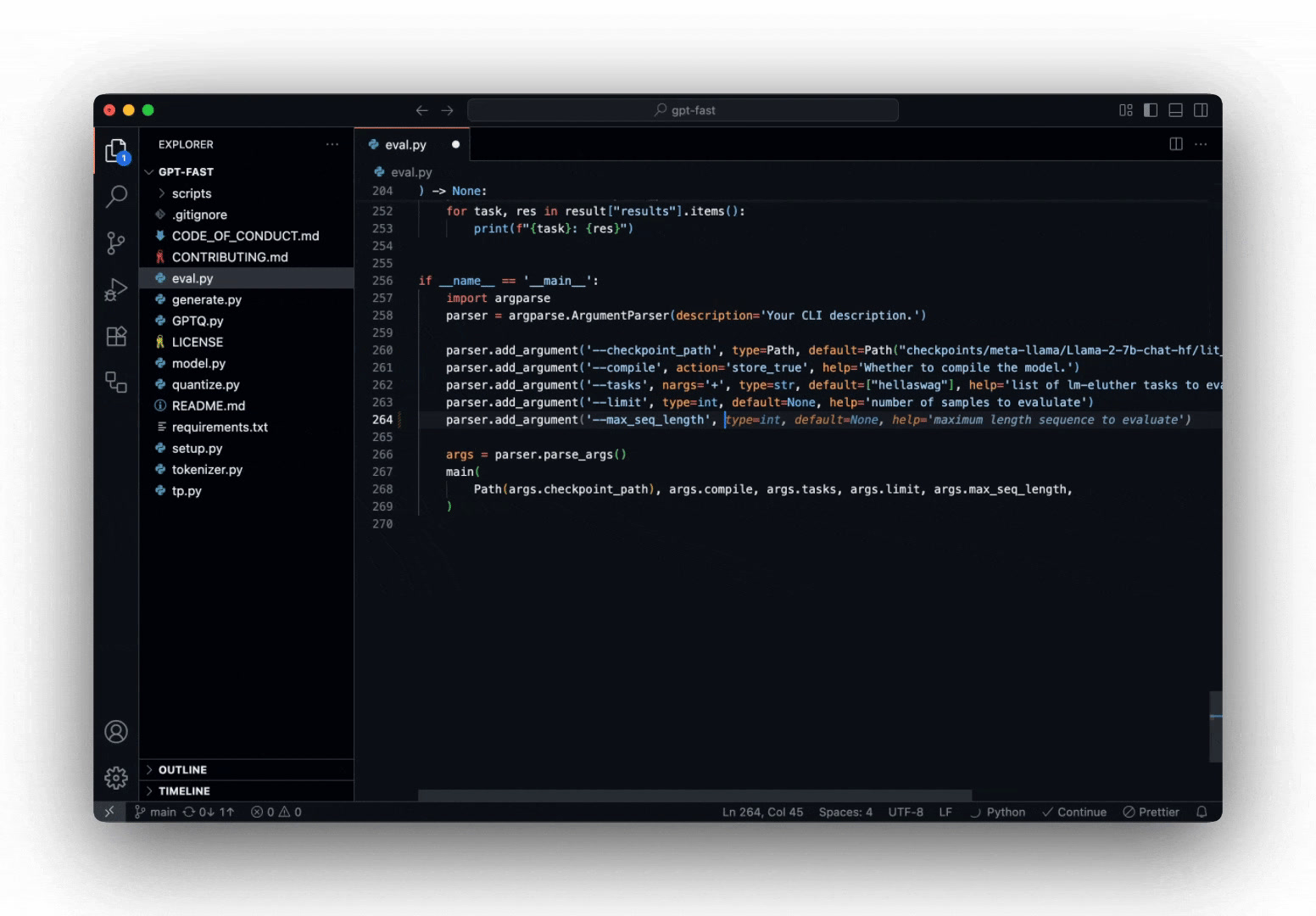
The IDE extension offered five related jobs. Autocomplete put ghost text at the cursor. Chat answered questions with selected files and code as context. Edit rewrote a highlighted region from a natural-language instruction. Plan mode explored with read-only tools. Agent mode could create files, change code, search the project, and run terminal commands. Continue’s CLI, invoked as cn, carried the same agent into a terminal and added interactive and headless operation for scripts, CI, and git hooks.
| Mode | Give it this | Expect this | Main risk |
|---|---|---|---|
| Autocomplete | Your cursor and nearby code | Inline continuations | Latency or irrelevant prose-shaped guesses |
| Chat | Questions, selections, files | Explanations and drafts | Weak context selection |
| Edit | A selected code region | A targeted diff | Overwriting a subtle detail |
| Plan | A task and repository | Read-only investigation | A confident but thin plan |
| Agent | A goal plus tools | Files, commands, iterations | Unreviewed changes |
Under the hood, Continue could use native tool calling or express tools in a system message, widening compatibility across providers. Tool policy mattered: users could require approval, automatically allow a trusted tool, or exclude it. Context came from direct file references, highlighted code, repository indexing, documentation, and outside services. The whole proposition depended on matching the right model to the right role.
“As chat tool it’s beautiful because of its flexibility and extensibility.”A LocalLLaMA user describing a multi-model Continue workflow
That same user had disabled AI autocomplete after a bad suggestion nearly reached production. Another praised chat but called Continue, at the time they tested it, poor as a productivity tool. Others reported indexing trouble, fiddly MCP calls, or completions that repeated code after the cursor. Local inference adds another variable: a model can be clever in a chat window and still too slow for the half-second rhythm of autocomplete.
The model buffet was the point
Continue did not ship one magic proprietary model. It was the dining table. Configurations could route chat and agents to OpenAI, Anthropic, Google, Mistral, or open models; autocomplete to a smaller, faster coder; embeddings and reranking to their own specialists; and local traffic through Ollama, llama.cpp, or compatible endpoints. In 2025, its Hub extended the idea into shareable blocks for models, rules, prompts, documentation, context, data, and MCP servers.
This was also Continue’s cleanest privacy story. Co-founder Nate Sesti had encountered restrictions on using LLMs while writing software at NASA. Continue’s original pitch argued that developers should know what context an assistant sees and keep control of development data. Local operation was possible, though privacy depended on the providers and configuration a user selected. “Open source” did not automatically make a remote API local.
It earned the tinkering
- Broad model and provider choice
- VS Code, JetBrains, and terminal clients
- Apache 2.0 source
- Rules and configuration that could travel with a repo
- Useful separation of chat, plan, edit, and agent work
It charged in attention
- Quality varied wildly by model and hardware
- Indexing and tool setup frustrated some users
- Autocomplete needed low latency and careful tuning
- The hosted platform is gone
- No active upstream maintenance after the final release
A three-year sprint, then the stop sign
Ty Dunn and Nate Sesti founded Continue in June 2023 and joined Y Combinator’s Summer batch. Dunn had worked on language-model experiments at Rasa; Sesti brought the NASA privacy problem. Their launch attacked the dreary ritual of copying code into ChatGPT, editing it, and carrying it back. Heavybit backed the company later that year. By February 2025, Continue reported 23,000 GitHub stars and 11,000 Discord members while announcing $3 million in seed funding and its 1.0 release.
Founded in San Francisco by Ty Dunn and Nate Sesti.
Version 1.0, Continue Hub, and $3 million in fresh seed funding.
Final 2.0 release removes authentication and anonymous telemetry, then tidies bugs.
Cursor acquires Continue. Hosted services end; open-source code remains.
The final release is unusually considerate software archaeology. Continue says version 2.0 removed authentication and anonymous telemetry, squashed bugs, and polished the VS Code extension, CLI, and JetBrains plugin. The repository’s README now plainly says it is no longer actively maintained and read-only. The website is a farewell and acquisition FAQ. There is no current subscription to recommend, no enterprise tier to compare, and no roadmap to squint at.
Continue versus the tools still moving
Cursor offers the integrated experience Continue resisted: editor, interface, hosted models, and product direction in one place. GitHub Copilot brings deep distribution and a managed subscription. Claude Code and Codex focus on terminal agents. Cline and Roo Code remain editor-based, model-flexible agent choices. Tabby leans into self-hosted code completion. Aider keeps the terminal workflow direct and git-aware.
| Pick | Good reason to choose it | What Continue did differently |
|---|---|---|
| Cursor | Integrated, maintained AI editor | Continue stayed inside editors you already used |
| Copilot | Managed setup and broad workplace adoption | Continue exposed more of the model plumbing |
| Cline / Roo | Actively developed model-flexible IDE agents | Continue also treated autocomplete as a first-class role |
| Tabby | Self-hosted completion and privacy | Continue covered chat, edit, plan, and agent flows too |
| Aider | Focused terminal and git workflow | Continue paired CLI with graphical IDE extensions |
For a new team, maintenance wins. Choose a living project with security updates, active issue triage, and a migration story. For an existing Continue installation, the final build may keep working, but pin versions, export configuration, audit model credentials, and plan an exit. For researchers and tool builders, the Apache-licensed repository is valuable raw material. Fork it with open eyes: 21,000-plus commits and a polyglot stack of TypeScript, React, Kotlin, Rust, SQLite, and Tree-sitter are a foundation, not a weekend patch.
A retired product with an active idea
Continue deserves credit for making model choice feel like a normal developer preference. Its chat and configuration system gave serious tinkerers room to build, while its uneven autocomplete and setup burden showed why integrated rivals became popular. Today the practical recommendation is narrow: use it for legacy workflows, experiments, or forks, and avoid beginning a critical new deployment on an unmaintained upstream.
The lasting lesson is broader. Developers want agents that understand their code, but many also want to see the wires. Continue let them see, replace, and occasionally trip over those wires. Four million installs later, that tradeoff still matters.