Blackbox AI is for the developer who has stopped asking which coding model is best and started asking why choosing one should be permanent. Open the VS Code extension, send a task to several agents, inspect their competing diffs, and keep the answer that survives scrutiny. That is the neat idea inside a product that otherwise sprawls cheerfully across browser, phone, terminal, API, app builder and enterprise GPU rack.
The clearest fit is a curious builder with enough technical judgment to review generated work: a solo developer clearing boilerplate, a student asking a strange codebase to explain itself, a small team prototyping a client demo, or an engineering organization comparing models without wiring a dozen providers by hand. A non-technical founder can make something visible with Builder, especially on a phone, but should bring in an engineer before calling the result production software.
The audience figures are Blackbox's own public numbers and have varied between company pages and marketplace snapshots. They show reach, not paid customers.
A toolbox that swallowed the workshop
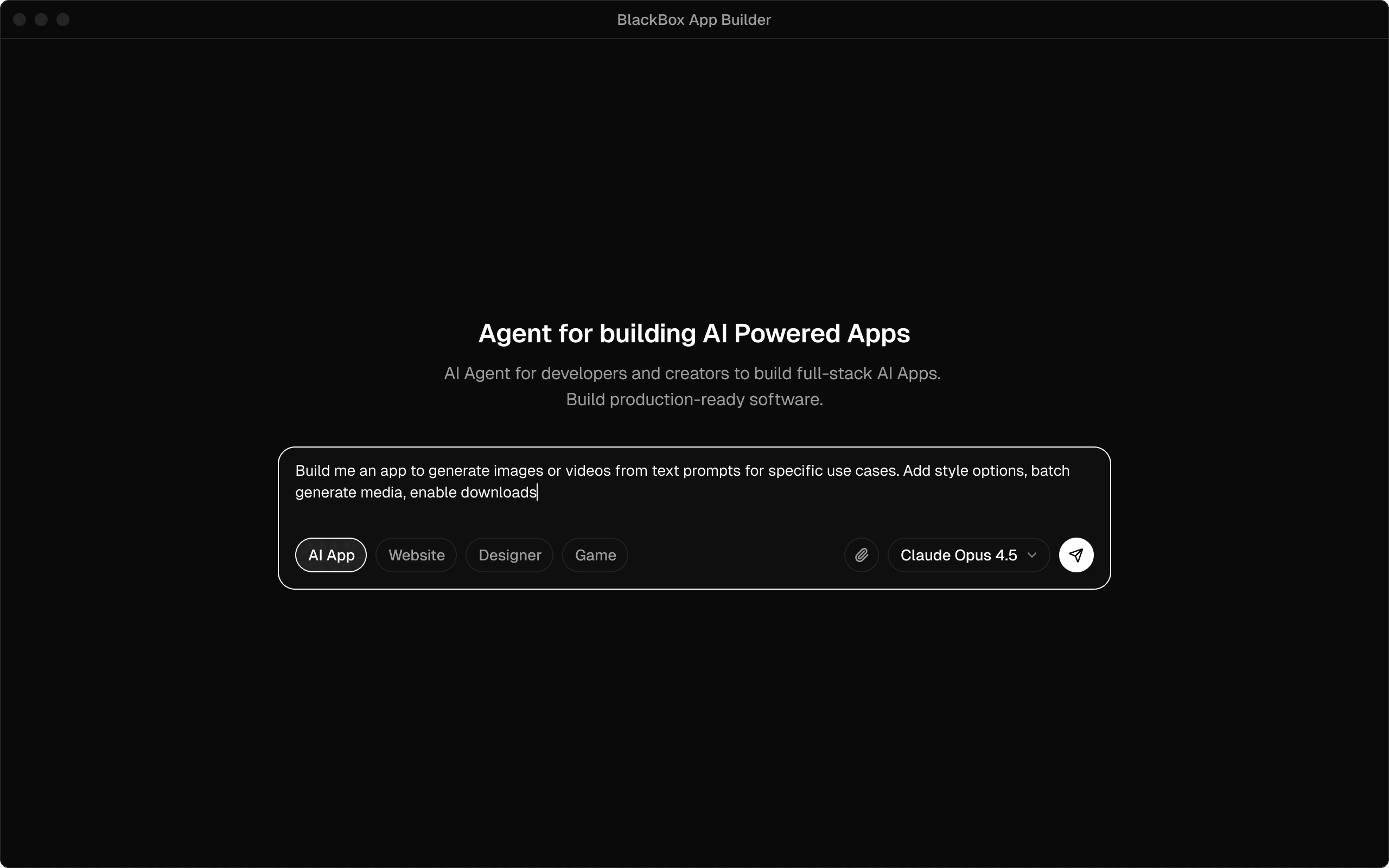
Blackbox first became legible to many users as a browser trick: grab code or text from a video, then paste it somewhere useful. The Chrome extension still advertises screen-area OCR, page context, code chat and a GitHub integration. Its larger identity now sits elsewhere. In VS Code it completes lines, reads project structure, turns instructions into inline diffs and runs multiple coding agents. In a terminal, its CLI can inspect a repository and work headlessly. Builder makes an application from a prose brief. The Agents API dispatches work to sandboxes. The enterprise platform routes traffic across open and closed models or serves an open-weight model on isolated capacity.
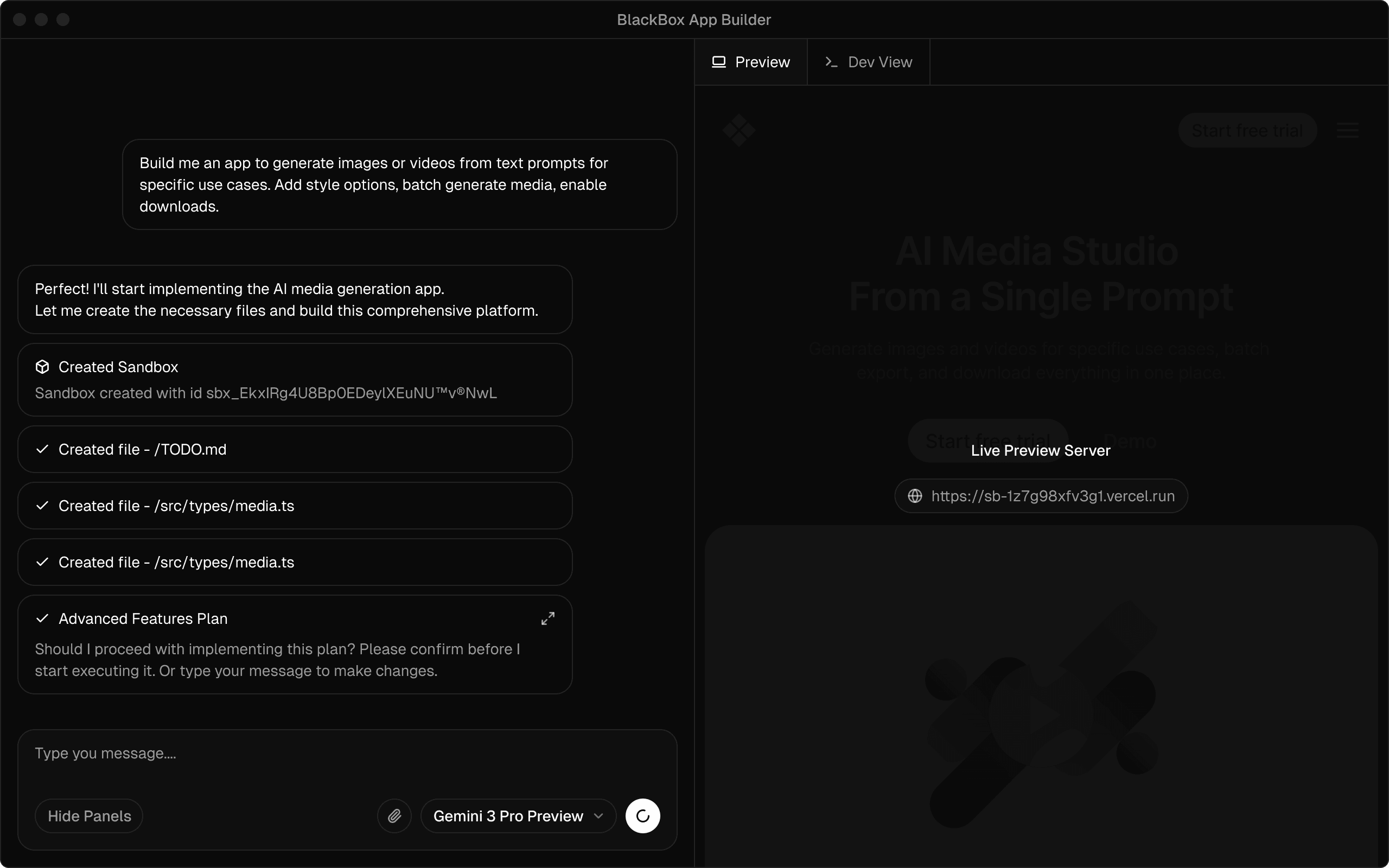
That breadth is Blackbox's advantage and its tax. You can begin in a familiar chat box and end up managing model routes, remote runners and a cloud bill. New users should ignore most of it. Pick one annoying, reversible job: generate unit tests, explain a module, translate a component, or scaffold a disposable prototype. The first question is whether the output saves more review time than it creates.
The multi-agent trick is the point
Most AI coding products sell a conversation with one assistant. Blackbox's more interesting move is orchestration. Its VS Code page says the /multi-agent command can send one task to Blackbox, Claude Code, Codex and Gemini. Results arrive as selectable diffs, while a “Chairman LLM” evaluates the candidates. The value is not mystical consensus. Different models fail differently, and a visible disagreement is a useful warning to slow down.
One prompt enters, one reviewed diff leaves
In July 2026, Blackbox published a more formal version of that instinct on Terminal-Bench v2.1. GPT-5.6 Sol produced an answer, a sandbox-running critic tested it, and Claude Opus 4.8 became the fallback when the test failed. Blackbox reported 90.2 percent pass@1 on the Artificial Analysis basis. It is an impressive published result, but also a specifically engineered pipeline, not proof that every casual prompt will land correctly.
Speed is now part of the pitch
The company increasingly talks like an infrastructure provider. Its current home page leads with encrypted enterprise inference, zero retention and model routing. Blackbox says Artificial Analysis measured its Nemotron 3 Ultra service at 454 output tokens per second in July 2026. In August, it added NVIDIA's Nemotron 3.5 Lightning, a sparse 30-billion-parameter reasoning model with 3 billion active parameters, and reported 1,200.57 tokens per second at the median across a 20-run preview test.
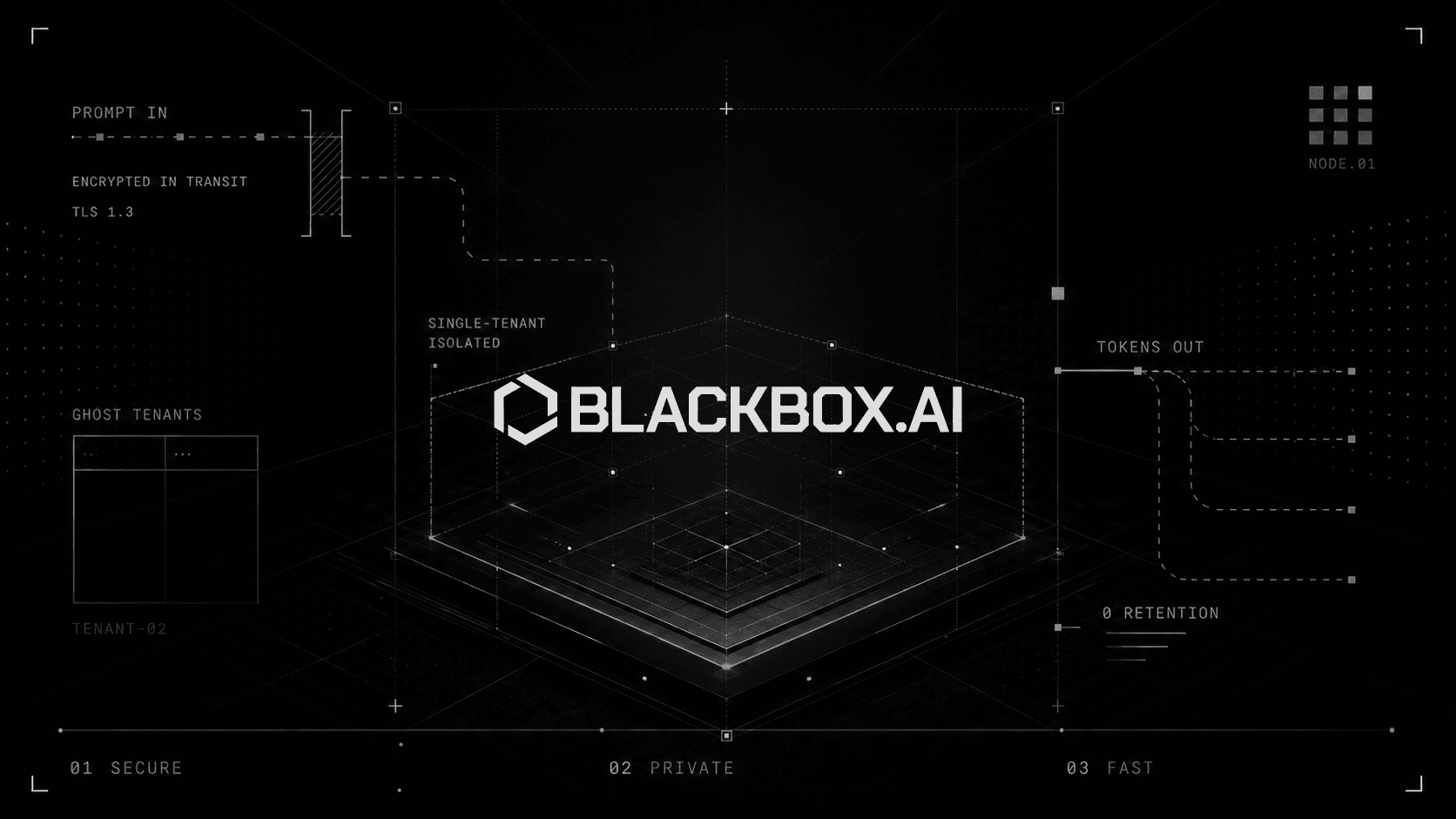
Fast tokens matter when an agent loops through planning, tool calls, tests and repairs. A delay repeated fifty times becomes a coffee break nobody ordered. Yet throughput is not code quality, and an infrastructure benchmark should not be confused with a product review. Blackbox's strongest claim is practical: teams can use one OpenAI-compatible endpoint, apply routing and caching, and swap models without rebuilding the application around every vendor.
Editorial guide, not a laboratory score. “Trust unattended” is intentionally low for every generative coding product.
What users like, and what should make you pause
The happy reviews are concrete. Developers praise quick boilerplate, explanations of inherited code, debugging suggestions and the convenience of working inside VS Code. One G2 reviewer called the smartphone experience fast and liked its voice mode, while also saying it could fall short for professional product work. A Reddit user described treating it as a second pair of eyes for late-night errors, then keeping critical logic for themselves. That is a believable success case because it leaves responsibility in the room.
The unhappy reviews are concrete too. The Chrome Web Store showed a 2.7 out of 5 rating from roughly 1,200 ratings in a 2025 snapshot, with complaints about reliability. Trustpilot's score was 2.4 from 105 reviews when checked in September 2026, and its summary highlighted billing, cancellation and support complaints. Review platforms are imperfect samples, but repeated administrative complaints deserve more attention than a flashy demo. Start free, save the terms shown at checkout, use a payment reminder, and confirm cancellation in writing.
| Choose | When it fits | Watch for |
|---|---|---|
| Blackbox AI | You want many models, multi-agent comparison and several surfaces under one account. | Product breadth, changing plan details and mixed support feedback. |
| GitHub Copilot | Your work already lives in GitHub and mainstream IDE workflows. | A more conventional assistant experience if model orchestration is your priority. |
| Cursor or Windsurf | You want an AI-first editor with deep repository interaction. | Switching editors and learning a new set of habits. |
| Claude Code or Codex | You prefer a focused terminal agent tied closely to one model family. | Less built-in comparison across rival agents. |
| OpenRouter | Your main need is broad model routing for an application. | The product focuses on model routing, with no full coding workspace or app builder. |
The buyer's guide, minus the costume
Blackbox says the product is free to start. Its current enterprise pricing page is token-based: rates differ by model, annual commitment earns discounts, and the company says it charges no seat or platform fee. Dedicated deployments, SAML SSO, SCIM, role controls, audit logs, data residency and custom service levels sit in the enterprise conversation. Older and parallel consumer pages have displayed monthly Pro tiers, so an individual buyer should trust the live checkout in front of them, not a price quoted in an old review.
For security-sensitive teams, the company states that routed traffic uses zero-retention controls where provider APIs support them, with PII removal before closed-model prompts on Enterprise. It also offers dedicated single-tenant deployments for open-weight models. Those are meaningful architectural options. They are not a substitute for reading the contract, mapping data flows and testing what happens when an employee pastes a secret into chat.
Verdict: an orchestra needs an editor
Blackbox AI is most distinctive when it behaves less like a genius in a textbox and more like a practical switchboard. One place can call several coding agents, show their work, route hundreds of models and, for larger buyers, run dedicated inference. That can reduce vendor plumbing and expose useful disagreements. The product's history also gives it an appealing oddness: the tool that helped people steal a stubborn snippet from a tutorial video now sells orchestration architecture and encrypted GPU capacity.
Try it if you build often, enjoy testing tools, and can tell plausible code from dependable code. Put it on boilerplate, prototypes, migrations, tests and code explanation before handing it a deployment key. Skip or postpone it if you want a tiny, settled product, cannot audit generated changes, or need spotless consumer support. Blackbox offers plenty of hands. The one thing it cannot supply is the person who knows when they should stop typing.