ai-coding-assistant
(11)
Continue Made AI Coding Yours. Then It Joined Cursor.
Continue gave developers a rare luxury: the freedom to choose the model behind their coding assistant. The project is now a 35,000-star time capsule, acquired by the rival whose black-box approach it once challenged.

Augment Code Wants the Whole Codebase, Not Just Your Cursor
The coding assistant that made its name remembering giant repositories now wants to run the whole software factory. Its context is sharp; the buying decision is about whether your team needs the factory.

Tabby Keeps the Cloud Out of Your Code
The self-hosted coding assistant gives privacy-minded teams Copilot-style completion, chat and repository context on hardware they control. The bargain is simple: you keep the code, and you also keep the server chores.

Aider Is the Coding Agent With Git Receipts
Aider edits the repo you already have, through the terminal you already use, with the model you choose. Its killer feature is less glamorous than autocomplete: every change leaves a clean Git trail.

MutableAI Put the Codebase on the Record
Before every coding assistant wanted to know your whole repository, MutableAI made the repository write its own field guide. The product is gone, but its sharpest idea now has a second life inside Google.

Blackbox AI Wants Every Model in One Room
The coding assistant that began by rescuing snippets now conducts whole rooms of rival models. It is fast, useful, sprawling - and worth trying with both hands on the wheel.
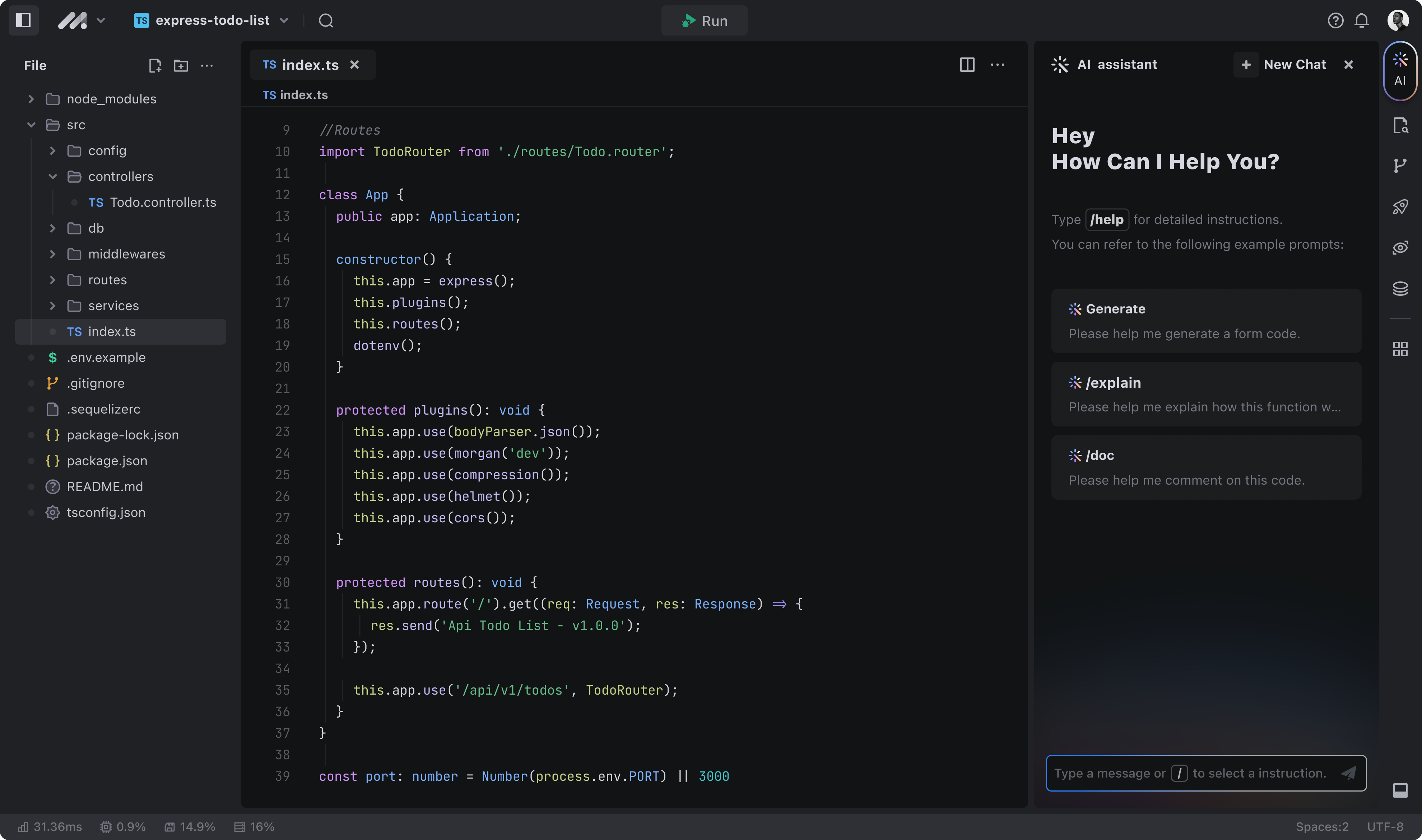
MarsCode Put the Workshop in Your Browser - Then Became Trae
MarsCode tried to make the blank laptop feel less blank: open a browser, import a repo, ask questions, run code. The name has moved on to Trae, but the original product still explains where ByteDance's coding ambitions began.

Tabnine Wants Your AI Coder on a Short Leash
The original AI autocomplete has grown into a governed coding platform for companies that cannot toss private repositories into any convenient cloud. Its bet is simple: in enterprise software, control can matter as much as cleverness.
Bezi
Bezi is a San Francisco software company building an AI assistant that lives inside the Unity game engine. It indexes a developer's entire project in real time - scripts, scenes, assets, packages - so it can debug, generate code and shaders, build editor tools, and automate repetitive work with full project context. Founded in 2021 as a collaborative 3D design tool by ex-Oculus designers, Bezi raised $13M led by Benchmark and later pivoted to focus on AI for game makers, positioning itself as 'AI for building real games, not generating them.'

Windsurf
Windsurf (formerly Codeium, originally Exafunction) is a Mountain View-based AI coding company that built one of the first agentic AI-native IDEs, powered by its Cascade agent. Founded in 2021 by MIT classmates Varun Mohan and Douglas Chen, it grew to over 1 million developers and $82M ARR before a dramatic July 2025 split: Google paid roughly $2.4B to hire its founders and license its technology, while Cognition (maker of Devin) acquired the remaining product, brand, team, and customer base. In June 2026, Cognition relaunched the Windsurf IDE as Devin Desktop, an agent command center for managing local and cloud coding agents.

Sourcegraph
Sourcegraph is a code intelligence platform that lets engineers search, understand, and automate changes across millions of lines of code. Its AI assistant, Cody, brings codebase-aware AI to enterprise development teams - the kind of context most generic coding copilots lack.