The first obstacle to doing data science can arrive before there is any data science. You want to examine a dataset. First, you need Python. Then libraries. Then the right versions of those libraries, which may disagree with the versions already installed. The machine has become a committee. Anaconda’s founding insight was that a great many people wanted to do the analysis without chairing the committee.
- What it does: packages Python tools into usable environments, then adds enterprise controls.
- Who buys: organizations that need repeatable work, software visibility and security policies.
- What to copy: solve the tedious prerequisite to the work people actually care about.
The installer was the insight
Peter Wang and Travis Oliphant founded the company in 2012. Their proposition addressed a peculiar imbalance: open-source scientific computing offered extraordinary possibilities, but assembling the tools could require expertise unrelated to the question a researcher wanted to answer. Access to code and access to a functioning system were different things.
Anaconda Distribution brings Python, the conda package manager, Navigator and hundreds of scientific packages together. Miniconda offers a smaller starting point. Conda resolves dependencies and separates projects into environments; Navigator supplies a graphical interface. A student can launch a notebook, an analyst can explore tables, and an engineer can prepare machine-learning work without assembling every component by hand.
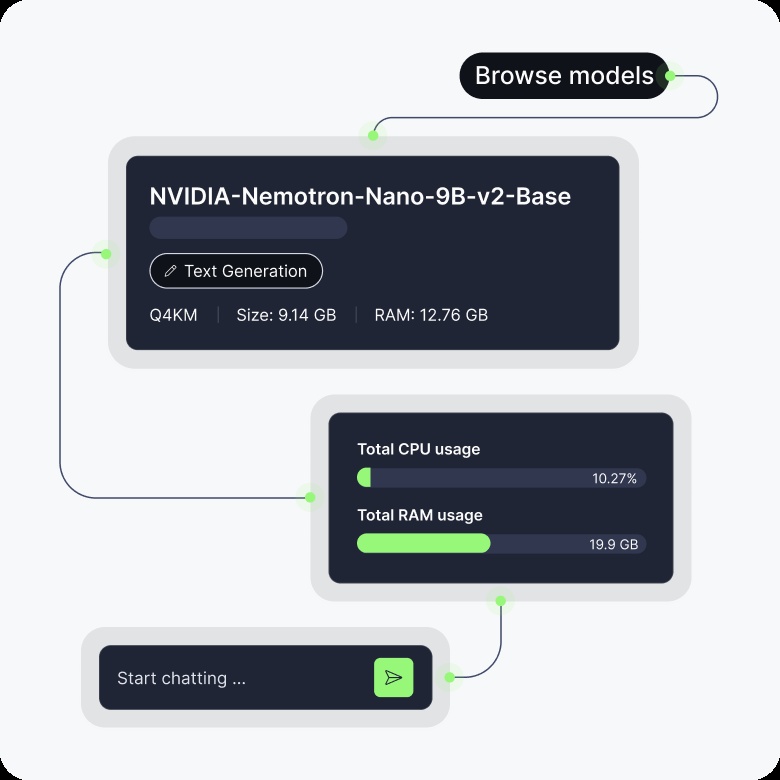
There is a newer variation. Anaconda Desktop, currently in open beta, puts model discovery and local inference alongside environment management. Its model browser includes hardware and licensing filters. The practical question becomes pleasingly ordinary: can this model fit on this computer? Even artificial intelligence must negotiate with RAM.
Free software has a maintenance bill
Making this convenience available had a cost. In its 2021 Dividend Report, Anaconda said it had invested nearly $30 million in incubating and maintaining open-source projects over the preceding years, largely through employee time. Hosting packages, maintaining builds and supporting tools consume real resources, even when the download button says free.
The commercial bargain therefore needs a careful distinction. Conda itself is free and open source. Anaconda’s repositories and platform have commercial terms. Its explanation of those terms notes the expense of supporting the distribution and default channel. The buyer pays for a maintained service and additional controls around software whose individual components may be freely available.
That distinction has needed explaining. Anaconda’s own forum contains users asking whether switching package channels changes their obligations. Wang’s 2025 funding reflection acknowledged lessons about listening and communicating with the community. The lesson for another software business is fairly sharp: familiarity with a free tool does not automatically produce agreement about the price of the service around it.
per user
per user
The broader Platform is quoted per organization. Model inference and cloud compute can bring separate charges.
The buyer sits in another room
The person delighted by a working notebook is not necessarily the person approving the contract. Security staff want vulnerability information. Administrators want access controls. Managers want a colleague to reproduce yesterday’s result. Anaconda’s Business offering includes a private repository, signature verification, software bills of materials and policy filtering. These answer institutional questions that a successful installation alone cannot settle.
Anaconda reported more than 50 million users and adoption within 95% of the Fortune 500 in July 2025. Those figures describe reach, not a census of paying customers. Its financial claim was more specific: profitability and over $150 million in annual recurring revenue at that date. The same announcement disclosed a Series C of more than $150 million led by Insight Partners, with Mubadala Capital participating.
Named users include Panasonic, AmTrust and Booz Allen Hamilton. Distribution also comes through other companies’ familiar rooms. In 2023, Microsoft and Anaconda announced Python in Excel, bringing curated libraries into spreadsheets, with calculations running in Microsoft’s cloud. A June 2025 Databricks partnership brought Anaconda packages into Databricks Runtime. Integration gives the company a route into existing habits.

“Your employees are also investors.”Peter Wang · Fund/Build/Scale · August 2026
Three purchases, one larger perimeter
In 2026, the company widened its remit. April’s Outerbounds acquisition added orchestration built on Metaflow, which originated at Netflix. July brought Kilo Code’s open-source coding agents. August brought Enkrypt AI’s model testing and runtime guardrails. The sequence extends the old environment problem across a longer chain: what gets written, what it depends on, how it runs and what it can do.
Workflow order shown above; acquisition months differ.
A wider perimeter also introduces more places for trouble. Anaconda disclosed that a Metabase incident exposed some Kilo users’ names, email addresses and other data. The incident occurred August 2; Kilo was notified August 6. The company said payment information was not exposed and non-Kilo Anaconda customers were unaffected. Package curation cannot settle every risk introduced by another supplier.
Copy the discipline, not the shopping list
Anaconda competes with simpler ways to assemble environments as well as broader enterprise platforms. A team can use pip and virtual environments, or conda-compatible tools with community channels such as conda-forge. Databricks overlaps with parts of the workflow while also being a partner. The relevant comparison is the work your team must still perform after choosing each option.
A small project with ordinary dependencies may need little of the paid machinery. A regulated organization sharing environments across teams may value it considerably. Neither a curated package catalog nor a unified platform supplies good data, sound experiments or judgment about a model’s output. Governance features still need somebody to decide the rules.
The useful experiment is to take one real project, record its dependencies and recreate it on a second machine. Then ask who approves its packages and who handles an update. Anaconda’s story suggests that the answers to those apparently dull questions can determine whether clever work ever becomes dependable work. The committee still exists. At least somebody has brought an agenda.