Matt Pfeil went to see Jonathan Ellis with a sensible objective: stop him from leaving Rackspace. Ellis wanted to build a company around Apache Cassandra, an open-source database. Pfeil intended to talk him out of it. Instead, he became the co-founder. In April 2010, the two started the business that would become DataStax. The intervention had failed rather productively.
- First, the database: make Cassandra practical for enterprise customers.
- Then, the connection: give AI applications access to company data.
- Now, IBM: bring those tools into the watsonx portfolio.
The intervention that became a company
The original name was Riptano. Its logo was a rhinoceros. In a July 2010 interview, Pfeil described buying an incorporation package for $799. “So for $799, we got everything we needed to start a company,” he said. That bought the paperwork, not the years of engineering ahead.
Ellis brought Cassandra expertise; Pfeil brought experience trying to make it usable across Rackspace’s development teams. Their opportunity was straightforward. Companies could download the database, but somebody still had to answer difficult questions when it misbehaved. Technical support, enterprise software and, eventually, managed infrastructure gave that somebody a business model.
The database behind the booking
Cassandra spreads data across machines. It can replicate records and keep serving requests when individual machines fail, depending on configuration and the failures involved. Capacity grows by adding nodes. This architecture suits applications that face heavy traffic and cannot casually close for maintenance.
Operating that machinery takes work. Astra DB, launched in 2020, shifted much of it to DataStax. Developers could use Cassandra-based storage as a managed cloud service, rather than provision and nurse every cluster themselves. The difference matters most when the database is essential and running databases is not the customer’s main business.
Consider Priceline. Google Cloud’s account of its migration places Astra DB beneath booking and checkout flows. Those are consequential clicks. A travel company needs the transaction infrastructure to work before it can worry about a charming AI travel concierge. Here, DataStax’s expertise sits close to the cash register.
Give the model something worth reading
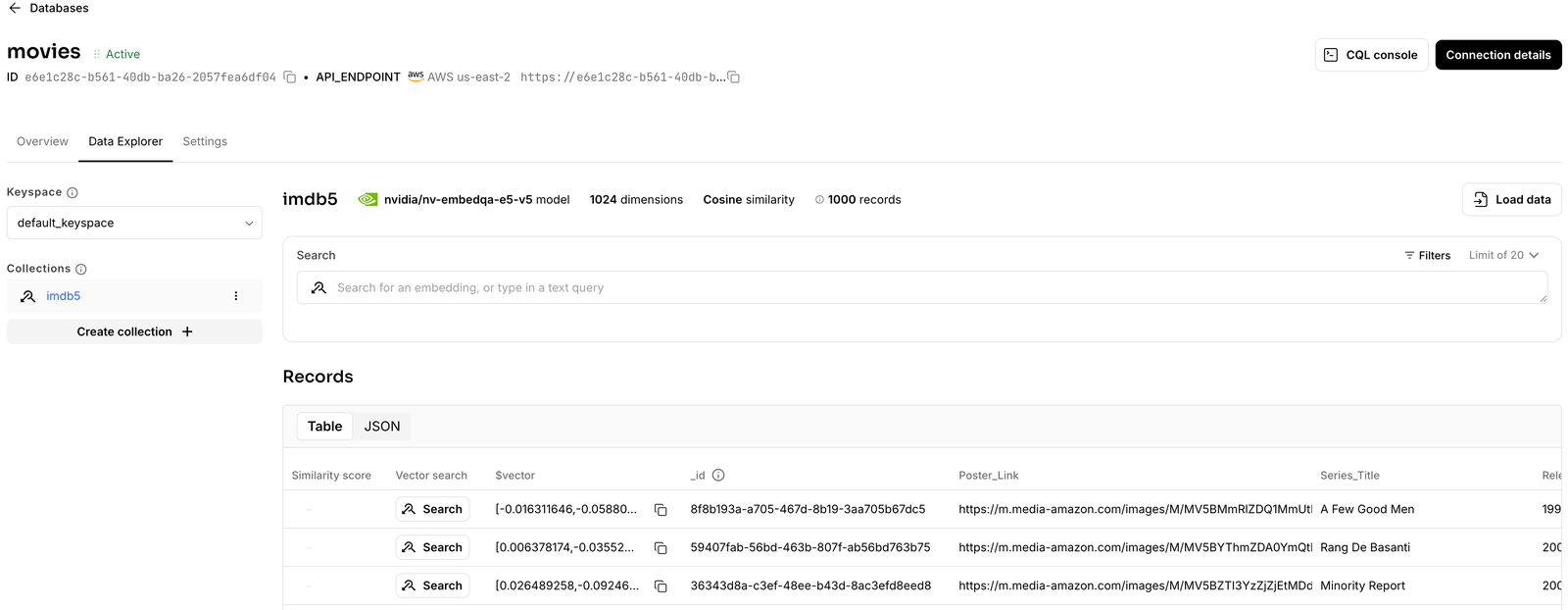
Generative AI added a different retrieval problem. A model’s training does not automatically include a company’s current documents, policies or product catalog. An application needs a way to locate relevant information and supply it with the question. Retrieval-augmented generation, usually shortened to RAG, describes that arrangement.
Vector search helps find material by similarity. Represent a question and documents as numerical embeddings, retrieve useful matches, then pass context to the model. DataStax added this retrieval capability to its database business. The proposition was appealing: keep operational data and AI retrieval closer together, with familiar enterprise infrastructure underneath.
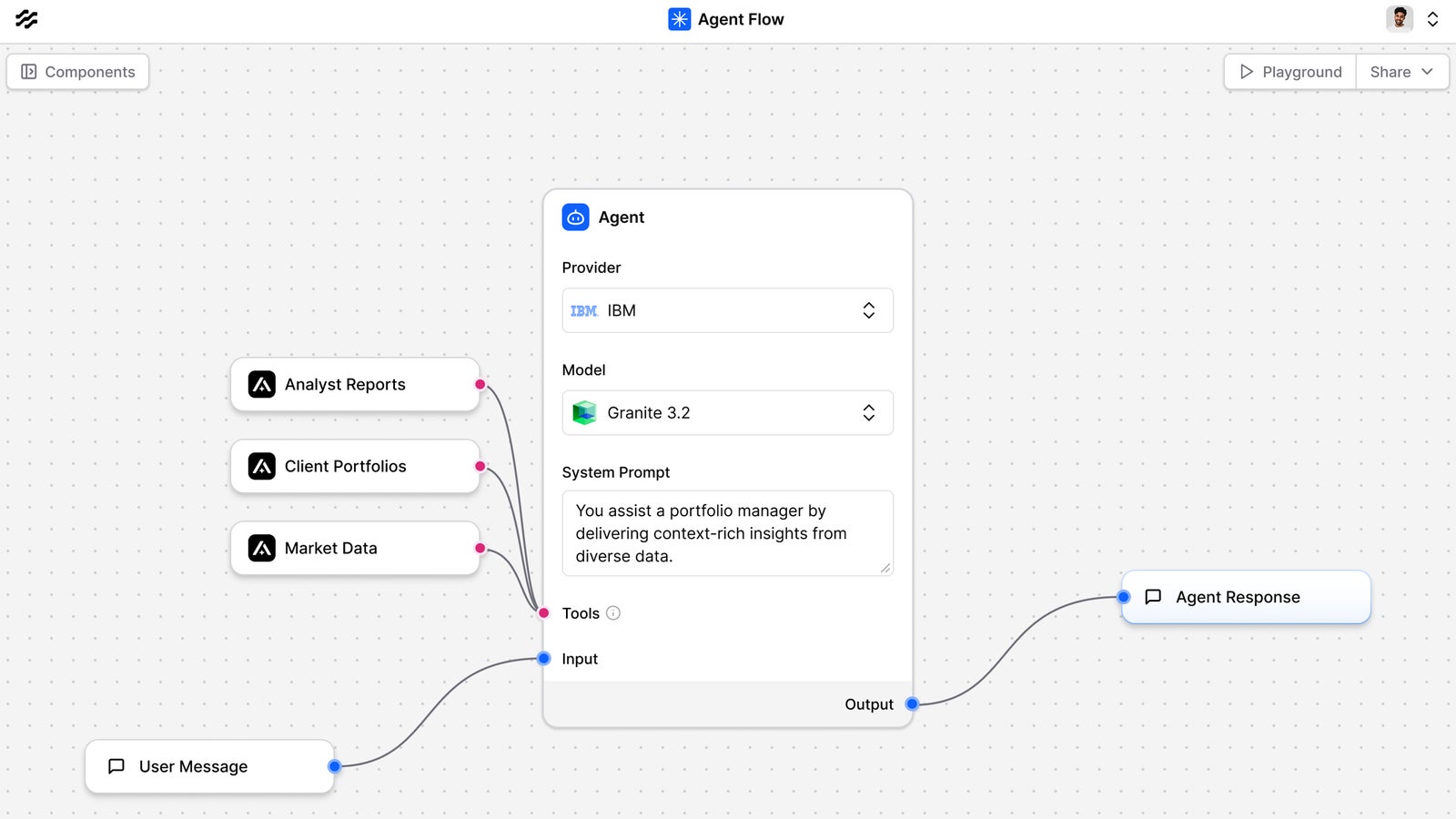
Langflow supplies another piece. DataStax acquired its maker, Logspace, in 2024. The Python-based open-source tool lets developers connect models, data sources and APIs through a visual canvas. A team can inspect the steps between a question and an answer, change a component and test again. It can also build agent workflows that call tools.
These capabilities have uses beyond office chat. A retailer can build a shopping assistant around product information. A support team can retrieve relevant documentation. In its October 2024 NVIDIA-integrated platform announcement, DataStax highlighted PhysicsWallah’s educational applications. Such examples show the intended territory: applications whose answers depend on an organization’s own changing information.
The price of fewer chores
The company sells a mixture of managed services, enterprise software and support. Astra customers pay through service plans and measured consumption or provisioned capacity. Customer-managed products such as DataStax Enterprise and Hyper-Converged Database serve organizations that need more control over infrastructure. Astra Streaming adds Apache Pulsar-based messaging and event delivery.
There is no useful universal price for that bundle. Storage, reads, writes, capacity, deployment choices and support influence the database bill; model calls and embeddings add separate costs. Open-source Langflow’s software license is free, but hosting and operating it still require resources. Compare the complete workload, including the people who run it.
Competition follows the job. A team can operate Cassandra itself. It can consider MongoDB Atlas for document workloads, a specialist such as Pinecone for vector retrieval, or PostgreSQL with pgvector when an existing relational system is sufficient. DataStax’s case is strongest when distributed operational data and AI retrieval belong in the same conversation.
IBM buys the connective tissue
By June 2022, DataStax could raise $115 million in a Goldman Sachs-led financing at a $1.6 billion valuation. Those numbers describe that funding event. They should not be mistaken for IBM’s purchase price. IBM announced its acquisition plans in February 2025 and now presents DataStax as an IBM company.
“We’ve long said that there is no AI without data”Chet Kapoor, then DataStax CEO, February 2025
The fit is concrete: Astra DB and HCD contribute database and retrieval capabilities; Langflow contributes application orchestration. IBM brings them into its watsonx portfolio. IBM’s customer list for DataStax included FedEx, Capital One, The Home Depot and Verizon, an indication of the enterprise audience behind the developer tools.
Product history still matters. DataStax’s hosted Langflow service was removed from Astra on April 9, 2026; official release notes point users to Langflow OSS. The project continues. Astra DB also continues to change: August 2026 brought a Go client and a built-in Data API console. A familiar product name can conceal an important change in delivery.
Copy the method, test the answer
The useful lesson is to start with the obstacle between a working technology and a usable application. DataStax repeatedly worked on that gap. Builders can copy the approach: choose one real task, connect the necessary data, measure retrieval quality and cost, then expand.
The conditions matter. Stale documents produce stale context. Similarity does not establish truth. Permissions must survive retrieval. A small application may not need distributed infrastructure, and a workload dominated by relational transactions may belong elsewhere. The sensible test is wonderfully unglamorous: does this system return the right information, within the required time and budget?