The most revealing number at Pharmascience is not 1,300, the count of stock-keeping units in its medicine cabinet. It is 26,000, the square footage being added to an injectable-drug plant in Candiac, Quebec. Shelves tell you what a pharmaceutical company sells. Concrete, clean rooms and filling lines tell you what it thinks comes next.
The privately owned Montreal company has spent more than four decades doing the useful, largely invisible work of generics: developing versions of established medicines, navigating approvals, producing them consistently and getting them to wholesalers, pharmacies and hospitals. It also sells over-the-counter products, exports medicines and runs Pendopharm, a specialty division that brings licensed branded drugs to Canada.
Now it is making the factory itself part of the product. Pharmascience's Royalmount Biopharma Services unit offers formulation, analytical work, sterile fill-finish and packaging to biotech and pharmaceutical companies. The customer may own the molecule. Pharmascience supplies the regulated choreography required to put it safely into a vial or prefilled syringe.
The business hiding behind the blister pack
Pharmascience began in 1983 with pharmacists Morris Goodman and Ted Wise, plus an R&D team of five. The basic proposition was access: make essential treatments affordable. It sounds plain because the mechanics are not. A generic manufacturer must choose viable molecules, develop equivalent formulations, satisfy regulators, manage patents and monographs, buy ingredients, run validated processes and deliver at prices that public and private payers will tolerate.
That makes the company less like a laboratory with a loading dock and more like a portfolio of synchronized systems. Its generic business covers tablets, capsules, inhaled drugs and injectables. Consumer products put private-label medicines on retail shelves. Pendopharm licenses and commercializes specialty products in areas including gastroenterology, orthopedics, neurology and cardiology. International operations take products and partnership models to more than 50 countries.
The customers change with each door. Wholesalers, pharmacists and hospitals buy medicines. Retailers buy private-label products. Patients are the ultimate users but usually meet Pharmascience through a prescription bottle or store brand, not a splashy direct relationship. Specialty-drug partners use Pendopharm as a Canadian launch and distribution machine. Biotech firms use Royalmount when they have a promising compound but no desire to build a sterile plant from scratch.
One operating base, three ways to earn
Volume and breadth
License and launch
Develop and make
This mix is its clearest distinction. Competitors such as Apotex, Teva, Sandoz and Viatris can fight for the same generic prescriptions. Specialist contract manufacturers can chase the same outsourcing budgets. Pharmascience's pitch is that it already lives on both sides: it understands the product owner's commercial pressure because it owns products, and it understands the contractor's technical burden because it runs the equipment.
“Creating our new CDMO business unit represents an excellent way to maximize the value of our research and development efforts.”Martin Arès, then CEO, 2024
What C$119.33 million buys
Announced in October 2023, the Candiac project combines roughly 26,000 square feet of new manufacturing space with a retrofit of about 7,500 square feet. The target is to more than triple sterile-injectable capacity from its 2021 level and raise annual output above 20 million units. Federal support totals C$29.77 million. Quebec, through Investissement Québec, committed C$24.75 million. Public project records put the total cost at C$119.33 million, commonly rounded by the company to C$120 million.
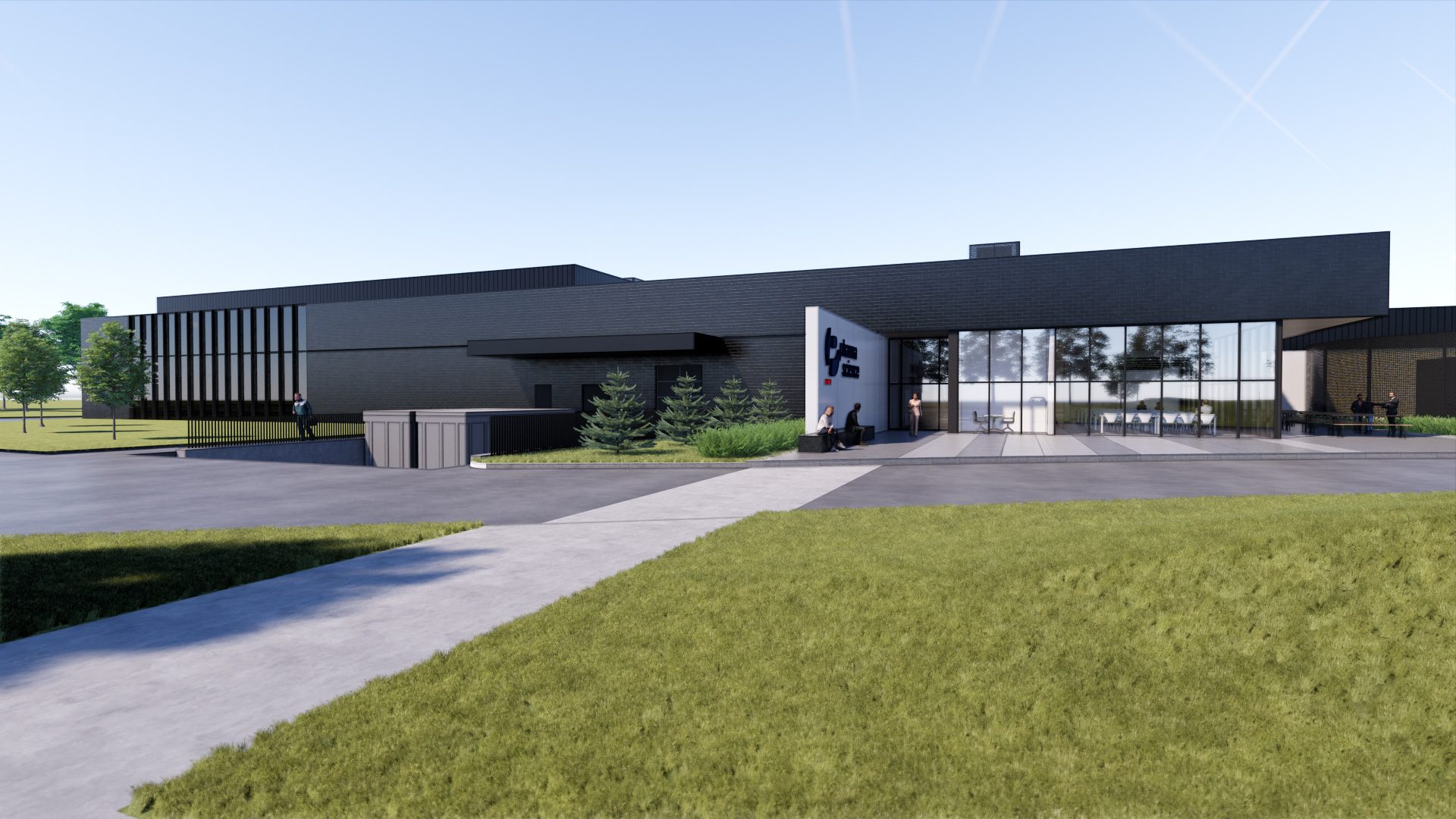
The expansion is not merely more floor. Sterile manufacturing demands controlled air, clean utilities, specialized filling equipment, process validation and relentless documentation. Royalmount advertises work with liquid and lyophilized vials, prefilled syringes and highly potent formulations. It also positions the facility as one of a limited number of North American FDA-approved sites with cytotoxic capability.
The strategic change is easy to miss. Capacity once justified mainly by Pharmascience's own pipeline can now be sold to outside partners. That spreads fixed costs across more programs and makes every validated process potentially more valuable. It also brings a different sales motion. Winning a pharmacy listing is not the same as winning a biotech founder who may be trusting one manufacturing campaign with years of research and most of a startup's cash.
The first thing that failed was trust
Factories do not get to coast on origin stories. In February 2017, Health Canada rated Pharmascience's Royalmount site non-compliant in a regular good-manufacturing-practices inspection. The public inspection database does not narrate the boardroom reaction, so any tale about a single moment that “changed their mind” would be theatre. What the record does show is more useful: the site was compliant on re-inspection five months later, then compliant again in listed inspections in 2018, 2019, 2020, 2022 and January 2024.
That sequence matters because a CDMO sells confidence before it sells millilitres. Pharmascience has also managed product recalls over the years, including a 2022 recall of one hydromorphone lot after a packaging error created a potential overdose risk. Recalls are not unique to one manufacturer. They are reminders that a large catalog multiplies the chances for a small process error to become a consequential event.
The lesson is less cinematic than a turnaround slogan. Quality is a renewable license. Pass, document, repeat. For Pharmascience, the expansion makes that repetition harder because there will be more equipment, more partner programs and more production volume. It also makes the repetition more valuable. A current compliance record is part of what persuades an outside drugmaker not to spend hundreds of millions building its own plant.
The playbook you can steal
The copyable move is not “build a pharmaceutical factory.” It is to inspect the expensive capability your core business forced you to master. Maybe it is compliance, fulfillment, fraud detection, localization or a specialized production line. If adjacent companies face the same problem but cannot justify the fixed cost, your internal machinery may be a service waiting for a name, a sales team and a service-level agreement.
Pharmascience followed the sequence neatly. First, build the capability for owned products. Second, prove it under demanding regulators. Third, identify external customers with a concentrated pain point - in this case complex sterile injectables. Fourth, create a dedicated commercial unit rather than expecting an internal operations team to sell itself. Finally, expand only when capital, government policy and market demand can share the load.
The capability is scarce, externally legible and already exercised by the core business. Buyers save years of capital, hiring and validation work.
Capacity sits idle, service work distracts the core team, customers create incompatible demands or one quality event damages every line of business.
The model is particularly unforgiving in generics. Prices are constrained, rivals are experienced and the cheapest plant is not necessarily nearby. New Candiac capacity has to win enough programs to cover expensive fixed infrastructure while preserving delivery for Pharmascience's own products. Public subsidies soften the upfront bill; they do not manufacture customer demand.
It also will not work everywhere. A company without regulatory credibility cannot simply rename its back office a platform. A capability that is common, poorly measured or deeply entangled with proprietary workflows may have no external market. And a factory optimized for one stable product can become clumsy when ten biotech customers each arrive with a special case.
Where the bet lands
Pharmascience sits between the giant global generics groups and the narrow specialist manufacturer. It is large enough to support R&D, regulatory affairs, international distribution and multiple dosage forms, but still presents itself as Canadian-owned, Montreal-rooted and quicker in partnerships than a multinational. The company says it invests roughly C$40 million to C$65 million in R&D annually, depending on the reporting period and definition, and it reached 49th among Canada's top corporate R&D investors for 2024.
Its social license is local as well as industrial. More than 300 employees volunteer during the annual Morris Goodman Community Day. The company reports a relationship of more than two decades with Health Partners International of Canada and more than C$70 million in donated essential medicines. Great Place to Work placed it among Canada's Top 50 Best Workplaces in 2024. Those credentials help with recruiting, but the hard culture test is whether the same care survives a production rush at 2 a.m.
Jim Vounassis became CEO in January 2026 with three stated priorities: pharmaceutical sovereignty, digital transformation and sustainable growth at home and abroad. Product launches followed, including pms-SACUBITRIL-VALSARTAN, pms-DOLUTEGRAVIR and pms-BILASTINE. The portfolio keeps moving while Candiac comes online.
“Together, we will continue to develop and manufacture high-quality medicines in Canada.”Jim Vounassis, CEO
That is the tension worth watching. Pharmascience was built to make established therapies affordable. Its next growth engine asks customers to pay for the capability behind that affordability. If the expanded plant stays busy and the quality record stays boring, the company will have turned a costly internal discipline into an exportable business. In pharmaceuticals, boring can be the most bankable outcome in the building.