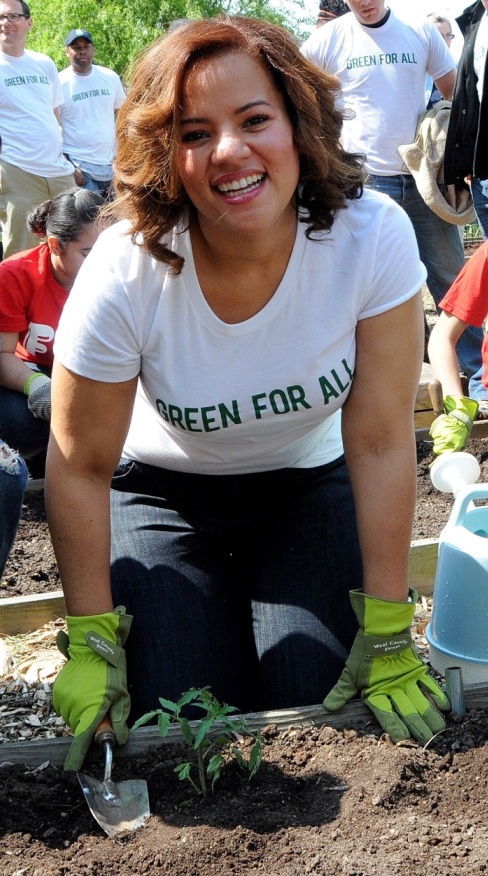
Mid-stride with Phaedra Ellis-Lamkins
She showed up to the Y Combinator interview in a minivan. Her co-founder wore Birkenstocks and flower-print jeans. The other applicants in the room were pitching ideas about literally freezing human brains. The interviewers looked at Phaedra Ellis-Lamkins and Diana Frappier with all the warmth reserved for obvious misfits. Then they got in.
That was 2018. Today, Promise - the company they built from nothing but a shared conviction that government payment systems punish poor people for being poor - is worth $520 million. Ellis-Lamkins, its co-founder and CEO, holds a spot on the Forbes Self-Made 250 at #247. Promise serves over five million households across more than twenty states, helping municipalities and utilities collect what they're owed by offering the one thing their payment systems had never considered: grace.
Revenue is a strategy for change. In our case, we can control how the capital is made.
- Phaedra Ellis-LamkinsThe thing about Ellis-Lamkins is that she did not arrive at technology from a computer science program or a stint at Google. She arrived from labor. After graduating from California State University, Northridge in 1998, she spent the next decade organizing unions, running the South Bay AFL-CIO Labor Council - which represented over 110,000 members across 100+ unions - and building coalitions that expanded the first county-based universal children's health insurance program to cover 160,000 kids. Her version of disruption involved legislative hearings, picket lines, and community benefits agreements negotiated at city hall.
Then, in 2009, she became CEO of Green For All, the organization founded by Van Jones to push for equity provisions in U.S. climate legislation. Under her watch, Green For All secured $860 million for green job training in a House-approved climate bill. When you understand that backstory, the logic behind Promise becomes obvious: Ellis-Lamkins has never worked anywhere that wasn't trying to fix a system designed to exclude the people she grew up around.
Delivering human dignity to your customers is more than just good practice. It can actually be an engine of scale.
- Phaedra Ellis-Lamkins, Masters of ScaleBetween Green For All and Promise came an interlude few would predict on a resume: managing Prince. Ellis-Lamkins joined the artist as a digital-rights management advisor and, in the end, helped him achieve the thing he had been fighting for his entire career - ownership of his master recordings. Van Jones, who had introduced them, later said it was "the happiest I have ever seen him." Prince, in turn, gave Ellis-Lamkins something she has carried ever since: a bone-deep belief in what she's capable of doing. "I don't think I've ever had someone have a more complete belief in my skills," she has said. "Prince made me feel magical."
He also gave her a piece of advice she quotes often. If you want to play Madison Square Garden, you'd better get used to booing. If you don't like booing, play in your backyard.
She chose Madison Square Garden.
People will pay you back if you make it easy for them - which is what we do for people with good credit. We just don't do it for poor people.
- Phaedra Ellis-LamkinsPromise began as a bail reform play. Ellis-Lamkins had watched the criminal justice system trap low-income people in pre-trial detention not because of what they'd done but because of what they couldn't afford to pay. The company built tools to help people navigate that system. Then she attended a meeting where a state official boasted about keeping someone locked up for years over a marijuana charge, and she understood something structural: a system that financially benefits from incarceration has no incentive to reduce it. She walked out of that meeting and came back to her investors with a pivot - mid-revenue, mid-growth - to redirect Promise toward utilities and government agencies.
The early thesis was proven by paying off parking tickets for strangers willing to repay. The Promise team did this without reliable home addresses, without credit checks, without any of the gatekeeping the system treats as essential. Over 90% paid them back. The standard government recovery rate for such debts: under 25%. The gap between those two numbers is the entire Promise business model.
Today, Promise offers three core products: flexible, zero-interest repayment options for utility bills and government fees; automated benefit enrollment that pulls from existing government data (SNAP records, housing files) to enroll eligible people without requiring them to navigate bureaucratic paperwork; and modern income verification systems that replace punishing proof-of-poverty rituals with what Ellis-Lamkins calls "self-attestation" - where people qualify based on their word, with the government retaining audit rights.
The 2021 Series A raised $20 million - one of the largest rounds ever for a Black, women-led startup - from Kapor Capital, Bronze, First Round Capital, and Roc Nation. The company has been profitable and growing year over year. Annual revenue now exceeds $33 million.
I am driven by the possibility of bringing dignity and grace to people who look like me.
- Phaedra Ellis-LamkinsEllis-Lamkins grew up without money. Her mother worked as a waitress at Bill's Place in San Francisco. When her mother finally got a union job - the kind of job her daughter would later spend years fighting for others to access - Phaedra's school lunch status changed from free to reduced-price. She has described that moment as formative, a window into how invisible the mechanics of economic mobility really are when you're a child living them.
She attended community college and then a state school. In Silicon Valley rooms where pattern recognition favors Ivy League degrees and former Google engineers, Ellis-Lamkins has consistently been the misfit - in demographic, in background, in the kind of problems she thinks are worth solving. She does not treat this as an obstacle. She treats it as the explanation for why those problems remain unsolved. "The problems I tackle remain unsolved because there aren't enough CEOs who look and think like me," she has said. Not as a complaint. As a market analysis.
She has spoken candidly about the pressure of representing not just her company but a data point that the venture capital industry will use - or misuse - to inform future bets on Black women founders, who receive less than half a percent of annual VC investment. Success, for Ellis-Lamkins, has always been measured by whether people's lives actually improve. By that measure, Promise is doing exactly what it set out to do.
Five Stories Worth Knowing
When her mother finally got a union job after years as a waitress, Phaedra's school lunch status shifted from free to reduced-price. It was, in a very specific way, evidence of progress - and the start of a lifelong obsession with understanding how systems of support actually work for the people inside them.
She and co-founder Diana Frappier drove to their Y Combinator interview in a minivan. Diana wore Birkenstocks and flower-print jeans. The room was full of younger applicants talking about brain freezing technology and frontier AI. They got in. Neither prototype nor engineer in hand - just a conviction about what government payment systems were doing to struggling families.
While Promise was still in its bail reform phase, Ellis-Lamkins attended a meeting where a state official casually bragged about keeping someone locked up pre-trial for years over a marijuana arrest. She left that meeting and went straight back to her investors to propose a full pivot - not because the bail reform product wasn't working, but because she understood the structural incentives of the system would never allow it to work the way she intended.
The earliest version of Promise's thesis was tested by paying off parking tickets for strangers willing to eventually pay them back - no credit check, no reliable home address required. More than 90% paid back. The lesson she drew from that: people don't want to be in debt. They want it to be easy to get out of it. Government systems, by design, make it hard.
After years managing Prince and helping him secure ownership of his masters - a lifelong ambition he finally achieved - she took with her something more durable than a deal: the belief that failure is never personal, only a failure to fully access what you're already capable of. "If something didn't happen the way he wanted," she has said, "it was clear to him that I had failed to understand my magic or had failed to assert it."