Some money is oddly bossy. It arrives on a rectangle of plastic, announces a dollar value, and then begins listing conditions. Spend it here. Do not deposit it there. Remember the balance. Mind the expiration rules. Try not to lose it in the drawer where spare keys, old batteries, and optimistic coupons go to retire.
Peter Vogt built a company around that minor domestic absurdity. Prepaid2Cash converts eligible prepaid and gift-card balances into cash. The pitch is pleasingly short because the problem is already familiar: people own the value, but the format limits what they can do with it. A card may buy dinner and still be useless for rent. It can sit in a wallet looking liquid while behaving like store credit in a tiny suit.
Vogt had the background to see more than an inconvenience. He had worked in financial analysis, fintech investment banking, private equity, and company operations. He could look at a stubborn piece of plastic and see payment rails, fraud controls, settlement, pricing, and a consumer proposition. The little annoyance contained an entire business.
The analyst learns to build
Vogt was born and raised in Seattle. He went south for college, studying finance and economics at Saint Mary's College of California and graduating with honors in 2006. His campus record suggests someone already comfortable moving between numbers and institutions: Business Club treasurer, student senator, peer mentor, member of an academic appeals committee.
His first professional stop was National Semiconductor, where he worked as a financial analyst. A year later he joined Financial Technology Partners in San Francisco. The firm specializes in the sector its name advertises, and Vogt worked on mergers, acquisitions, and private placements for fintech clients. There he met John Gushman, the colleague who would later become his co-founder.
The pair first learned the industry from the adviser side of the table. They watched how payments companies were valued, financed, sold, and explained. That is useful training for a founder, though not a substitute for founding. A banker can build a model in which every cell agrees. A consumer will still forget a gift card in a kitchen drawer.
Vogt moved into private equity in 2009, working with GESD Capital Partners and then Murano Group. At Murano, he rose to vice president and worked on growth investments and buyouts, especially in food and beverage. He became involved in sourcing, transaction structures, capital markets, and portfolio oversight. In 2013, he stepped directly into operations as interim chief financial officer of A.G. Ferrari Foods after its acquisition.
From spreadsheet to scan
That sequence gave him a view of business from several altitudes. Analysis asks what happened. Banking asks what a company is worth to someone else. Private equity asks what it could become under new ownership. Operating asks whether payroll, customers, and tomorrow morning all fit inside the same plan. Prepaid2Cash would require the full stack.
Money, with fewer instructions
Vogt and Gushman kept returning to the restrictions around prepaid cards. Network-branded cards from Visa, Mastercard, American Express, or Discover looked broadly spendable, but the funds could not simply be swept into savings or used like ordinary cash. Store gift cards were narrower. The founders described their money as being “held hostage by little plastic cards.”
They launched Prepaid2Cash to the public in 2016. The product translated a complicated process into a phone-sized gesture: enter the necessary information, scan the card, choose a payout path. The company handled both network-branded prepaid cards and retailer gift cards, buying the balance at a discount and sending the user cash.
Liquidity is a feature.
A dollar that can travel to a bank account is more useful than a dollar restricted to one card or one store. Prepaid2Cash charges for making that value movable.
The model depends on a distinction finance people understand instinctively: face value and usable value are not always identical. A $100 card may say $100 on the front, yet be worth less to the owner who cannot spend it where the next bill is due. Prepaid2Cash lives inside that gap. The customer accepts a discount in exchange for flexibility; the company earns a fee or spread for the conversion.
There is no magic in the description, which is part of its charm. The hard work hides behind the scan: confirming value, managing fraud, moving funds, and creating enough trust for a customer to hand over card credentials. In payments, simplicity on the screen is often purchased with complexity behind it.
A westward habit, reversed
By 2019, Vogt had spent 13 years in San Francisco. Startup mythology usually treats that city as a destination. His next move reversed the arrow. After Prepaid2Cash secured backing from the Alabama Futures Fund, the company announced that it would relocate its headquarters to Birmingham and establish a base at Innovation Depot.
The case for Birmingham was operational rather than romantic. Costs were friendlier than Silicon Valley. Local universities supplied talent. Historic buildings provided infrastructure. Most of all, Vogt found a technology community that behaved like one. People made introductions, opened their contact lists, and helped the newcomers find their footing.
“There is a great talent pool with the local universities, immense infrastructure in the historical buildings, and a community that is intensely focused on embracing technology companies.”Peter Vogt on Birmingham, 2019
His language about the reception was notably grateful. He said the team's access to local business leaders made them feel “humbled and grateful.” This was not the standard founder-arrives-to-disrupt script. It sounded like a relocation with manners.
The human details were less strategic and more edible. Vogt liked the brisket at Jim 'N Nick's. Fried okra and fried green tomatoes, he admitted, were “growing on me.” Every cross-country business plan eventually meets a lunch menu. Birmingham was becoming both headquarters and habitat.
Two sides of the capital table
Vogt did not abandon investing when he became a founder. In 2017, he became a managing partner at Hayden Creek Capital, a principal investment firm focused on lower-middle-market companies in consumer food and beverage, business services, and distribution. The roles are complementary and occasionally mirror images. At Prepaid2Cash he raises capital, allocates it, and answers for the operating result. At Hayden Creek he evaluates teams that must do the same.
The investment work has remained active. Axial ranked Hayden Creek among its top 20 independent sponsors in 2024, then placed the firm sixth in 2025. Its public deal directory records acquisitions including Bin to Bottle in 2024 and Anthony's Ladies Apparel in 2025. The categories are far from gift cards, but the discipline travels: understand cash flow, find the constraint, decide whether capital and attention can improve the outcome.
At Prepaid2Cash, a larger vote of confidence arrived in July 2021. The company closed a $5.1 million Series A led by Benson Capital Partners and Relevance Ventures, with Alabama Futures Fund participating. Vogt's public note put the team first, saying he was proud of their work and grateful for the investors' belief.
“Proud of our Prepaid2Cash team for all their hard work in getting us to this point. Excited for the opportunities ahead.”Peter Vogt after the Series A
The card keeps changing
In 2023, Vogt joined the Forbes Finance Council, saying he wanted to connect with other finance professionals and share what he had learned about fintech, private equity, and gift cards. He published two pieces in early 2024. One examined digital gifting; the other treated gift cards as tools for retailers and consumers during an inflationary period.
His argument widened the frame. Gift cards are not only presents. Retailers receive cash before merchandise leaves the shelf. Consumers use cards to plan spending, stretch budgets, or pass value to someone else. Digital formats can personalize the experience, while secondary markets create fraud challenges that demand better controls. The humble card sits at the intersection of sentiment, accounting, software, and trust.
That is also where Vogt's career has settled. He is an investor who became an operator without ceasing to invest, and a fintech founder whose product begins with something almost comically ordinary. His story does not require a futuristic object. It requires a familiar one viewed without accepting its rules.
The useful insight is not merely that unused cards contain money. Everyone who has cleaned a drawer knows that. The insight is that inconvenience has an exchange rate. People will surrender a little face value to gain control, speed, and choice. Build the rails safely enough, and frustration becomes a transaction.
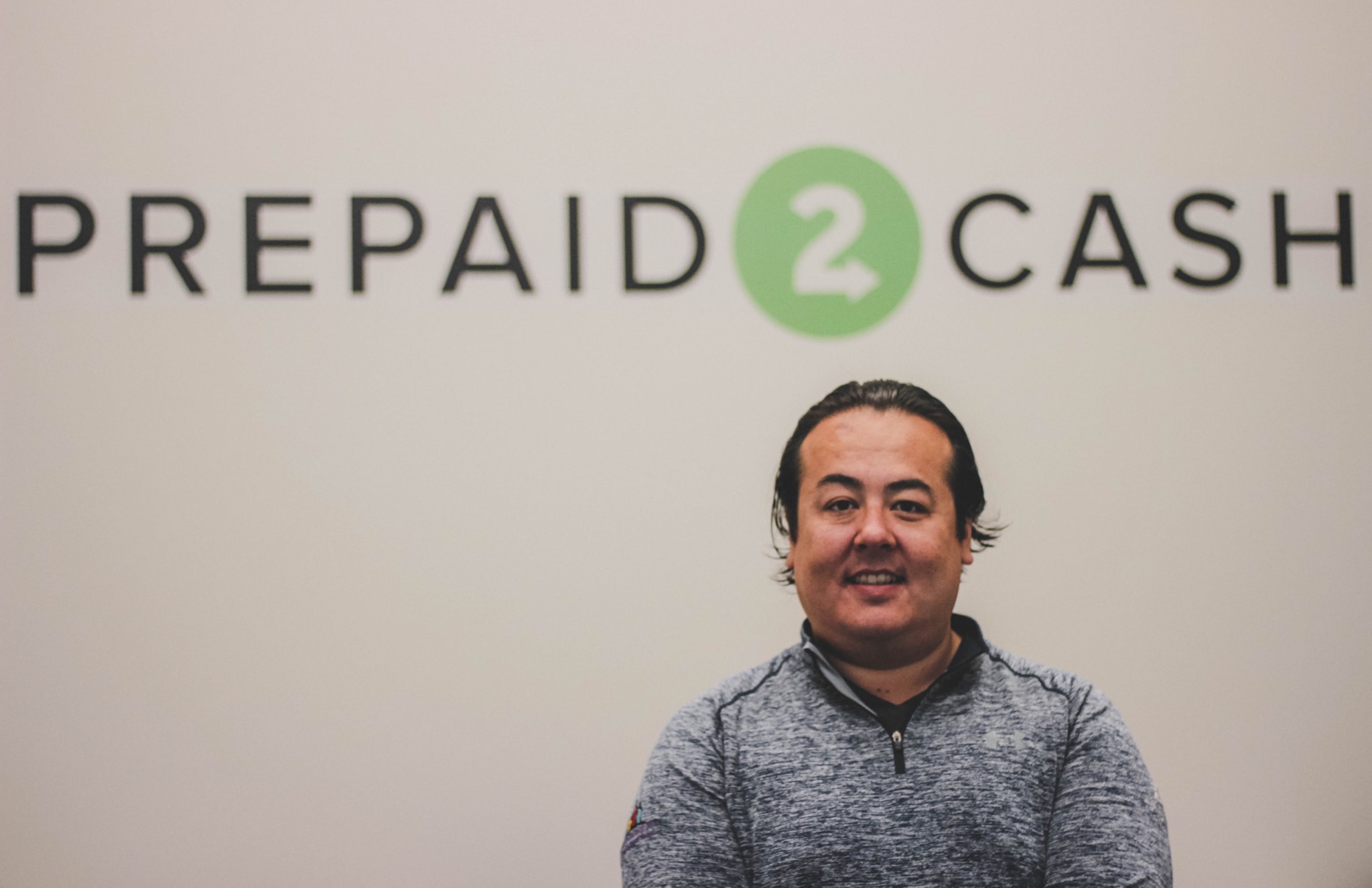
Vogt followed that transaction from Seattle to California finance, from spreadsheets to company operations, and from San Francisco to a Birmingham office with the company name spread across the wall. The plastic card remains small. The system around it is anything but.