At 21, Avi Patchava began playing poker with a group of roughly two dozen amateurs. He won two tournaments within a month. A promising beginning, certainly, though a card table has ways of correcting a young person's opinion of himself. Years later, he would turn the experience into an essay for data scientists: learn to read incomplete information, listen to feedback, and make decisions before certainty arrives.
The detail belongs in the story of Bright Money's co-founder and co-CEO because his career keeps returning to that problem. Economics, advertising algorithms, consumer finance, hiring: each asks someone to act on a partial view of the world. Patchava has spent his working life trying to improve that view. His extracurricular reading suggests he would also like to inspect several other worlds before dinner.
Based in Bengaluru, he helps lead a company built to serve American consumers. The journey runs through Oxford, the London School of Economics, McKinsey and InMobi. But the interesting part is less the collection of institutions than the habits he carried between them: questioning a model, explaining an idea, and treating learning as work that deserves time on the calendar.
A philosopher walks into a data team
Patchava studied philosophy, politics and economics at Oxford, attending from 2003 to 2006. At the London School of Economics, his postgraduate studies included philosophy and research economics. Advanced logic and set theory sit alongside the economics in his educational record. It is a background that makes room for both a calculation and an argument about what the calculation actually means.
His early public writing makes that combination unusually visible. In 2009, he dedicated a poem about the Annapurna range to his grandmother, Jayabharathi Patchava, who had encouraged him to write about his travels. The poem's accompanying explanation identifies mountains, a friend, and his younger sister among its allusions. Before the product frameworks came a family request to put an experience into words.
By 2011, his poetry had appeared in Philosoverse, an LSE philosophy publication. Its acknowledgements credit him with helping generate and circulate ideas. The contribution is a useful small detail: he was willing to work on the circulation of thought as well as its composition. A philosophy magazine offers rather different returns from a startup, but both need someone to get things moving.
When the model meets the factory
At McKinsey, Patchava worked in advanced analytics, alongside strategy and operations assignments. He later became vice-president of data sciences and machine learning at InMobi. His work there reached across advertising, market research and consumer products, including Glance. The move brought an economist's interest in behavior into contact with software making decisions at considerable speed.
One earlier project, described in an essay he co-wrote with Paul Meinshausen, involved a machine-learning control system in a steel plant. Thousands of sensor measurements and several upstream processes complicated the task. The team made progress by drawing the system on a whiteboard, deciding which variables mattered and making its assumptions explicit. The whiteboard is a pleasingly modest supporting actor in a story about advanced computation.
The essay argues for hypotheses, clear models and results that can be reproduced. Its concern is practical: a statistical tool can be impressive while answering the wrong question. Patchava's scientific outlook asks what produces the data and what decisions a model can usefully inform. Those questions travel well. A factory and a household have different machinery, but neither benefits much from a beautifully calculated misunderstanding.
Ten billion chances to learn
In a 2018 interview, Patchava explained InMobi's advertising business through the decisions behind an ad request. A system estimates whether a person will respond, gives the opportunity a value, and bids for it. At the time, the network handled more than ten billion requests a day. Nobody was going to work through that queue with a pencil.
He also described the problem of a new advertiser or application without much historical information. The system has to learn from fresh responses, then change where it commits resources. That account puts feedback at the center of the business. Prediction begins a decision; the outcome supplies another lesson.
Teaching formed another part of his InMobi work. His professional biography records launching a machine-learning academy, with 800 employees participating and 150 engineers graduating. It also describes a university research program involving four universities. The numbers belong to that earlier period. They show a leader spending effort on the people around the models, as well as the models themselves.
“I will not lose my fire for research.”
Avi Patchava, The Data Scientist Manifesto, 2018
He even wrote a poem about the profession. The Data Scientist Manifesto complains about employers who want academic credentials, obedient execution, clever technical work and eloquent storytelling in the same package. Its speaker insists on inquiry, building and creative independence. The exasperation is recognizable to anyone whose job description has gradually become a small department.
From an ad auction to a credit card bill
Bright Money began in 2019. Patchava's co-founder and fellow co-CEO, Petko Plachkov, had met him at McKinsey. The founding group also drew on people with shared InMobi experience, including Varun Modi, Avinash Ramakanth and Amit Bendale, alongside consumer product experience from Alex Seyfert. Relationships formed in earlier jobs became part of the new company's working infrastructure.
The founding proposition was personalized financial planning for consumers who would ordinarily lack a dedicated adviser. Bright's MoneyScience system used financial data to organize decisions about debt and savings. At launch, that meant paying attention to an individual's cash flows and obligations rather than handing everyone the same plan. A credit card bill is an unforgiving place to discover that your customer is an average who does not exist.
In September 2021, Bright announced $31 million in Series A funding from Sequoia Capital India, Falcon Edge Capital and Hummingbird Ventures. It had spent about two years in stealth and reported 30,000 users. The investors also connected it to a wider network: Bright belonged to the first Surge cohort, and its angel backers included InMobi founders Naveen Tewari and Abhay Singhal.
- 2019Bright Money begins
- 2021$31m Series A announced
- 2023$12m equity + $50m debt announced
A seat at the table, with homework
As Bright developed, Patchava wrote about organizing decisions through small groups he called brain trusts, drawing inspiration from Pixar's approach. Participants were expected to contribute both ideas and judgment. Seniority was not supposed to settle an argument, and membership came with responsibility for doing the work once a direction had been chosen.
His preferred groups began with three people and generally stayed within four to seven. He described their use across product, business strategy, design, revenue and people decisions. The attraction is understandable: enough minds to test an idea, few enough chairs that everyone has to speak. An observer hoping to attend purely for the biscuits would have had a difficult time qualifying.
Another framework, his twelve Ps of product leadership, ranges from purpose and persona to people, presentation and profit. The list makes his expectations explicit. Technical leaders need to understand the product's entire life, including its user and its economics. It is a broad remit, and one that connects the builder's decisions to the business they eventually create.
The candidate who can listen
Patchava's hiring essay provides a more personal glimpse of his leadership preferences. Clear thinking and analytical ability matter. So do humility, persistence and considerate communication. He separates fluency in English from the effort required to make yourself understood. That distinction gives the hiring conversation something more useful to measure than polished delivery alone.
He also describes giving candidates difficult questions and watching how they respond to guidance. The ability to listen becomes evidence of the ability to learn. His stated preference can favor a less accomplished applicant with strong motivation to improve over one who already scores higher. It puts considerable responsibility on the employer to create conditions where that improvement happens.
In a separate essay on predictive management, he asks leaders to anticipate where a team member may struggle and coach that specific weakness. Waiting for failure can be expensive. Yet his earlier writing on developing a chief data scientist places the burden of creating the role on the CEO. Across these arguments, leadership involves building capability rather than simply buying it in the hiring market.
A business gets dealt another hand
The company story includes a difficult turn. In July 2022, Bright restructured and laid off employees during the startup funding downturn. Patchava publicly confirmed the restructuring. It is a necessary part of the chronology of a founder who writes about judgment: decisions have consequences for colleagues as well as customers, and growing a company involves choices that cannot be made pleasant by a framework.
By September 2023, Bright announced another financing package: $12 million in equity from existing investors Alpha Wave, Hummingbird and Peak XV Partners, plus a $50 million debt facility from Encina Lender Finance. Patchava reported sixfold growth over the preceding year and a reach of hundreds of thousands of users. Those were the company's statements at that point in time.
The two financing components deserve separate treatment. Equity funds the company; a debt facility supplies borrowing capacity. Adding them produces a large headline, but loses information about how the business works. For a founder trained to interrogate models, that distinction seems particularly appropriate. Even a fundraising number needs its assumptions explained.
Leave a few books open
Outside the operating frameworks, Patchava describes reading across disciplines and talking to friends about what he learns. In a 2022 essay, he set out a method for finishing twelve books a month, keeping several open at once. The detail that makes the account appealing is its tolerance for curiosity. A book can linger. An unfamiliar subject can earn a place beside the expected business reading.
That appetite also appears in The Economy Stack, where he proposes his own classification of 26 sectors and considers how their inputs and outputs fit together. It is an economist's attempt to put a large, untidy subject into a form people can examine. The impulse resembles the factory whiteboard: draw the relationships before pretending you understand the whole machine.
Poems, poker, teaching, models and a consumer finance company make an unusual collection. What connects them is the recurring work of interpretation. Patchava keeps asking how an idea can become understandable enough to use. Bright gives that question a concrete destination: the ordinary decisions surrounding someone's money. The next hand still arrives with incomplete information. He has built a career around taking it seriously.
Follow the conversation
- THE COMPANYBright Money
- SOCIALAvi on LinkedIn
- SOCIALAvi on X
- ESSAYS & POETRYBig Data, Small Data, No Data
- EARLY WRITINGVehemence of Verse
- READ MOREAvi’s essays on Medium
- LISTEN / 2018Advertising, prediction and machine learning
- WATCH / 2023Patchava on Bright’s company values
- IN HIS OWN WORDSSeven reasons a data scientist should play poker
- NEWS / JULY 2022Bright’s restructuring
- NEWS / SEPTEMBER 2023Equity funding and the lending facility
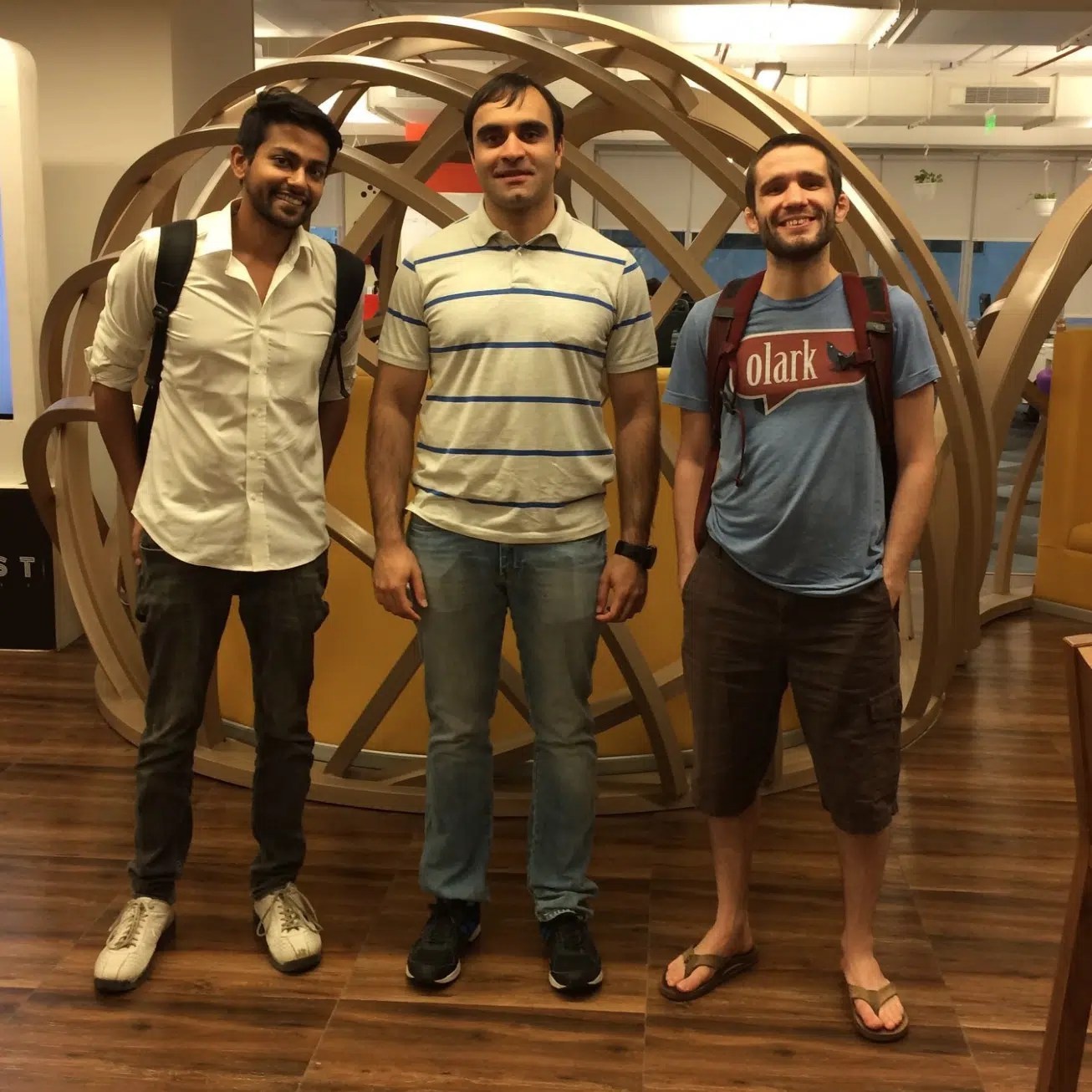
Interview photograph: Emerj, 2018.