A clipboard is a remarkably patient colleague. It never interrupts a meeting, never complains about a missing signature and never asks whether anyone has acted on what it contains. For Peter Grant, that patience became a business problem. A construction project could generate plenty of information while leaving the people responsible for the next decision waiting for it.
Grant came to software through civil engineering and project management, including work at Australia’s Leighton Contractors. He knew the territory his future customers occupied: large commercial projects, responsibility spread across teams, and administrative work competing with the work everyone had actually come to do. His eventual product, Safesite, would try to shorten the distance between noticing something and getting someone to deal with it.
That is an unassuming place to begin a technology company. It also explains the unusual route his career has taken. Grant helped build a mobile application, became the co-founder and CEO of a software business, and co-founded an insurance business alongside it. The connective tissue is the ordinary working day: who participates, what gets recorded, and what happens next.
The engineer leaves the form behind
Grant studied at Griffith University before building his career in construction. Safesite’s founding team brought together Grant, technical co-founder Leigh Appel and David Fontain. Their backgrounds gave the business connections to the building site, software development and the commercial decisions surrounding both. This was a product formed around a working process they wanted to change.
Fontain has described the early company taking shape in Sydney as smartphones and tablets were becoming more acceptable tools in workplaces. American companies began downloading and using the application, creating a reason for the founders to travel to California and investigate the demand. The customer geography arrived before the polished expansion story. People across the Pacific were already doing the experiment.
It is an appealingly practical beginning. Rather than asking a contractor to imagine a distant technological future, the founders could ask what happened when a familiar task moved onto a phone. The test was close at hand. Could somebody record an observation while still standing beside the thing they had observed? Could the next person know about it without waiting for a stack of forms?
A notification needs a destination
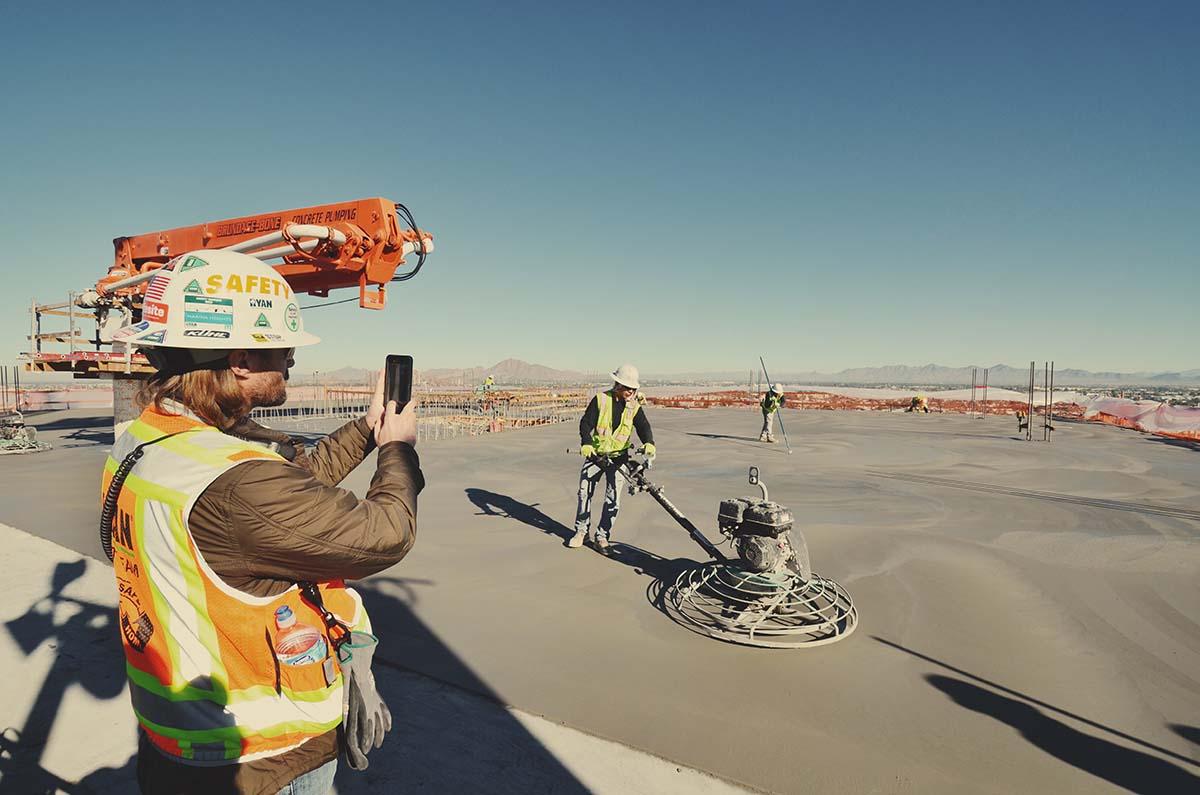
By May 2016, Safesite was being used on 1,000 projects in the United States. Grant described a system in which field workers could log observations, notify the responsible parties and follow a resolution through to completion. A desktop application brought the records together. The useful part was the handoff: information acquired an address and a next step.
That same year, he appeared at BuiltWorlds’ first Safety Meet-Up, discussing early work with Ryan Construction in Arizona and Express Construction in Washington. Those examples placed the young company among real crews and projects. Grant had a specific audience to persuade, and a demonstration had to survive questions about how work actually got done.
His explanation already extended beyond the phone. Project information could be collected into a feed, assessed over time and turned into reports. He was also discussing insurance premiums. Years before the insurance venture launched, he was making the connection between everyday activity in the field and the financial consequences that followed it.
- 01Record
In the field - 02Assign
A responsible party - 03Resolve
Track the action - 04Review
Look for patterns
Three million records, one stubborn question
In August 2017, Grant was talking about a database containing more than three million safety records. He described mobile tools for the field, a desktop portal for reporting and communication, and plans involving insurance partnerships and machine learning. The ambition was expanding from handling individual tasks to understanding what repeated activity might reveal.
He also described the value of meeting business leaders and infrastructure planners through San Francisco’s Chamber of Commerce. That detail matters in a founder’s story. A product can be designed around an engineer’s experience, then improved by hearing where that experience differs from somebody else’s. A developer, a contractor and a corporate manager can occupy the same project while needing different answers.
For Grant, the question kept returning to participation. A database grows because somebody contributes a record. The person doing so has other demands on their time. Behind the talk of machine learning sat a more immediate negotiation: make the task straightforward enough that someone will do it again tomorrow. Even an ambitious algorithm has to wait for somebody to tap the screen.
“We want a low entry point”
Peter Grant, explaining participation in Safesite
The sandwich shop experiment
Grant’s writing offers a useful glimpse of how he thinks about that negotiation. In a 2021 article about workplace habits, he used an illustrative example involving five-dollar sandwich-shop rewards for wearing safety glasses. Participation suddenly looked excellent. One worker in the example even put on two pairs. The incentive had acquired an enthusiastic amateur accountant.
Grant’s point was that a reward can alter what a manager sees without addressing why the behavior existed. Equipment might fit poorly. Training might leave assumptions unexamined. A supervisor could spend money and still leave the underlying problem intact. The sandwich story was a teaching example, rather than a claim about an episode from his own jobsite experience.
In another article that October, he argued for giving employees a voice and a sense of ownership in a company’s program. Read together, the pieces show the reasoning behind the software: participation needs a workable environment and a reason to continue. A tidy dashboard can count activity; the organization still has to understand the people producing it.
His advice to companies starting with Safesite was similarly modest: begin by asking for one or two observations a week. That is a manageable request in a busy workplace. It allows a new habit to enter the schedule without arriving dressed as a complete organizational revolution.
When the jobsite reached the insurance desk
Foresight launched in 2020, taking the founders into workers’ compensation insurance. Grant co-founded the business; Fontain became its CEO. Safesite supplied the technology around which the insurance offering could build services and evaluate engagement. The businesses sat together within Foresight Group, giving the original software a second commercial setting.
The move changed who had a reason to pay attention. A contractor’s use of a mobile tool could become part of a discussion with an insurance provider. For Grant, a familiar concern about participation now connected with underwriting and premiums. The audience had expanded from the people managing a project to the people deciding how to cover a business.
OMERS Ventures saw that progression as part of the investment case. Its account of backing Foresight emphasized the founders’ construction software origins and the way a specialized software business could develop financial services around its existing work. In January 2022, Foresight Group announced a $39 million Series B led by OMERS Ventures, bringing its announced funding total at the time to $59 million.
Foresight Group’s Series B, led by OMERS Ventures. Group financing, covering the business that includes Foresight and Safesite.
A founder who still talks about setup
Money makes a convenient chapter break. Grant’s explanations of the work remain closer to the customer’s first day. In a 2022 interview, he described customers needing help going from “zero-to-one in terms of digitization”. That phrase puts the challenge in proportion. Before sophisticated analysis comes the practical business of getting an organization comfortable with a different way of recording work.
His 2020 technology writing had already stressed implementation support, task assignments, automated reports and the ability to use photographs and video. These are the ingredients of a system people can operate. They also suggest why Grant’s engineering background remains relevant to his executive role: the product has to connect its parts in a sequence that works.
In 2025, the insurance side received recognition for another version of that problem. Celent named Foresight a Model Insurer in Digital and Emerging Technologies for Project Lake House, an initiative involving centralized data and automated workflows. Grant publicly celebrated the team’s award. The setting had moved to insurance operations, but information still needed to arrive in a useful form.
Back among the builders
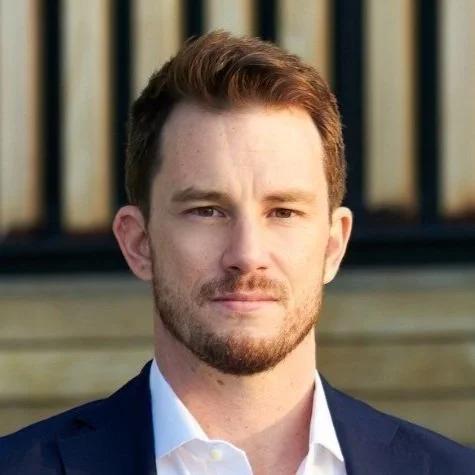
Grant also appears in Formwork Labs’ mentor directory, among founders and operators working across construction technology. It is a fitting place for an engineer whose business grew by following a jobsite problem into an unfamiliar industry. There are younger companies facing their own version of that journey: finding the first useful task, then learning what customers need around it.
Mick Liubinskas, who has worked with Grant, describes him as someone who listens, works hard and makes decisions, while remaining considerate of people. That description supplies a personal counterpoint to the executive titles. A founder introducing software to an established industry needs conversations as well as demonstrations. Grant’s record includes both: talking through project examples, explaining the first steps of adoption and writing about the assumptions managers bring to their teams. These are parts of the job that a funding announcement has little room to describe.
The public account of his career has a consistent scale of attention. He discusses company-wide patterns, insurance economics and new analytical tools, then returns to a worker making an observation and a manager taking responsibility. The large system depends on those small exchanges. Software can preserve them, distribute them and make them easier to inspect.
A form, once completed, can enjoy an extremely quiet retirement. Grant has spent his founder years giving its contents more work to do: notify someone, prompt a response, inform a decision. His career has carried that idea from Australian construction into American software and insurance. The clipboard would have been content to stay where it was.