Walk into a pet store and the wall of food begins to look like an advanced chemistry exam designed by golden retrievers. There are promises for digestion, shine, joints, weight, age, breed, allergies, ethics and the delicate emotional state of the person holding the wallet. Petcurean's answer is not to print every promise on one bag. The private Canadian company sorts the confusion into four brands, each with a clean job.
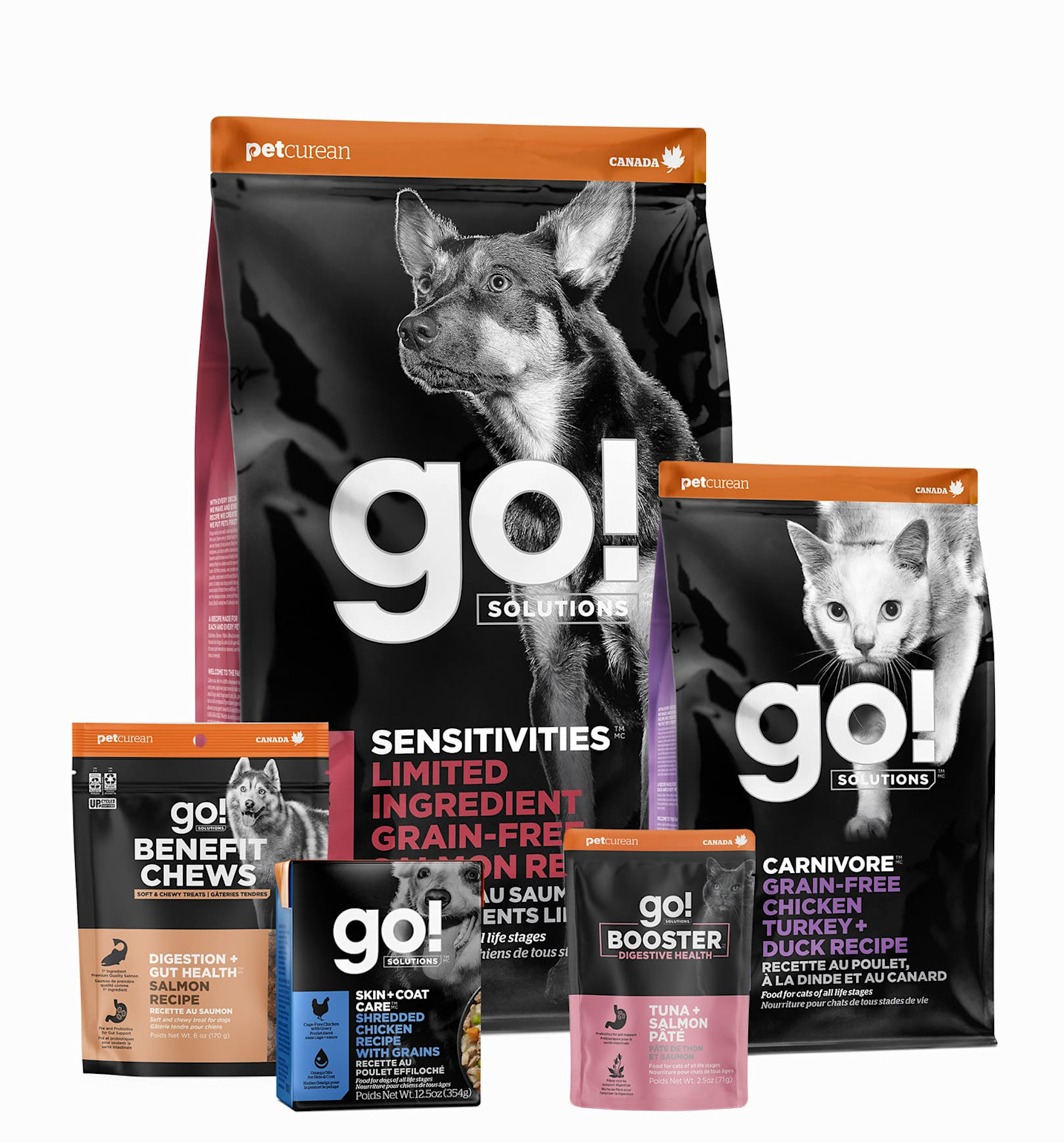
Go! Solutions addresses a problem. Now Fresh makes ingredient quality and life stage easy to recognize. Gather gives environmentally minded buyers a certified-ingredient option. Summit offers an accessible everyday premium. The architecture is simple enough to remember, but broad enough to carry dry food, wet food, toppers and treats for dogs and cats.
That is the quiet business idea inside a company founded by friends Ron Mayert and Dan Van Leeuwen in British Columbia's Fraser Valley in 1999. Petcurean now reaches more than 30 countries and employs roughly 110 people. A supplied company-data estimate places annual revenue near $44 million, though the private business does not publish accounts. It is neither a garage brand nor a multinational food conglomerate. It occupies the interesting middle - large enough to run nutrition, quality, export and sustainability teams, but focused enough for one species pair to command the whole company.
The portfolio is the pitch
Petcurean's customers are pet owners, but its route to them runs through another customer: the retailer. Specialty-store staff have to translate ingredient panels into a recommendation while a terrier is wrapping its leash around the display. Petcurean supports those stores with sales and marketing help, product education and an online University of Petcurean. International distributors get training and regular communication. This is a B2B2C machine dressed in friendly consumer packaging.
Sensitivities, digestion, skin and coat, weight and functional formats.
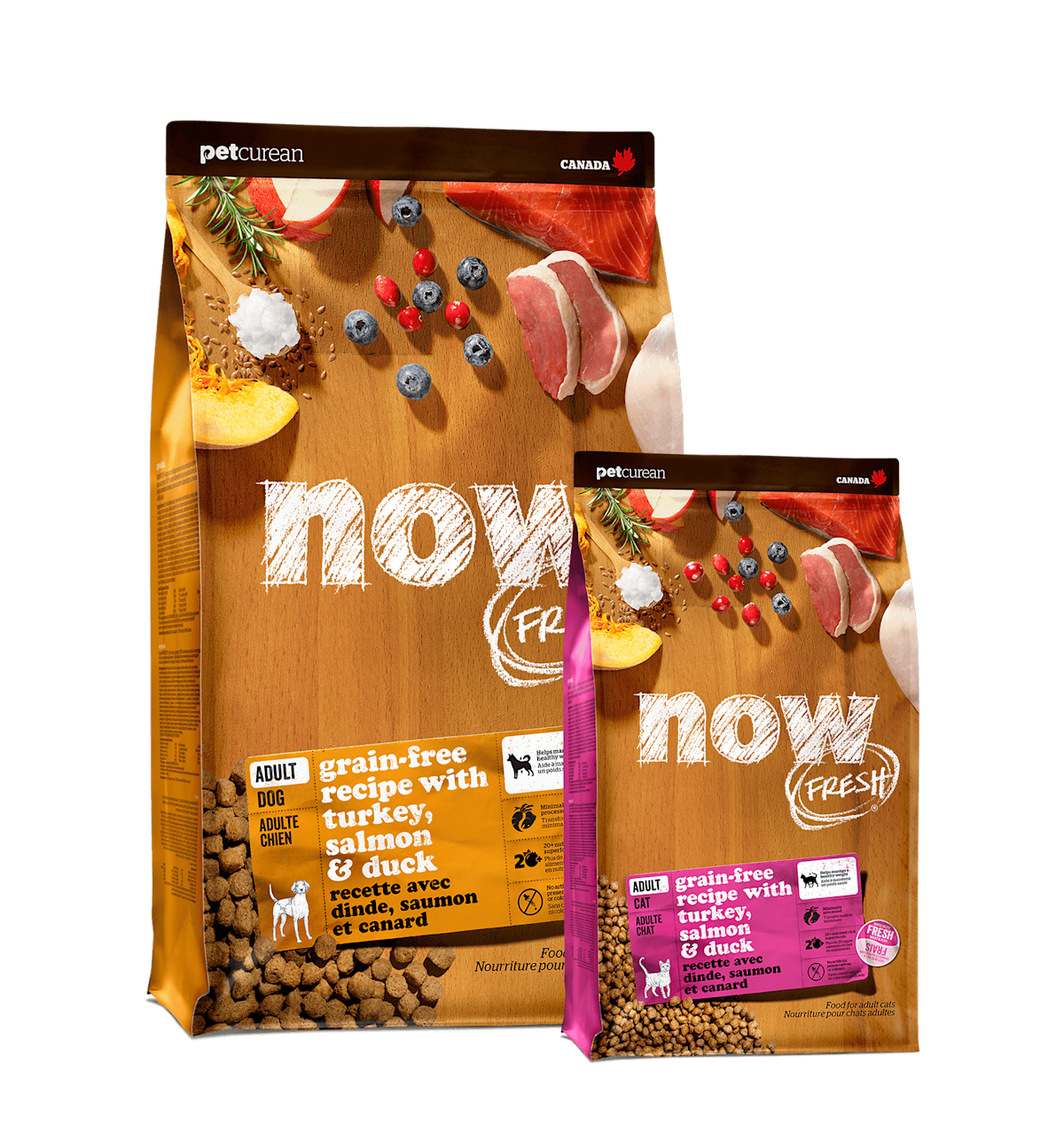
Fresh meat, no meat meals, with life-stage and breed-size choices.
Certified, organic and responsibly sourced ingredients.
Multi-meat recipes positioned as everyday premium nutrition.
The distinction matters because premium pet food is not one market. An owner managing a suspected protein sensitivity is shopping differently from one who wants fresh meat or one who prioritizes organic inputs. The competitors change with the task: Royal Canin and Hill's own clinical authority; Purina and Blue Buffalo bring scale; Acana, Orijen, Wellness, Open Farm and FirstMate crowd the specialty aisle; fresh-food subscriptions compete on format. Petcurean differentiates with a portfolio that lets each brand say less - and mean it more clearly.
What they actually make
Petcurean's nutritionists formulate recipes around nutrient availability rather than ingredient-list theatre. Go! Solutions includes limited-ingredient and functional recipes. Now Fresh uses fresh meat and oils without rendered meat meals, with formulas by life stage and dog size. Gather uses certified organic or responsibly sourced inputs. Summit keeps the proposition broad and price-conscious. Across the portfolio, Petcurean works with manufacturing partners in Canada, the United States and Europe rather than pretending that a Chilliwack office contains every production line.
Quality control is the part nobody photographs. The company says every kibble batch receives microbial testing and nutritional verification. It evaluates ingredient suppliers and requires Tier 1 suppliers to sign a code covering human rights, safety, environmental management and business conduct. Its Canadian, American and European manufacturing partners hold combinations of recognized food-safety and export certifications.
“Quality first, pets first, without compromise.”Petcurean's operating refrain
The more playful innovation is Good Gravy. Introduced as a broth-coated Now Fresh kibble in 2024, it can be poured straight into a bowl or mixed with water to make gravy. One SKU produces two feeding rituals. In 2026, Petcurean expanded the idea into eight wet-food recipes for cats and dogs, available in Canada through Pet Valu's store family. The current US dry launches span roughly $21.99 to $94.99 depending on recipe and bag size. That is what the product costs at retail; Petcurean has not disclosed its development bill.
What changed the product roadmap was not a sudden corporate epiphany so much as converging demand. Owners wanted health benefits without giving up enjoyment; they wanted moisture and meal variety without abandoning kibble. Petcurean cited consumer research showing appetite for wellness treats, then launched Go! Solutions Benefit Chews with meat or fish first and certified upcycled ingredients. Good Gravy applied the same logic to hydration: preserve the familiar routine, add a useful option.
The work beneath the leaf icon
Sustainability claims are easy to make in the pet aisle because the customer cannot inspect a supply chain between the cash register and dinner. Petcurean's more credible move is to publish denominators. In 2025, it reported that 68 percent of kibble bags had moved to recyclable structures, all new recipes launched in recyclable bags, and 10.4 metric tonnes of food were upcycled through Benefit Chews.
The company's Scope 1 and 2 greenhouse-gas emissions fell 8.3 percent in 2025 and 41.4 percent against its 2022 baseline. It maintained carbon-neutral status for those direct and purchased-energy emissions by combining reductions with verified Canadian offsets. The qualification matters. Scope 3 - ingredients, manufacturing, freight and the rest of the value chain - is the heavier bowl, and Petcurean began measuring its material Scope 3 emissions in 2023.
What failed first? Not a flagship brand, at least not in any documented public postmortem. The friction is more ordinary. Flexible pet-food packaging remains hard to collect and recycle, so a technically recyclable bag is not automatically recycled. Petcurean once framed the industry pledge around moving the majority of packaging by 2025; it reached a majority, but not the whole portfolio. Its published 68 percent is both achievement and visible unfinished work. That honesty is more useful than declaring the packaging problem solved.
Distribution is the other ingredient
A good formula sitting in the wrong warehouse is a very expensive bag of lunch. Petcurean spent 2024 widening its American distribution through Veterinary Service Inc. in the West, Pet Food Experts across more territory, and Southeast Pet in Georgia, the Carolinas, Florida, Tennessee and Alabama. In Canada, its long Pet Valu relationship became the launchpad for Good Gravy wet food in 2026. Those partnerships solve availability, retailer service and regional freight - the plumbing behind a consumer brand's apparent ubiquity.
This also explains why the model is difficult to copy quickly. The company can sell online, but pet food is heavy, repeat-purchased and often discovered through trusted store staff. Retail education and distributor relationships lower the risk of a shopper choosing the wrong formula. They also keep the brand present after an Instagram campaign disappears down the feed.
When the playbook breaks
Multi-brand segmentation fails when the customer cannot tell the brands apart, when manufacturing cannot support the SKU count, or when each segment is too small to earn shelf space. The model also weakens in a pure direct-to-consumer category where retail education and regional distribution add little value.
The parts worth stealing
Petcurean's lesson is not “start four brands.” It is to organize complexity around the customer's decision. The company has enough technical depth to make many products, but its public language keeps returning to a few legible jobs. That restraint is useful far beyond pet food.
- Give every brand one sentence. If the promise needs a paragraph before a buyer can repeat it, the portfolio is doing internal work, not customer work.
- Match evidence to the claim. Nutrition claims need nutritionists and tests. Sustainability claims need baselines, percentages and scope boundaries.
- Design for an existing ritual. Good Gravy adds water to familiar kibble. The new behavior is small enough to try tonight.
- Treat channel partners as users. Training, launch materials and reliable service help the retailer make the final sale.
- Publish the middle. Sixty-eight percent communicates progress and remaining work. A perfect slogan communicates neither.
The company still faces the conditions every premium food maker faces: price-sensitive households, crowded shelves, shifting nutrition debates and supply chains whose environmental impact sits mostly beyond the office meter. Specialized formulas only work when owners understand the benefit and pets will eat them. Recyclable film only works where collection exists. A distributor expansion only works if velocity follows availability.
Yet Petcurean's shape is instructive. Two friends began with the belief that pets deserved more care in their food. The adult version of that belief is less sentimental: four positioned brands, qualified formulators, batch checks, supplier standards, retailer education, regional distributors and published operating metrics. The cute animals are real. So is the machinery behind their dinner.