The platform ends. The train does not. For a passenger, that mismatch may mean an announcement asking them to move forward before getting off. For a railway engineer, it means establishing exactly where the train has stopped, working out which doors face usable platform, and making sure the equipment acts on that information. An everyday journey contains some very particular problems.
Petards Rail Solutions makes a business of those particulars. Its eyeTrain equipment combines onboard cameras, recording systems and door-operation technology; its software brings video and equipment data back to the people managing the fleet. The buyers are train builders, rolling-stock owners and operators. Passengers encounter the consequences without needing to recognise the supplier’s name.
The Gateshead operation sits within Petards Joyce-Loebl, part of the listed Petards Group. It occupies an unshowy but consequential position in the supply chain: between the company that builds a train and the people who must get it away from a station safely, repeatedly, in ordinary service.
A short platform makes a long argument
Automatic Selective Door Operation, or ASDO, answers the question posed by the overhanging train. Petards’ system uses satellite positioning and odometry, which measures movement, to establish the appropriate door-release pattern. Doors beyond the usable platform can remain unavailable. Correct Side Door Enable, a related software function, addresses another obvious hazard: releasing doors on the side without a platform.
Petards offers a balise-free configuration, avoiding the extra trackside beacons that some door-operation arrangements use. The system can also work with existing balises. That flexibility matters to a buyer deciding how much infrastructure a project must touch. The company describes its ASDO solution as SIL 2 compliant, referring to assurance of a defined safety-related function.
The practical appeal is easy to grasp: change what the train knows about a stop, and a longer formation can serve a shorter platform. The boundary is equally practical. Position inputs, platform information and vehicle interfaces must support the intended application. A configurable product still needs an engineered railway installation.
Illustrative door selection, not a technical installation drawing. Train position + platform data determine the release pattern.
What the driver needs to see
Door selection and departure observation are different jobs. Petards’ Driver Controlled Operation system, or DCO, sends views from exterior cameras to a monitor in the cab. The driver can inspect the side of the train as passengers board and leave. Unlike a platform-mounted mirror or screen, the onboard camera travels with the vehicle, retaining a view during departure.
The telling specifications concern the picture’s trustworthiness. Petards lists protection against frozen, delayed and dropped frames, alongside end-to-end latency below 600 milliseconds. A beautifully sharp image is of limited use if it belongs to the wrong moment. Camera housings can include sealing and anti-condensation heating; the product has to contend with the weather as well as the scene.
PTeye tackles a related risk at the platform-train interface: someone or something becoming trapped and dragged. Petards describes the technology as AI-ready and designed to help prevent these events before dispatch, with drag detection as a secondary measure. Those are stated design purposes. They should guide questions about deployment, testing and operational procedures, rather than be read as a measured elimination of risk.
Nineteen trains, one test wall
The most revealing way to understand a supplier is to open a contract. In October 2020, Porterbrook awarded Petards work worth more than £1.3 million for 19 Class 769 trainsets. The package included DCO and ASDO equipment, spares, engineering services and a test wall. That last item is a pleasingly tangible reminder that railway systems have to be checked somewhere before they earn their place on a train.
Petards says it delivered the project equipment in February 2021, on schedule and to specification, despite pandemic restrictions. The case study describes an ASDO arrangement independent of the train control and management system, helping make the retrofit easier. This is a record of Petards’ delivery; it is not a claim about the subsequent outcome of the entire train programme.
October 2020 Porterbrook contract
Spares + engineering + test wall
Its work with Stadler illustrates the new-build side. A 2017 award covered CCTV, DCO and ASDO for Greater Anglia’s Class 745 and 755 trains. The published fleet breakdown totals 58 trainsets across intercity, airport and regional configurations. The application also brought together forward-facing, pantograph and track-debris monitoring. Petards supplied a collection of coordinated functions within trains carrying somebody else’s badge.
The camera gets a gardening job
One of the company’s more appealing applications starts with equipment already aboard. In October 2022, Greater Anglia described a collaboration with Petards, CrossTech and Network Rail to identify troublesome vegetation along its routes. Train-recorded video was analysed using CrossTech’s Hubble technology, producing maps to help engineers prioritise trees and plants that could become a problem.
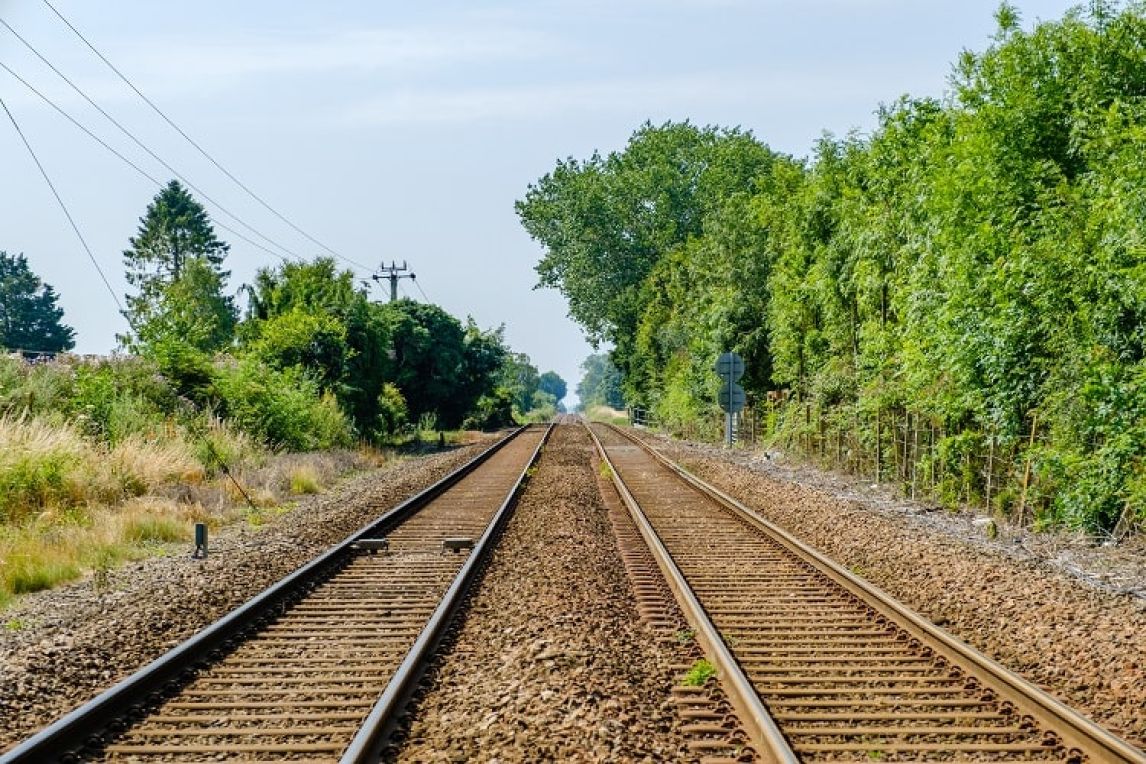
The division of labour is worth noticing. Petards’ camera equipment supplied the view; CrossTech’s analysis helped turn that view into useful locations; Network Rail could act on the findings. Greater Anglia contributed trains travelling the routes. This was a collaboration organised around an existing journey.
For other businesses, the transferable idea is to examine what their installed equipment already observes. A new use may depend more on connecting that information to the right specialist than fitting another sensor. The condition is that someone can act on the result. A map of an overgrown railway is useful only when it reaches a team able to organise the work.
A passenger count with somewhere to go
Inside the train, Petards has another way of making an ordinary movement useful. Its automatic passenger-counting systems use infrared detectors at doorways to record people moving in both directions. Under framework agreements with Hitachi Rail Europe, this equipment serves Class 800-series applications associated with operators including LNER, Great Western Railway and Hull Trains.
The counts can be combined with vehicle identity, station, date and time. That makes the difference between an isolated number and a record planners can use to understand demand. Petards’ case study quotes typical accuracy of 99 percent, a supplier specification whose relevance depends on the application. The operational aim is to help match services and capacity to actual passenger movements.
Elsewhere in the product range, interior cameras provide footage for reviewing onboard events, while forward-facing cameras provide a driver’s-eye record for investigating operational incidents. These functions give the same buyer several reasons to deal with one supplier, although each has its own purpose and requirements.
There are alternatives. Synectics, for example, supplies transport surveillance and video-data management. Petards’ particular proposition brings that surveillance work into the same rail portfolio as door-operation functions and fleet support. Buyers comparing systems need to compare the required functions and integration effort, not simply count cameras.
The sale continues after delivery
Petards’ back-office products extend the relationship beyond installed hardware. The company distinguishes eyeBOS, for managing a train fleet, from eyeTrain Connect, for multiple fleets. Features include equipment-status views, historical analysis and requests for footage by train, location or time. Remote access gives authorised staff a way to investigate without treating every question as a visit to the vehicle.
It also creates another commercial relationship. On August 24, 2026, Petards announced £700,000 of rail orders from a global train builder. The scope combined equipment and engineering with a three-year eyeBoS software-as-a-service contract for another fleet. Equipment delivery was expected in the second half of 2026; engineering was scheduled to continue into 2027.
That mixed contract is a better description of the business than calling Petards either a camera manufacturer or a software company. It sells equipment, adapts it to the fleet, and can remain involved through software and support. The separate dates show why an order announcement and recognised revenue are different events.
Long-lived equipment shapes the offer. Petards says six generations of its systems remain in rolling-stock service and advertises product support extending to 30 years and beyond. For a purchaser, that puts repairability, spares and future upgrades alongside the specification of the initial installation.
When the orders take their time
The commercial pressure is visible in the group’s reporting. Its 2024 results described slow customer order placement in the eyeTrain business, while the installed fleet continued to generate service, spares and repair work. The constraint in that account was the buying timetable. Existing equipment gave the business something to maintain while it waited for new commitments.
The response was consistent with an earlier engineering strategy. In its 2022 annual report, Petards described preserving the proven core of eyeTrain while developing software functionality around it. The reasoning was explicit: customers could gain capabilities while retaining equipment with an operating history. That is a useful approach where replacement involves engineering work and disruption.
Improved rail trading helped parent Petards Group lift 2025 revenue to £14.9 million, although the group still reported an operating loss of £435,000. Those figures cover the wider group, including other businesses. They do not describe standalone rail sales or profit. In August 2026, the parent reported a £9.6 million order book at the June half-year end.
The people behind the safety argument
The company’s heritage also needs careful labels. Herbert Loebl and Robert Joyce established Joyce-Loebl in 1951. Petards dates its establishment to 1992; it acquired Joyce-Loebl in 2001. The current rail operation inherits that engineering history through the combined business. These dates explain the lineage without pretending the present product catalogue existed at the beginning.
“A safety audit is about much more than presenting documents.”
David Muse / Chief Technical Officer / August 2026
A more immediate glimpse of the workplace comes from chief technical officer David Muse’s August 2026 account of an external software safety audit. Experienced engineers worked alongside colleagues facing an independent assessment for the first time, across programmes involving ASDO, CSDE and DCO. His emphasis was on understanding requirements, explaining decisions and providing traceable evidence.
That account gives substance to the company’s stated emphasis on safety and developing talent. Railway customers need people who can explain how a system behaves, including when an input or component is unreliable. A working departure is the visible result of many such decisions. At the platform, the passenger simply waits for the right door to open.
Follow the equipment
Explore Petards Rail’s website, news and insights, LinkedIn and the Petards group X account. Watch Greater Anglia’s vegetation-monitoring video, or read the August 2026 rail-order announcement.