The products were almost finished. According to a customer account published by Libertas Funding, a hardware parts business had inventory that was 90% complete, with buyers waiting. The missing components required cash beyond its existing working capital line. Until that money arrived, nearly finished goods could not become sales. A small shortage had stopped the whole transaction.
- Libertas finances the interval between spending cash and collecting it.
- Its products include revenue-based financing and WebBank-issued term loans.
- The value of speed depends on the return, the repayment schedule and the contract.
That is a useful place to begin with Libertas. Business finance is often described as a contest over interest rates. Here, the decisive variable was sequence. The order existed. The goods mostly existed. The cash needed to complete them arrived too late through the existing arrangement. Libertas supplied the missing capital.
01 / The calendar is part of the product
The company serves established small and medium-sized businesses across the United States. Its website advertises a core financing range of $500,000 to $10 million, with some funding as low as $100,000. Its LinkedIn profile advertises a broader ceiling of $20 million. The scope depends on the product and transaction.
Inventory, acquisitions, new locations and bridge financing share a pattern: expenditure comes first; revenue follows. Libertas says its proprietary technology can support decisions in as little as one business day. That conditional promise matters. A fast decision still requires financial information and underwriting.
Illustrative sequence, not a funding or repayment schedule.
Its published acquisition examples make the scale tangible. A cooking oil manufacturer used a $3 million facility for a Fort Lauderdale acquisition. An IT services business received a $1.2 million facility supporting two dealer acquisitions. These are company-reported cases, but they describe a recognizable market: operating businesses making specific moves.
That positioning puts Libertas alongside bank credit, asset-based lending and other business financiers. A bank relationship may offer a different price and timeline; an asset-based facility depends on eligible collateral. Libertas emphasizes the transaction’s urgency and cash generation. The sensible comparison is between offers for the same need, with the same deadline, rather than between product labels.
02 / A credit desk with a human attached
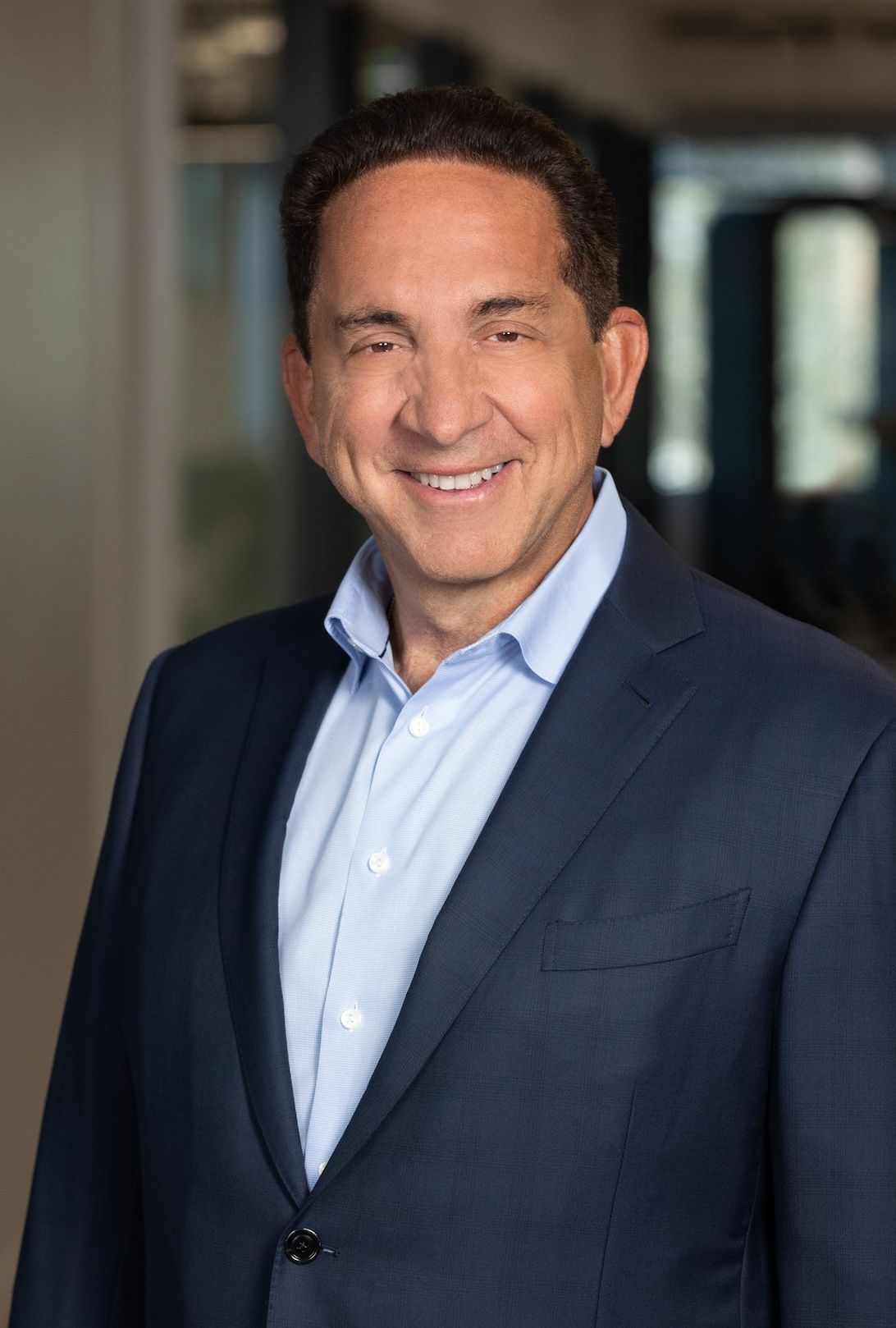
Gary Katcher founded Libertas in September 2016 after a career in credit and trading. At Merrill Lynch, he headed the high-yield trading desk. His company’s proposition combines financial analysis with direct conversations about what a business intends to do with the money.
The machinery has two distinct parts. Revenue-based financing advances capital against future receipts. Term loans have fixed maturities and are issued by WebBank, with Libertas acting as servicer. The WebBank partnership was announced in July 2021. These structures create different obligations; the names deserve attention before the application begins.
“We look beyond just data.”
Randy Saluck, then CEO, announcing the WebBank partnership in 2021
Libertas also works with bankers, advisors and investors. The commercial logic is straightforward: an existing financial partner can introduce a client whose immediate need falls outside its own structure. Technology speeds the assessment, while people interpret the transaction. This is private credit delivered through a financial technology platform.
03 / Read the price before the promise
Actual contracts make the economics clearer. AIRO Group Holdings’ 2025 annual report describes a January 2025 Libertas agreement exchanging $2 million in cash proceeds for $2.5 million of future receivables. The $500,000 difference equals 25% of the cash advanced. It is not an annual percentage rate.
AIRO Group Holdings filing. A transaction example, not a standard quote or APR.
The filing says receipts were remitted through a percentage of weekly collections and that the agreements were secured by accounts. Some transactions also involved warrants. “Non-dilutive” therefore deserves contract-level scrutiny. For Libertas, the purchased-receipt premium is part of the financing economics. For customers, payment timing, fees, security interests and any equity rights all affect the bargain.
The relevant comparison includes the profit an opportunity might produce and the cash it leaves available while payments continue. A larger order can increase sales and still strain liquidity. Revenue alone cannot settle the question.
04 / Even the financier needs financing
Libertas has its own capital calendar. In 2021, it announced a warehouse facility of up to $100 million from Silicon Valley Bank. In April 2025, it closed $75 million of investment-grade corporate note financing, with Brean Capital as placement agent. In October, Victory Park Capital supplied a $100 million credit facility supporting its SuperB financing program.
Those are financing transactions, not venture rounds or a company valuation. They help explain how an originator replenishes the money it puts to work. In January 2026, Libertas announced more than $5 billion in cumulative funding. Deployment measures activity; it does not establish profit or credit quality.
05 / Relationships include responsibilities
There is a smaller, different expression of its approach in Connecticut. Through the WBDC Accelerate program, Libertas funds grants for women-owned businesses. Four recipients received $25,000 each at the September 2025 Catalyst Symposium. Katcher developed the initiative after attending a WBDC gala and seeing the organization’s work. The resulting grants are distinct from its commercial financing products.

The relationship also carries data responsibilities. An October 1, 2026 incident notice says an unauthorized party acquired files containing applicant information, including Social Security numbers, after suspicious activity was detected around September 9. Libertas said it knew of no misuse at the notice date and offered 24 months of credit monitoring.
06 / Borrow the method
The transferable idea is to put dates beside the numbers. Identify the expenditure, the expected cash arrival and the funding gap between them. Compare the complete obligation with the cash the opportunity can realistically generate. Include a delayed-payment scenario. A project with distant or uncertain returns is a poor match for rapid collections.
Libertas occupies the space where time has an economic price. Its usefulness depends on whether the customer can earn that price back. For the hardware business, the immediate problem was a final component purchase. For another owner, waiting may be cheaper. The calendar belongs in the calculation either way.