Blady Urena’s business had a problem that looked, from a distance, like success. Solving Electric Motors had customers across South Florida and a team of 15. But an inventory business has an awkward appetite: it needs money before the merchandise earns any. A favorable purchase price means little if the cash arrives after the opportunity disappears.
In One Park Financial’s published account, Urena received funding within three days, bought inventory at a lower cost and protected his margins. The sequence explains the company’s appeal: capital is useful only if it arrives while the purchase still makes sense. Its product begins with a clock.
- The job: connect operating businesses with working capital.
- The method: an online application, revenue review and a funding manager.
- The trade-off: faster access still needs to earn its cost.
A customer, a shelf, a deadline
One Park occupies the space between a business owner’s immediate needs and a funder’s willingness to advance money. Think inventory, equipment or the next payroll. The customers include restaurants, contractors, retailers and professional-service firms. These are businesses with transactions already happening, rather than ideas waiting for their first customer.
Consider Raúl, another customer featured by the company in June 2026. His Miami firm, Advanced Professional Accounting, had enough demand for audits and ongoing work to need more staff. He had explored banks and compared options. What changed his preference was the responsiveness he encountered at One Park. The constraint was capacity: clients could arrive faster than the people needed to serve them.
These are company-selected accounts. They illustrate uses for capital, without establishing the typical customer’s outcome. The useful question they raise is specific: can the extra inventory or employee produce enough cash, soon enough, to justify the funding?
Two minutes opens the door
Founded in 2010 by John Lie-Nielsen and Ben McCrery, One Park built its pitch around small businesses that struggled with conventional financing requirements. The company’s current homepage advertises funding from $10,000 to $1.5 million. Revenue matters to its assessment, alongside credit and operating history.
The starting thresholds are unusually easy to remember: three months in business, $10,000 in monthly sales before expenses and a 500 FICO score. They establish who can begin the conversation. They do not promise approval, or tell an owner what size payment the business can withstand.
The advertised two-minute prequalification is followed by more substantial work. Applicants provide three months of bank statements, or use secure bank verification, and government identification. A Business Funding Manager helps complete the application and review an offer. One Park says an offer may be available within two business hours and money within 24 hours after signing and completing final steps. Documentation and funder processing affect the timing.
Two minutes starts the conversation. The repayment schedule decides whether it makes sense.
The company behind the conversation
One Park’s FAQ says it does not finance businesses directly. It connects them with funders. That distinction helps explain the business model: the application is the entrance to a matching and servicing operation, supported by people who organize the information and explain the offer.
Behind the brand sits parent company Fund Street Technologies. Its public description separates customer acquisition, funding evaluation and portfolio management into proprietary systems named Eagle, Skynet and Apex. It also identifies McKenzie Capital with revenue-based financing and MCK Business Loans with fixed-term lending. One Park is the merchant-facing front door to that infrastructure.

The funding history reflects those separate layers. One Park announced a $30 million credit facility in June 2016. A decade later, Fund Street announced a $45.5 million seven-year investment-grade corporate note, placed through Brean Capital, to support origination growth and other initiatives. Those are corporate financing events, distinct from the dollars received by an individual shop.
Put a dollar sign on the shortcut
Applying is free. Accepting funding brings a cost of capital and a professional service fee. Revenue-based products advance cash against future sales; other products can have fixed daily or weekly payments. The agreement determines the mechanics. A friendly description of flexibility should lead to a close reading of how payments actually change when sales fall.
*Before additional fees. The $5,000 difference is 25% of the advance. A factor rate is not an annual percentage rate.
The arithmetic is simple; the calendar supplies the complication. Returning that amount quickly puts a different demand on cash than spreading it across a longer period. An owner comparing offers needs the net proceeds, total remittance, payment frequency and any early-payoff adjustment. One Park’s own financing guides encourage looking beyond the advertised rate.
For Urena’s inventory purchase, the relevant comparison would be the purchase savings and additional margin against the financing expense. For a business repeatedly using advances to cover an ongoing operating loss, there may be no profitable transaction to pay for the shortcut. A company without sales also falls outside the basic eligibility rules. Speed cannot supply missing demand.
The people called Grovies
There is a less numerical side to this operation. Employees are called Grovies, after Coconut Grove. In its Dream Weaver program, the company funds selected personal wishes. An early request came from a youth-football coach facing uniform and tournament costs that some families could not afford. One Park agreed to support the team.
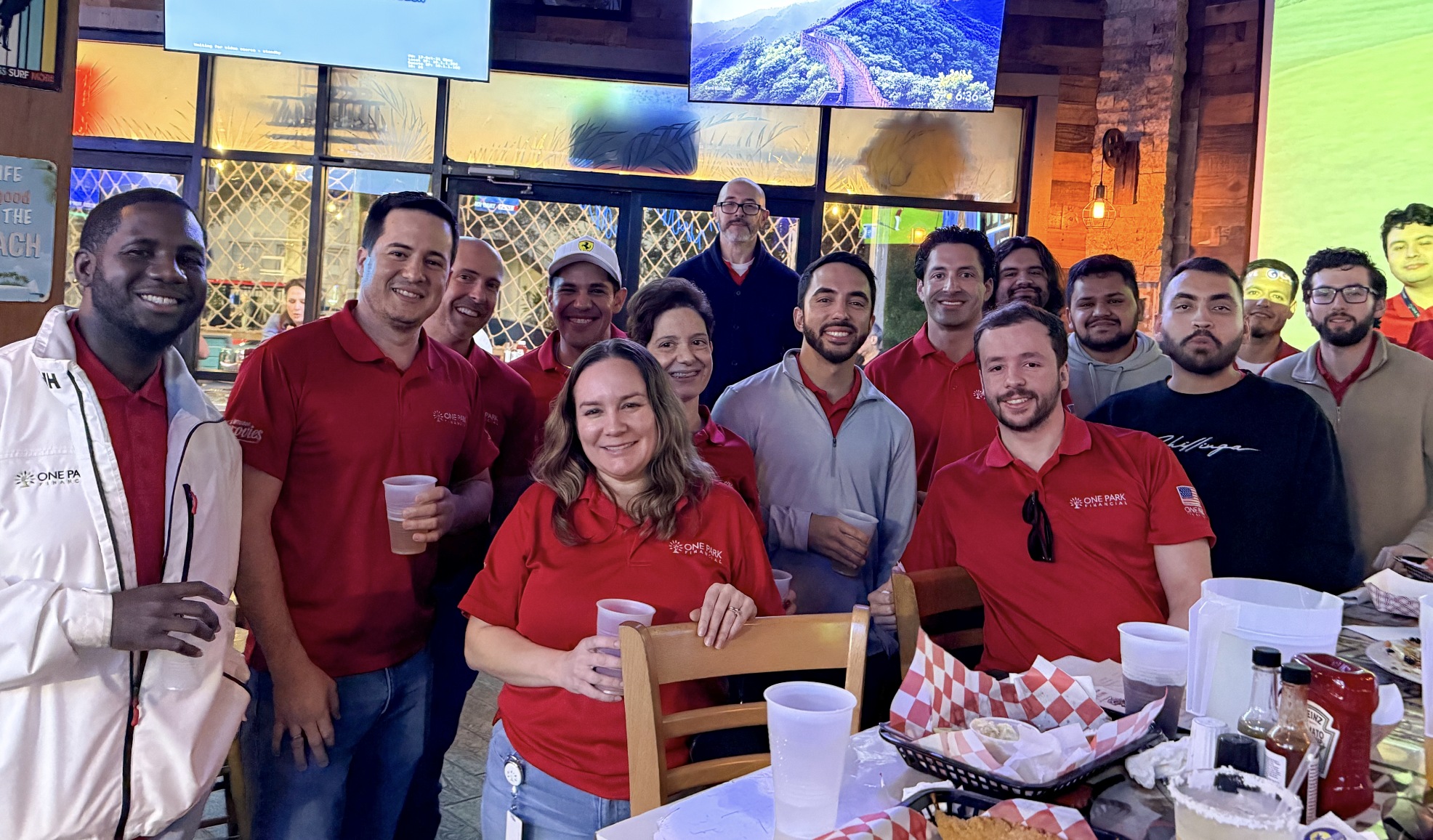
That emphasis on people also appears in the funding-manager role and English-and-Spanish service. The company announced a ninth Sun Sentinel Top Workplace recognition in May 2026, following an April office opening in Phoenix. Digital applications coexist with local offices and a deliberately personal sales process.
One Park says it has funded more than 55,000 businesses and serviced more than 100,000 clients. Those measures describe different things. Its appeal is easier to grasp at the scale of one customer: a shelf that needs stocking, an order worth taking, a hire that cannot wait. The owner still has to decide what buying that time is worth.