On October 23, 2026, MIAC offered a portfolio of 32 mortgage loans for sale. Together, their unpaid balances came to $14,140,174. The listing called them “scratch and dent.” It is an oddly domestic phrase for a financial asset: something has made these loans less straightforward to sell. Their balances are precise. Their market price requires more work.
- MIAC sells mortgage analytics and uses its own software in advisory work.
- Its customers need to price loans, manage hedges and value servicing rights.
- The useful habit: keep assumptions close to both the original data and the market.
That distance between a balance and a price is where Mortgage Industry Advisory Corporation operates. A mortgage promises payments over time. What an institution will pay for that promise depends on interest rates, borrower behavior, servicing costs and the possibility of loss. Put thousands of loans together and the arithmetic becomes a business.
The borrower is part of the model
Consider an apparently happy event: the homeowner refinances and pays off the old mortgage. For the company collecting fees to service that loan, future revenue can disappear. Mortgage servicing rights, or MSRs, carry value partly because those fees are expected to continue. An early payoff changes the expectation.
MIAC’s CORE behavioral models forecast voluntary prepayments and the frequency, timing and severity of losses under different economic scenarios. Mortgage rates, unemployment and house prices enter the calculation. The institution can then ask what a portfolio might do under a changed set of conditions. The answer remains conditional on those assumptions.
- 01Rate lockPrice the promise.
Measure pipeline risk. - 02Loan saleCompare bids.
Choose execution. - 03ServicingProject fee income.
Test borrower behavior.
The advisers use the machinery
Bob Husted and Paul Van Valkenburg founded MIAC in 1989 amid a national financial crisis. Their anniversary account describes an opportunity for an independent firm equipped with its own technology. They built a business with two connected activities: licensing software and providing services using that software.
“having a balance between the two has always set us apart”Paul Van Valkenburg, cofounder, 2019
There is a practical attraction to that arrangement. An adviser working through a valuation encounters the awkward inputs and questions a product demonstration can skip. A software developer has a nearby practitioner who needs an answer. The founders describe holding their own tools to the standards of demanding clients. That gives their feedback loop a specific workplace.
The business grew to include mortgage delivery services through its 2013 acquisition of Mortgage Delivery Specialists. Today, MIAC describes a network of sales and development teams spanning several US locations, London and India. Its customers include originators, servicers, investors, agencies and regulators - institutions meeting the same loan at different points in its life.
An auction for the assumptions
Models need contact with the market. MIAC’s Generic Servicing Assets provide a particularly tangible mechanism: a monthly virtual auction among active servicing-market participants across approximately 300 cohorts. These observations join transaction evidence and industry surveys in informing valuation assumptions.
A monthly virtual auction gives the valuation process a market reference point.
The exercise helps explain why MIAC combines brokerage, data and valuation expertise. A modeled cash flow describes an expected stream of money. A buyer’s price also expresses what the market demands for taking the associated uncertainty. Keeping those views in conversation is part of the work. An average mortgage cannot tell the whole story.
MIAC’s October 2026 commentary on borrower recapture shows the debate in miniature. A servicer may win a refinancing borrower back, creating an opportunity that buyers consider when pricing servicing. MIAC argues for modeling that behavior explicitly. Adjusting a discount rate until the answer looks plausible is less revealing than identifying the assumption that moved it. The distinction matters to anyone who has to explain a valuation to an investment committee or an auditor.
Start with the file
Before any of this comes data housekeeping. DataRaptor maps imported records into working tables while retaining the source data. Users define audit rules, identify missing information and correct fields. That preserved original matters: someone reviewing a result can distinguish what arrived from what an analyst changed.
Vision handles valuation, scenario analysis and stress testing. MarketShield addresses another part of the problem: the period between a borrower locking a rate and the lender selling the loan. It brings together pipeline hedging analytics, loan-level pricing, Spec Pool valuation and execution analysis.
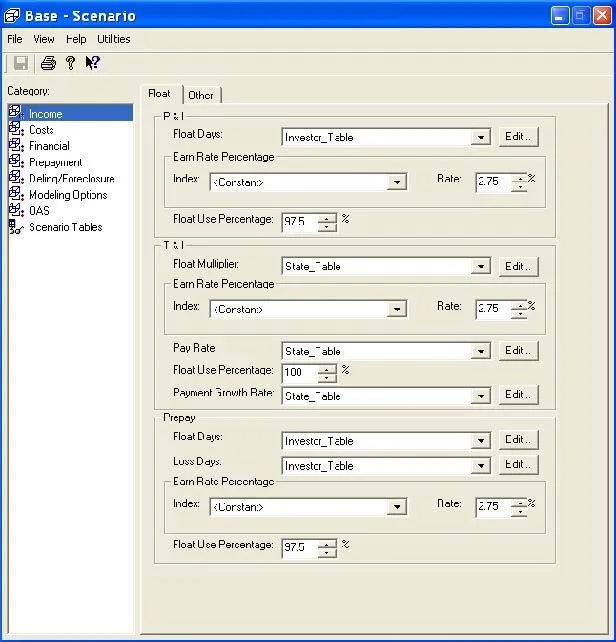
For a secondary marketing desk, those are connected decisions. Which investor bid is attractive? How should loans be pooled? Does the hedge reflect the pipeline? MIAC offers BuySide Trader, SellSide Trader and its MOJO pooling tool for parts of that workflow. A mortgage can reach several destinations; the economics depend on the route.
The model has to show its work
MIAC’s AI BondAgent tackles securitization documents. Its stated purpose is to turn offering memoranda or prospectuses into source-linked deal rules and an executable waterfall - the sequence determining who receives money, and when.
The product description keeps review in the process. Analysts inspect interpreted provisions, refine ambiguities and examine payment allocations, triggers and reserves. The revealing feature is the connection between a rule and its supporting document. Faster interpretation helps only if someone can examine what the interpretation means.
A price is a decision, too
MIAC’s business model offers institutions a choice of software licensing and professional services. A firm can bring analytical capability inside or engage specialists for valuations, hedging and transaction work. Adoption involves people as well as tools: MIAC describes IT installation support, client-specific setup and at least two days of onsite training.
The alternatives overlap. MCT offers pipeline hedging, execution and MSR capabilities; SitusAMC combines valuation, analytics and hedging; Optimal Blue supplies mortgage capital-markets tools. MIAC’s combination of proprietary models, advisory work and brokerage gives buyers a particular operating arrangement to evaluate. It does not remove the need to compare scope and implementation.
The lesson travels beyond mortgages: preserve the inputs, expose the assumptions and check the output against observed behavior. It works best when the data is usable and the people reviewing the model understand its limits. A clean number deserves a messy question: what had to be true for us to get here?