BREAKING
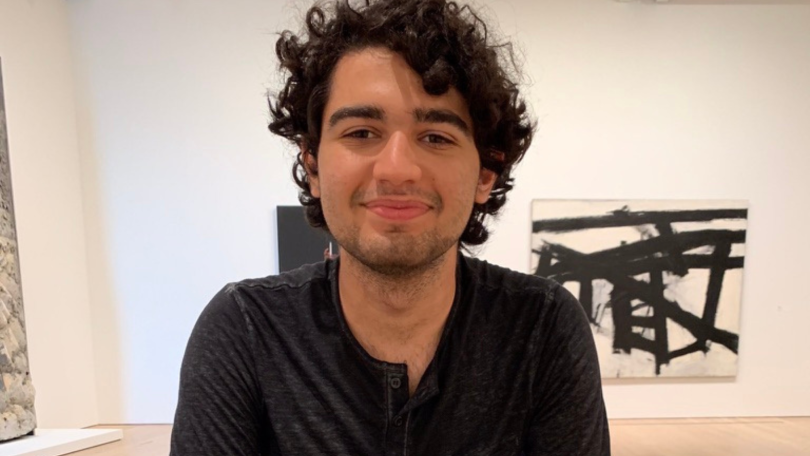
Pedro Paulino, Founder & CEO of Tavrn
Founder Profile

San Francisco, CA  /  Legal AI  /  Series A

PedroPaulino

The chess player who walked into a law office and never left the same way.

At 25, Pedro Paulino is the CEO of Tavrn - an AI platform that does in 24 hours what paralegals spend weeks on. He dropped out of Harvard, played competitive chess, worked two startups, pivoted a company mid-flight, and raised $21.6M along the way. The legal tech world had no idea it was waiting for him.

$21.6M Total Raised
52 Employees
25 Years Old
70% Review Time Cut

Pedro Paulino didn't set out to fix legal tech. He set out to fix the way talented people find each other. The original Tavrn - a networking app for LA's creative class, built after his own formative intern summers - was a real company with real funding. But somewhere between the beta launch and the pitch circuit, Paulino noticed something more interesting: the most inefficient, document-heavy, manual-labor-dependent industry in America wasn't entertainment. It was personal injury law.

The pivot wasn't impulsive. Paulino and co-founder Vitor Vavolizza (CTO, age 21) spent close to a year shadowing paralegals. Not interviewing them remotely - physically sitting in law offices, watching how medical records piled up, how demand letters took days to draft, how client intake swallowed hours. That level of immersion is rare in tech. It's how you build something that actually fits the workflow instead of something that just looks like it should.

"Tavrn emerged from our desire to apply AI to industries where manual workflows still dominate and precision is paramount." - Pedro Paulino, CEO, Tavrn

The legal product works because it was designed backwards from reality. Medical chronologies - the dense, multi-hundred-page summaries of a patient's injury history - are Tavrn's core output. The platform ingests records, links evidence, extracts damages, and delivers a structured summary in under 24 hours. Demand letters follow, tailored from the case facts the AI derived. Then retrieval. Then intake. A paralegal's week, compressed into a morning.

Paulino's angle isn't AI assistance. He's explicit about the distinction: full automation, high accuracy, source-linked outputs traceable back to the original documents. "Not AI-assisted drafting," he's said. "Full automation." That is a different product promise, and it's landing. Law firms report 50-70% reductions in record review time. Settlement timelines cut in half. One client claimed 6x return on platform cost within a single quarter.

Left Lane Capital led the $15M Series A in July 2025. A*, Hummingbird Ventures, and Box Group joined - Hummingbird having backed the original networking app, now doubling down on the legal pivot. Total funding: $21.6M. Paulino's five-year call is straightforward: "to become the dominant AI platform that personal injury attorneys trust to deliver better outcomes faster." That's not a category-building ambition. That's a monopoly play.

The Chess Foundation

Before startups, there was the board. Paulino played competitive chess, and he credits the game directly for how he thinks in business: pattern recognition, anticipating moves several steps out, knowing when to sacrifice a position to win the endgame. When he decided to shadow law firms for a year before building, that was a chess player's instinct - gather information before committing. When he pivoted Tavrn mid-flight from social networking to legal AI, that was positional awareness. The pieces moved; the player adapted.

Earlier Chapter

Before Tavrn, Paulino ran two speed rounds. At Kalshi, the regulated prediction markets platform, he saw what happens when finance gets weird and specific - a product built for sharp bettors on real-world events. At PearPop, the creator economy play where artists collaborate commercially, he sat in product and watched the attention economy at its most transactional. Both stints were brief. Both left fingerprints.

He had dropped out of Harvard before those jobs. Liberal arts. The dropout story is ordinary in Silicon Valley, but Paulino's isn't really about leaving - it's about what he was moving toward. The internships that changed how he thought about networks. The recognition that creative professionals in entertainment were isolated despite massive followings. The first Tavrn. And then, a better idea.

He hired four account executives in two weeks using Juicebox, doing the recruiting himself. "I'm a big advocate for founders owning their recruiting process," he's said. At 52 employees, Tavrn is no longer a four-person beta - but Paulino still moves like a founder who needs to be in the room. He defines Tavrn's differentiator not in features but in philosophy: precision beats speed, traceability beats output volume, and full autonomy beats AI-lite augmentation every time.

Tavrn in Figures
50-70%
Reduction in medical record review time
2x
Faster time to settlement for law firm clients
6x
ROI on platform cost reported by one firm in a single quarter
24h
Average turnaround for complete medical chronology
What Tavrn Actually Does

Medical Retrieval

Automated acquisition of medical records from thousands of providers nationwide. Real-time tracking replaces the weeks of follow-up calls paralegals traditionally field.

12-day avg turnaround improvement

Medical Chronology

Dense patient records converted into structured, citation-linked summaries. Every insight traceable to the source document - built for scrutiny, not just speed.

Delivered within 24 hours

Demand Letters

AI-generated demand letters built from the case facts and damages analysis the platform derives. Tailored to the specific case, not templated boilerplate.

50-70% time reduction

Client Intake

Automated intake and case evaluation so the first conversation with a client isn't bogged down in paperwork. Triage before the attorney even picks up the phone.

Full automation, not augmentation

eDiscovery

AI tagging and document review for discovery workflows, reducing the manual review burden that has historically consumed associate time at billing rates law firms hate to justify.

AI-driven tagging at scale

Security Layer

AWS infrastructure, 256-bit AES encryption, TLS 1.2 in transit, SSO, multi-factor auth. User data is never used for model training. HIPAA-ready from day one.

Enterprise-grade from launch
How the Funding Built Up
Tavrn Total Funding: $21.6M
Pre-Seed - Hummingbird Ventures $1.4M
$1.4M
Early Rounds (A*, Box Group, others) $5.2M
$5.2M
Series A - Left Lane Capital (lead) + others (July 2025) $15M
$15M
Left Lane Capital (Lead)
A*
Hummingbird Ventures
Box Group

The Timeline
2019

Enrolled at Harvard University, liberal arts. Played competitive chess through college. Completed internships that would later shape a company.

2021

Dropped out of Harvard to pursue startup work. Joined Kalshi - the regulated prediction markets platform - getting a front-row seat to fintech product development at an early-stage company.

2022

Worked as Product Manager at PearPop (creator economy, celebrity-fan collaborations). Left to found the original Tavrn: an in-person networking app for LA's creative and entertainment professionals.

2023-01

Tavrn raises $1.4M pre-seed from Hummingbird Ventures for the networking concept. Beta launches with four team members in Los Angeles, targeting artists and entertainment workers.

2023-24

Identifies personal injury law as a far larger automation opportunity. Executes a full company pivot. Spends close to a year physically shadowing paralegals and attorneys at contingency-fee firms before writing product code.

2024-25

Ships Tavrn's legal AI platform: medical retrieval, medical chronology, demand letters, intake automation, eDiscovery. Scales to 52 employees. Hires 4 AEs in 2 weeks through founder-led recruiting.

2025-07

Tavrn closes $15M Series A led by Left Lane Capital. Total funding hits $21.6M. Hummingbird Ventures - the pre-seed backer from the networking app days - doubles down on the pivot. Legal AI category expands.

Pedro Paulino on Building

What truly sets Tavrn apart is our commitment to full automation with high accuracy, not just AI-assisted drafting.

This funding round is more than just capital; it's a signal that legal AI is entering a new chapter.

We're building tools that act as force multipliers, enabling legal teams to handle more cases, serve more clients, and deliver better results without sacrificing precision.

I'm a big advocate for founders owning their recruiting process - that's how you get the right people fast.

Our five-year ambition is clear: to become the dominant AI platform that personal injury attorneys trust to deliver better outcomes faster.

I, myself, as a person, grew the most when I was meeting great people in various industries with various different backgrounds, and I just wanted to replicate that at scale for other people.

Things That Make Pedro Paulino, Pedro Paulino
Chess Before Startups
Competitive chess player before he ever wrote a product spec. He credits the board for pattern recognition and the ability to think several moves ahead - which tracks with every major decision he's made building Tavrn.
🎓
Harvard Exit
Dropped out of Harvard's liberal arts program. In Silicon Valley this is a cliche; in legal tech, it's still unusual. He left to go build things and never looked back. The credential stayed behind. The discipline didn't.
🕑
A Year in the Trenches
Before shipping a line of legal product code, Paulino spent close to a year in law offices watching paralegals work. That kind of domain immersion is extraordinarily rare in tech-founder culture. It's why the product fits.
🔄
The Cleanest Pivot
From LA creative networking app to personal injury AI platform. The jump is so lateral it sounds wrong - until you realize both are about removing friction from professional relationship-building, just at different scales of complexity.
🤝
Youngest Founding Duo?
Paulino (25) and CTO Vitor Vavolizza (21) may well be the youngest founding team in serious legal AI. Four years apart, they've built a platform that law firms trust with their most sensitive case documents.
💼
Founder-Led Everything
He hired four account executives in two weeks - himself, using Juicebox. No agency, no outsourced recruiting. "Founders should own this," he says. At 52 employees and counting, he still operates like the company's most important first call.

Share This Profile

Know someone building in legal AI? Pass it along.

Links & Profiles