In April 2014, Paul Taubman had a remarkably small operation for someone attached to remarkably large transactions. He was working from temporary quarters inside a law firm. Verizon had turned to him over its $130 billion purchase of Vodafone’s stake in Verizon Wireless. Comcast had sought his advice on its proposed acquisition of Time Warner Cable. There were banks with entire floors of people that would have enjoyed either assignment.
Taubman could see the difficulty in his position. “I’m just one person,” he said at the time. The observation was both an explanation and a constraint. He could choose his work carefully; he could give a client his attention. He could also run out of hours. A very successful independent adviser had arrived at a fairly ordinary human problem: there was only one of him.
The next chapter would require colleagues. It would eventually require offices across continents, a public listing and a business that could operate beyond the reach of its founder’s diary. PJT Partners grew out of that transition. To understand Taubman, it helps to linger on the interval when the familiar institution had disappeared from his business card and the telephone kept ringing.
A career measured in return calls
He had spent nearly 30 years at Morgan Stanley before leaving in 2012. His responsibilities eventually encompassed investment banking, capital markets, sales and trading as co-president of institutional securities. The titles describe a large management job. His subsequent independent work revealed something more portable: clients who still wanted his judgment after he had left the building.
His education had taken him through economics at Wharton and an MBA at Stanford. He belonged to Wharton’s class of 1982. By the time he started his own firm in 2014, the young graduate’s professional network had become decades of conversations, negotiations and decisions. A relationship in banking can sound like an entry in an address book. These relationships had survived actual transactions.
His departure also coincided with a broader opening. In a 2022 conversation with Colbert Cannon, Taubman discussed how the financial crisis had left corporate clients more willing to seek advice outside the traditional large banks. That shift gave experienced individuals room to build independent firms. A client could still use the financing machinery of a large institution while looking elsewhere for a particular adviser.
How do you turn the confidence clients place in one person into an institution they can trust?
This is the tension running through his second career. Personal credibility got him started. A company needed enough people, skills and continuity to make that credibility useful at a different scale. The telephone was an excellent beginning. It was an inadequate organizational chart.
The deal behind the dealmaker
In October 2014, Blackstone announced a plan to separate its financial and strategic advisory, restructuring and Park Hill fund placement businesses and combine them with Taubman’s firm. He would lead the resulting independent public company as chairman and chief executive. The arrangement supplied an existing collection of businesses around the fledgling advisory operation.
For Blackstone, the reasoning included potential conflicts as its investment activities expanded. For Taubman, the combination brought capabilities that reached beyond advising on corporate acquisitions. A business could seek help buying something, renegotiating its obligations or raising private capital. These are different conversations, often held at very different moments in a company’s life.
That breadth matters to the story because a founder’s most visible assignments can give a misleading picture of the company being built. Taubman had attracted attention for large merger roles. The public firm would also contain people whose work began when a conventional merger conversation was far from anybody’s mind.
Park Hill
PJT began trading on the New York Stock Exchange on October 1, 2015. There is a useful distinction between the founding date, 2014, and the public company’s arrival a year later. One marks the creation of Taubman’s firm. The other marks the combination that gave the enterprise its listed form. Entrepreneurship sometimes involves a garage. This version involved a spin-off.
The Yankees photograph
A quieter detail from his early days as a public-company chief executive is more revealing than another transaction total. In 2016, an autographed photograph of Roger Maris hung on his office wall. Taubman was a Yankees fan who took clients and his young son to games. Wall Street offices contain plenty of trophies; this one at least came with innings.
People who knew him described an introvert and a good listener. Those observations sit comfortably beside the work: an adviser has to understand what another person is prepared to do, what concerns them and what they have left unsaid. A crowded room is useful to a dealmaker only if somebody is paying attention.
The photograph and the reputation offer a glimpse of someone whose public identity is largely professional. They make the résumé easier to picture: a banker with a baseball allegiance, and a reputation for listening in an industry where talking is rarely rationed.
“I’m just one person.”
Paul Taubman, reflecting on his independent practice in 2014
A thousand people later
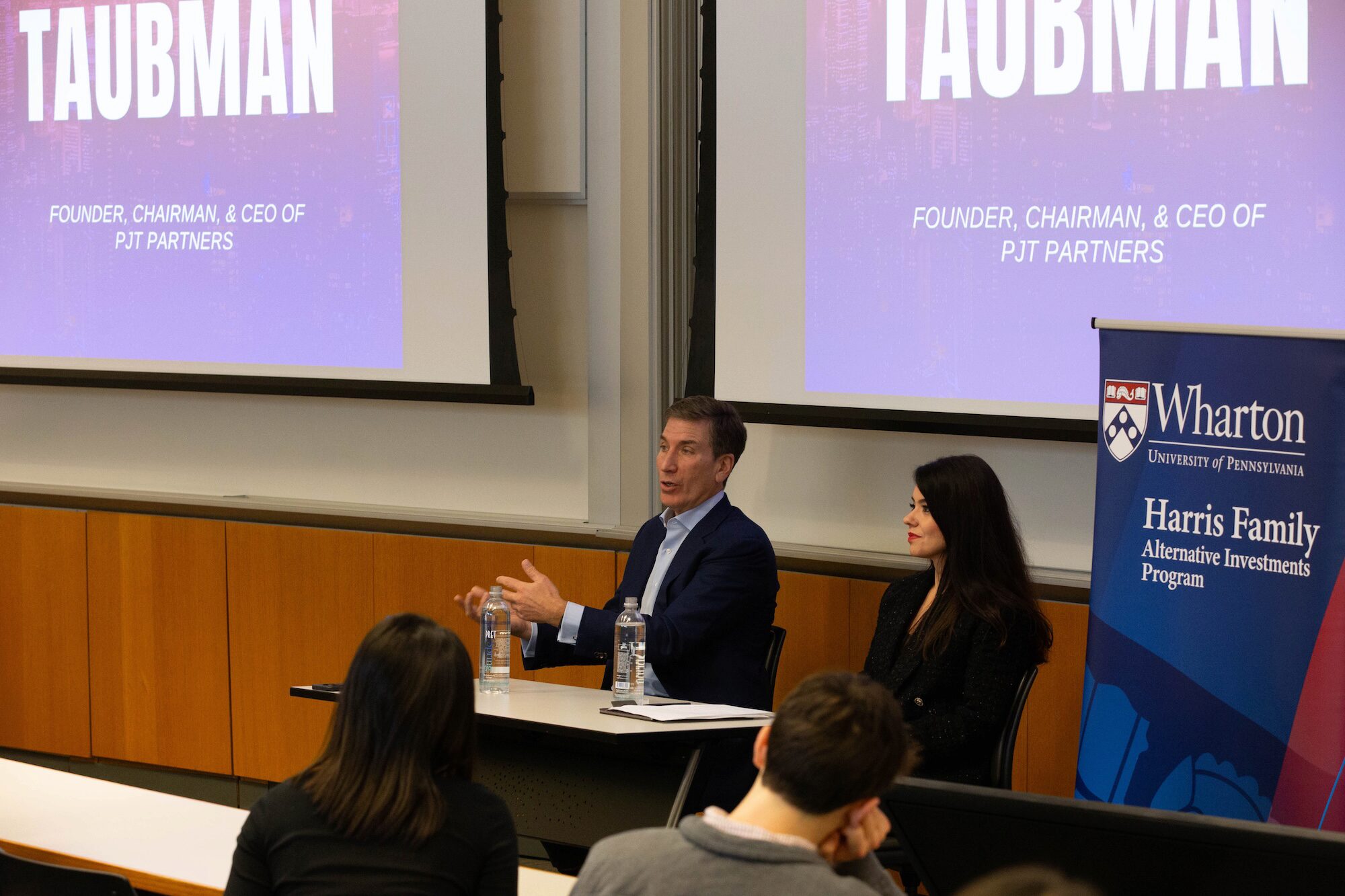
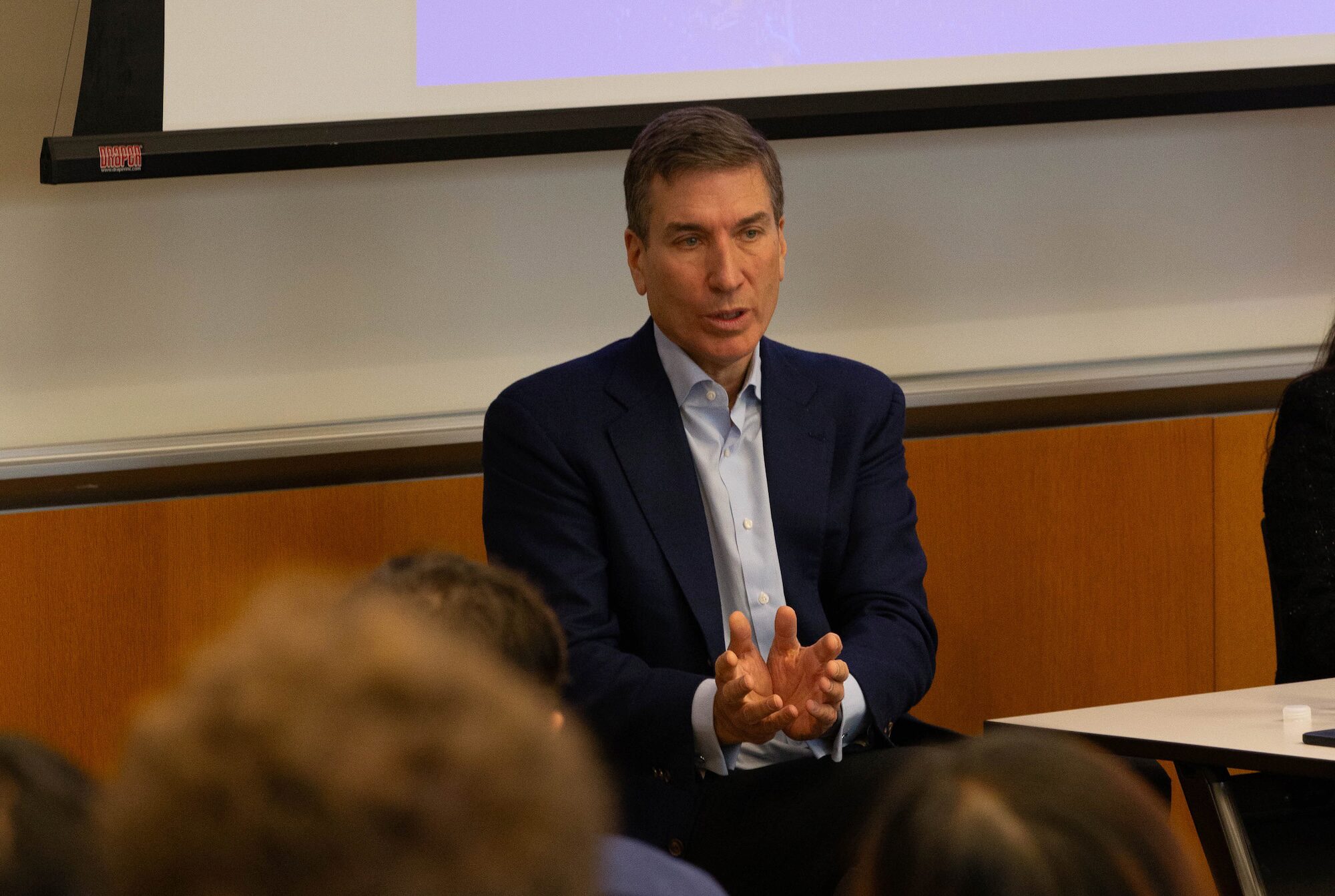
By December 2025, Taubman was back at Wharton discussing the firm with students. He recalled a beginning with a team of two and spoke about selecting people who were driven and intellectually curious. The conversation returned to the deliberate choices involved in building an organization. Recruiting had become part of the work of advising, because the advice would increasingly come from colleagues.
Even the name had received thought. He explained that “PJT Partners” was meant to signal a firm defined by its people. His initials were on the door, followed by a word that made room for everybody else. The students were hearing from an alumnus who had attended the same institution, then spent decades accumulating experience before becoming a founder.
That sequence gives his story a different rhythm from the familiar account of a student abandoning college to start a company. Taubman brought a long institutional apprenticeship into a young firm. Experience was already present at the beginning. The task was to assemble it, recruit around it and give it somewhere to work.
The arithmetic of building
The resulting growth can be seen in a few plain numbers. PJT’s investor figures put 2015 revenue at $405 million and year-end employment at 353. In 2025, revenue reached approximately $1.714 billion and employment reached 1,224. Those are company measures, rather than a tally of Taubman’s individual deals. That is precisely why they matter here.
The firm’s 2025 results, released in February 2026, reported a 15 percent annual revenue increase. The following July, second-quarter revenue reached $486 million, up 20 percent from a year earlier. First-half revenue was $904.5 million, up 24 percent. Increases came from strategic advisory, private capital solutions and restructuring. Several parts of the business were contributing to the result.
Its map changed, too. The 2018 CamberView acquisition added shareholder advisory capabilities. The 2024 purchase of deNovo brought offices in Dubai and Riyadh into PJT’s footprint. In 2026, Stockholm and Milan became its sixteenth and seventeenth offices globally, bringing its presence to ten countries. A practice once limited by one person’s availability now had a geographical coordination problem.
The figures also clarify the nature of Taubman’s current job. A founder who once decided whether he could personally take another assignment now oversees a firm that must recruit, organize and support people doing work he cannot attend himself.
Opportunity beyond the office
His interests in talent extend into education and volunteering. He serves as board president of New York Cares, sits on the Partnership for New York City board and participates in Stanford’s business-school advisory council. These connections place him in institutions concerned with the city where he works and the education that helped him enter the profession.
Prep for Prep named him its 2019 Lilac Ball honoree after more than two decades of support. Visiting its preparatory classes, he was struck by an eleven-year-old speaking complete sentences in Mandarin after only weeks of study. It is a specific, appealing detail: an executive accustomed to assessing experience taking notice of somebody who was just beginning.
The program prepares students of color for independent schools and provides continuing support. Taubman’s involvement adds a public dimension to a theme that recurs in his business career. People need a setting in which their ability can develop. In a company, that involves colleagues and assignments. In education, it involves access, preparation and sustained encouragement.
What outgrows the founder
In March 2026, he warned publicly that AI’s economic promise would come with disruption for existing businesses. It is a concern suited to an adviser whose clients may face both the attraction of new investment and the damage to established models. Growth creates decisions; so does the realization that a company’s familiar position may no longer be secure.
In 2026, Taubman remains PJT’s founder, chairman and chief executive. His public comments connect the firm’s results to years of investment in its capabilities, footprint and brand. The language is managerial because the work has become managerial. Winning an assignment and building the organization that can handle the next hundred are related achievements with different demands.
The temporary office in 2014 makes an unusually good opening scene because it contains both the appeal and the limit of personal success. Clients wanted him. He had only so much time. His answer took the form of a partnership, a public company and an expanding collection of colleagues. The initials remain. There are many more people available to answer the phone.
More conversations, more context
- Paul Taubman / official biography
- PJT Partners / website
- Paul Taubman / LinkedIn (supplied profile)
- PJT Partners / LinkedIn
- PJT Partners / X (company account)
- Listen / Colbert Cannon conversation, 2022
- Watch / Bloomberg interview on PJT’s Vimeo
- Wharton / December 2025 conversation and photographs
- Read / The 2014 independent-adviser profile
- Read / PJT’s latest financial results