Paul Rady chose his college with an atlas. Growing up in suburban Detroit, he had heard friends describe the American West. He opened a map, picked Western State College in Gunnison, Colorado, and hitchhiked there from Michigan. He had never seen the campus. As admissions strategies go, it required a certain tolerance for surprises. It also put him in the place he would spend decades finding reasons to repay.
He graduated with a geology degree in 1978. The college is now Western Colorado University, and one of its buildings bears his name: the Paul M. Rady School of Computer Science and Engineering. An $80 million gift announced in 2018 helped make it possible. Between the hitchhiking and the school came a career spent looking beneath landscapes, building companies, selling them, and starting again.
The atlas makes a convenient beginning. A second map supplies an unusually good ending. In 2018, when Colorado geologists wanted to thank Rady for his giving, they presented him with an old geological map of the Gunnison Valley. It included Mount Antero, the mountain that gave his company its name. A business career had acquired a surprisingly tidy set of coordinates.
Ten years before the corner office
Rady earned a master’s degree in geology at Western Washington University, then worked for Amoco for ten years. His territory included the Rockies and the Mid-Continent. Before he became responsible for a company’s direction, his work was the earth itself: formations, basins and the question of where to look next.
That apprenticeship matters because his later career can look, from a distance, like a succession of executive titles. In 1990, Barrett Resources recruited him as chief geologist. He moved through exploration management and senior operating positions, eventually becoming chief executive. The technical specialist had become the person responsible for the whole enterprise.
At Barrett, the scale of the assignment changed considerably. During his years there, the company expanded from a business active in a single basin into an explorer operating across eleven. A contemporary account of his career put its market capitalization at $20 million near the beginning of that period and $1.2 billion later. Those are company figures, rather than a personal scorecard, but they explain the environment in which he learned to run a business.
Then, in 1998, he left to lead Pennaco Energy. Moving from an established leadership position into a young venture gave his geological training a different test. Now the acreage, the money and the organization had to come together around a particular opportunity: coalbed methane in Wyoming’s Powder River Basin.
Barrett Resources
Chairman & CEO
company founded
Both Antero companies
Two partners, several kinds of rock
Glen Warren joined him at Pennaco. Warren brought experience in investment banking and had previously worked as an Amoco landman. Their partnership would survive changes of company, basin and drilling technology. A geologist and a financier are a useful combination when the interesting rocks and the available capital occupy different rooms.
Pennaco grew from a small acreage position into a public company producing more than 50 million cubic feet of gas a day. In February 2001, Marathon Oil bought it for $500 million in cash. The venture had lasted less than three years. Rady and Warren could have treated that transaction as a finish line. Instead, they began another company.
They founded the original Antero Resources in 2002, with investor funding following in early 2003. Their attention moved to the Barnett Shale in Texas. By April 2005, that business was sold to XTO Energy for more than $1 billion in cash and stock, including assumed debt. The distinction matters: a transaction value belongs to the deal, with its debts and investors, rather than to one founder’s bank account.
There was another Antero to build. The corporate entity behind today’s Antero Resources dates to 2004, overlapping with the predecessor’s final chapter. Keeping the two histories straight helps explain why company biographies use both 2002 and 2004. Rady’s record includes the original venture and the company that continued afterward.
He was candid about how much of the industry’s future had been invisible at the time. Asked in a 2014 interview whether he had foreseen the change in American natural-gas production, he answered, “I had no idea.” He remembered coalbed methane as an unusual opportunity because it offered thousands of potential drilling locations. An independent producer could suddenly plan much further ahead.
“I had no idea.”
Paul Rady, in 2014, on whether he foresaw the shift in U.S. gas production
That admission gives the story some welcome texture. The public version of entrepreneurship often arrives with hindsight pressed flat and all the creases removed. Rady’s answer leaves the uncertainty in place. He and his colleagues recognized a workable opportunity. Knowing what it would eventually mean for the entire country was a different matter.
A Denver address, an Appalachian business
Antero entered Appalachia in 2008 and drilled its first wells there in 2009. Rady remained based in Denver while the company’s operating center of gravity shifted east, toward the Marcellus and Utica shale formations. The map kept getting larger even as the business concentrated on particular rocks.
The company went public in 2013. Its offering marked the arrival of a business built through years of acquiring acreage and developing unconventional gas resources. The management team carried experience from Amoco, Barrett, Pennaco and the earlier Antero. Some colleagues had worked together, at different stages, for more than thirty years.
That continuity is an easily overlooked part of Rady’s career. Companies changed their names and owners; working relationships could persist. When Warren retired in 2021, Rady described a partnership of more than twenty years, extending from Wyoming coalbed methane through the Barnett and into Appalachia. The geological opportunities were different. The person across the table was familiar.
There was also a second business to organize around the first. Antero Midstream was formed in 2012 to develop infrastructure serving the producer. Gathering lines and compression equipment helped connect underground resources to customers. Its public offering followed in 2014. The arrangement made the less glamorous connective work a business in its own right. A successful well still needs somewhere for its gas to go.
The student who paid for a different syllabus
Rady’s giving to Western started well before the engineering building. In 2001, he contributed $1 million to establish an endowed chair in petroleum geology. He added $1.5 million in 2014. Those gifts supported teaching in the field he knew, bringing a career’s accumulated resources back into the classroom where another career might begin.
The engineering partnership extended that idea into different disciplines. Students could study computer science or mechanical engineering in Gunnison and earn degrees from the University of Colorado Boulder. They would begin as Western students, then become CU Boulder students for the latter part of the program, while remaining on Western’s campus. The geography of the student’s life could stay put while the institutional arrangement changed.
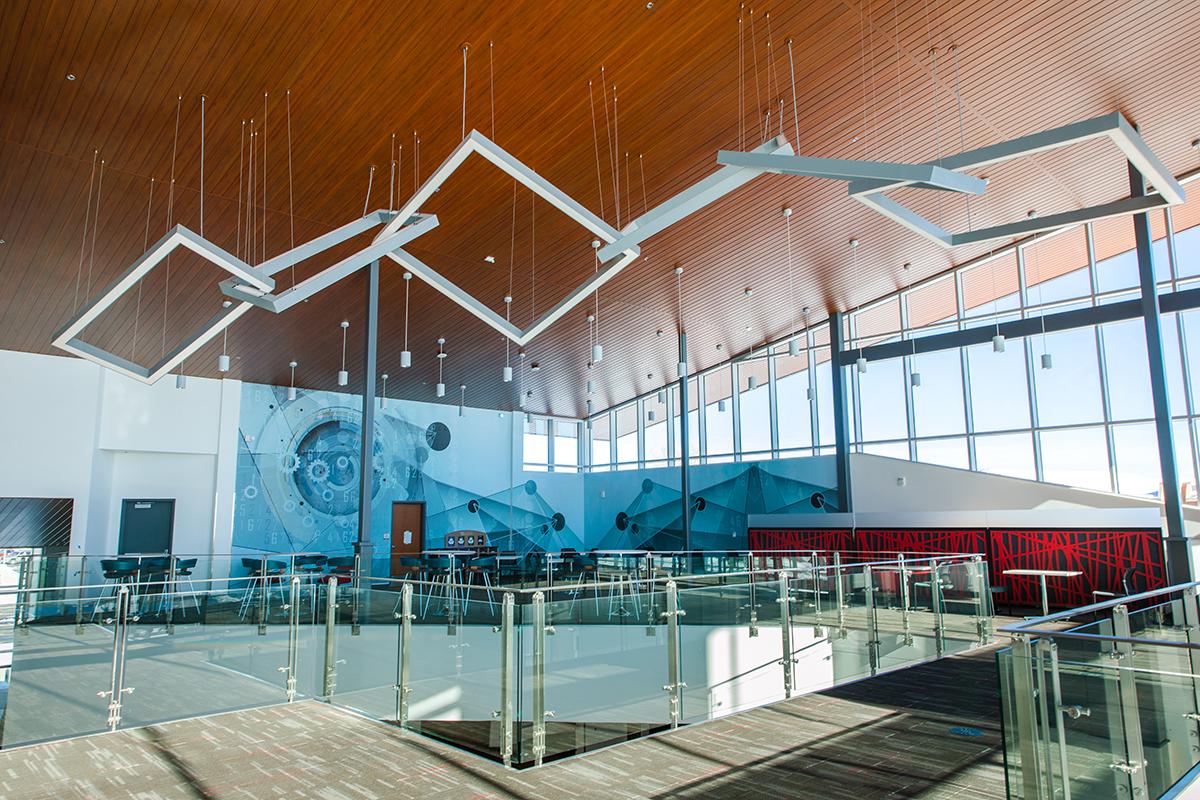
The school’s 75,000-square-foot building opened in 2020. Its rooms were designed for hands-on work, with laboratories and project spaces alongside classrooms. By the opening, Western described Rady’s support for the initiative as totaling more than $90 million. The original $80 million announcement and that later total describe different moments in the project’s history.
His connection to Boulder grew too. The university named its mechanical engineering department for him in 2020, recognizing $15 million in committed giving. He also backed an endowed geology chair and educational geology animations. This was a donor whose interests could accommodate both an old geological map and a newer way of showing how the ground works.
One campus. Two universities.
Students in the partnership remain in Gunnison and earn a CU Boulder degree in computer science or mechanical engineering.
Room for the people in the stands
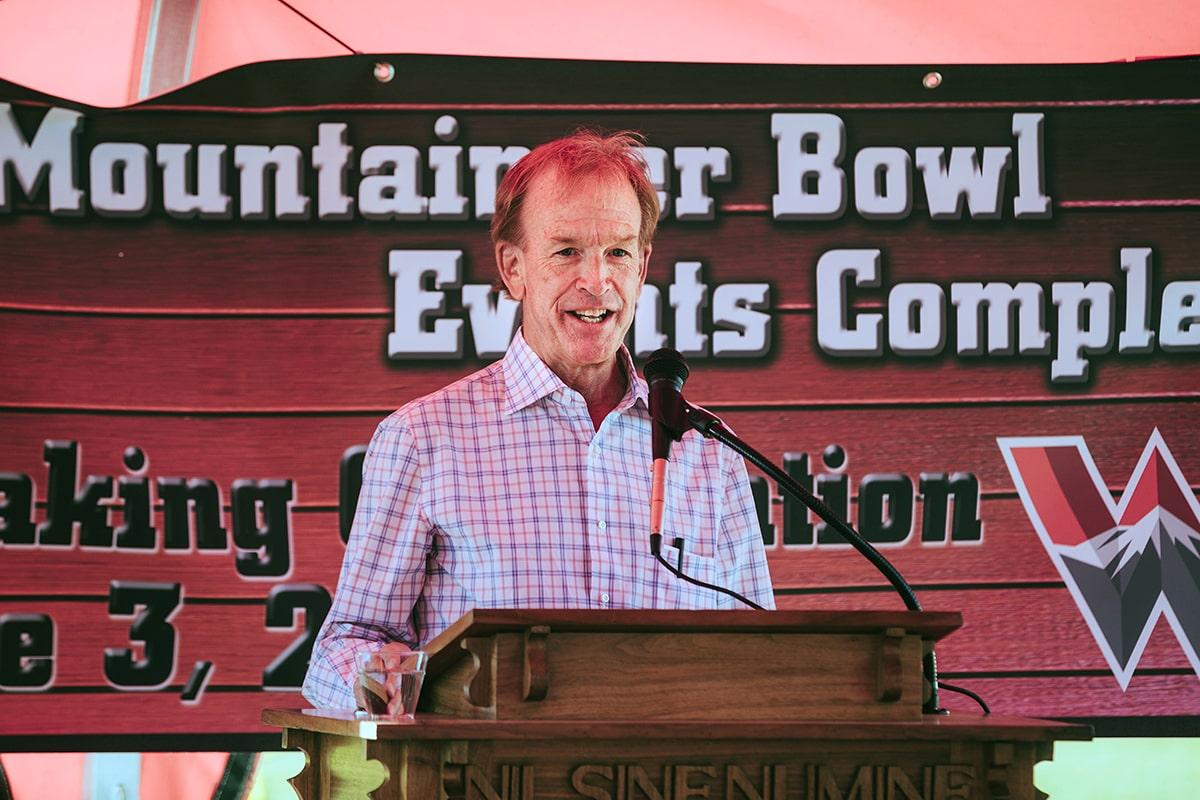
In June 2022, Rady stood at a lectern at Western’s Mountaineer Bowl groundbreaking. He and his wife, Katy, had made the lead commitment for the renovation. The setting was a useful reminder that university life continues after the laboratory closes. There are teams, spectators, visiting families and the town beyond the campus.
The renovated venue opened in 2024 as part of the Rady Family Sports Complex. It included a new entrance, an expanded press box, a new playing surface and track-and-field facilities. Rady had explained the couple’s intention as complementing Western’s expanded academic programs with improvements to its athletic core. Their involvement reached from what students studied to where the community gathered to watch them compete.
The Radys had already received honorary degrees through the University of Colorado’s 2020 Regent Awards. Neither had attended CU. That detail fits a pattern in their educational giving: an attachment to one college had become a reason to connect institutions, rather than a boundary around who could benefit.
A map suitable for the living room
On August 14, 2025, Rady became chairman emeritus of Antero Resources and Antero Midstream. Michael Kennedy succeeded him as chief executive and president of both companies. Rady’s new agreement provided for advice and counsel when requested, with an initial term through December 2028. The daily job had changed, while a formal connection remained.
His earlier thank-you gift from the geologists offers a less contractual way to understand the arc. Paul Weimer had found a map linking the place Rady studied with the mountain behind the Antero name. Weimer suggested finding room for it in the office. Katy proposed the living room instead.
It is a small domestic decision to set beside acquisitions, public offerings and university buildings. It also brings the scale back to something recognizable: a person, a place and an object worth keeping at home. Rady had once used a map to choose somewhere to go. Decades later, another map showed how much of his life still led back there.
Follow the route
More on the companies, the campus and the map.