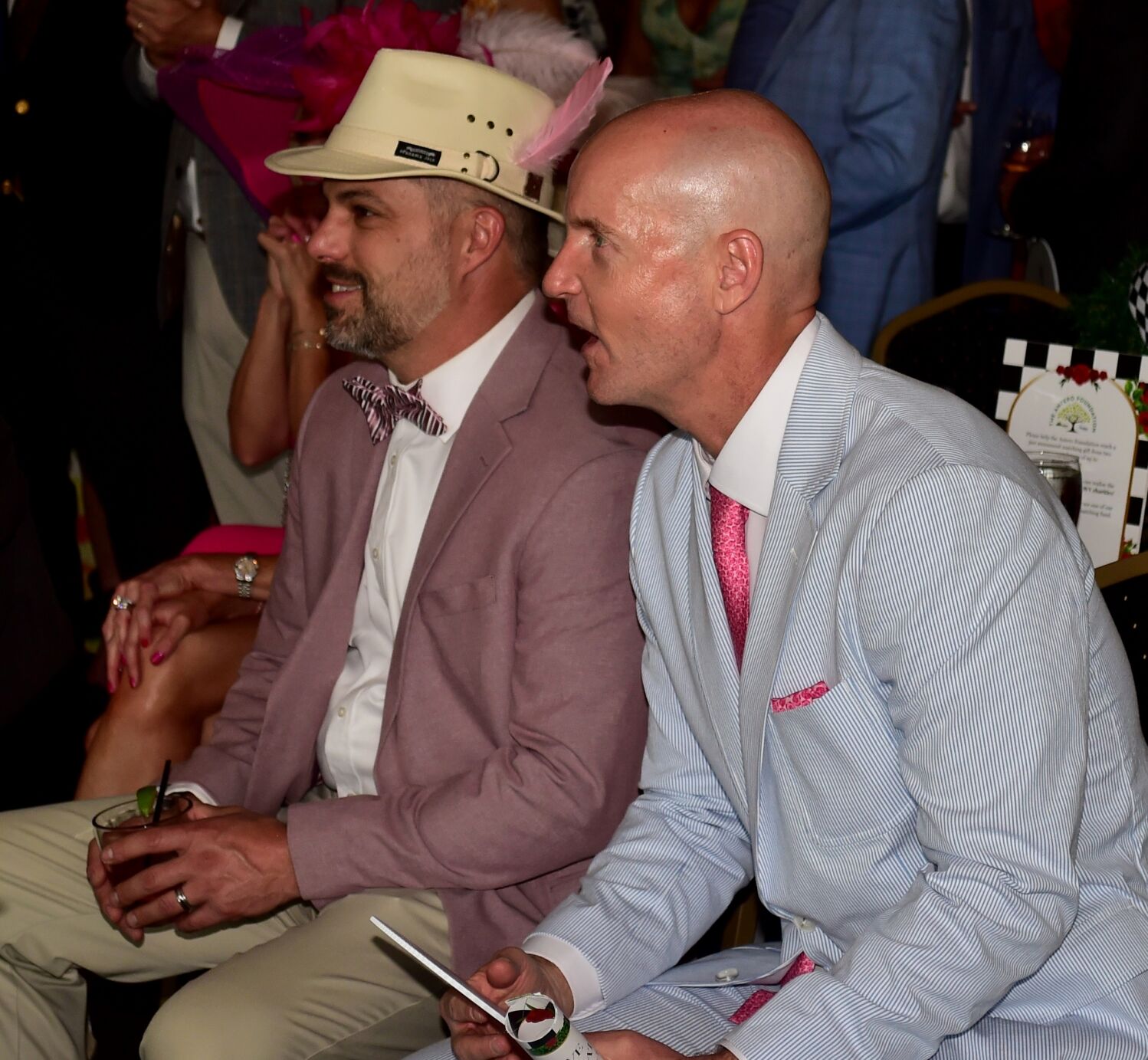
At the Kentucky Derby fundraiser in Bridgeport, West Virginia, Michael Kennedy wore seersucker. Around him were elaborate hats, a silent auction and the business of persuading people to part with money for a local cause. Kennedy had been chief executive for about eight months. He had been with Antero since 2013. The difference between those two clocks is a useful place to begin.
The occasion was the Antero Foundation’s ninth Hats, Hearts & Horses gala, held at Pete Dye Golf Club in May 2026. Kennedy talked about the welcome the company had received in West Virginia. He described giving back as a responsibility to the communities where Antero works. There was a fundraising target, too: he hoped the evening would help bring eight years of donations past the million-dollar mark. Even in seersucker, the accountant had a number in view.
By then, Kennedy was running two public companies. Antero Resources produces natural gas and natural gas liquids. Antero Midstream provides gathering and other infrastructure services. Denver is his professional base; West Virginia is central to the business he leads. His story runs between the financial office and the physical work of moving energy to a buyer. The distance between those places can be expensive.
Before the wells, the ledger
Kennedy’s degree is a B.S. in accounting from the University of Colorado Boulder. He worked at Arthur Andersen from 1996 to 2001, auditing businesses in natural resources. That is an unusually useful opening chapter for someone who would eventually oversee a producer and an infrastructure company: an introduction to the industry through the records it must keep and the claims those records must support.
He joined Forest Oil in 2001 and spent twelve years there, working through financial roles before becoming executive vice president and chief financial officer in 2009. He held that position until 2013. These were substantial stretches at a small number of employers. His route to the chief executive’s chair was built through repeated exposure to the same industry, with responsibility accumulating along the way.
At Antero, he started as vice president of finance in August 2013 and became senior vice president in January 2016. His responsibilities extended across the related midstream businesses as their corporate structure changed. By 2021, he was chief financial officer of Antero Resources and a director of Antero Midstream. He had experience on both sides of the relationship well before he became responsible for leading both companies.
- 1996Natural-resources auditing at Arthur Andersen
- 2001Joins Forest Oil; becomes CFO in 2009
- 2013Joins Antero’s finance team
- 2021Antero Resources CFO; Antero Midstream director
- 2025CEO and president of both companies
Two companies, one appointment
The companies have separate stock listings: AR for Antero Resources and AM for Antero Midstream. Each has its own board. Kennedy’s shared title therefore reaches across two sets of corporate responsibilities. The physical connection between their operations sits alongside that formal separation, making coordination part of the work of leading them.
On August 14, 2025, Kennedy succeeded Paul Rady as chief executive and president of Antero Resources and Antero Midstream. Rady became chairman emeritus. The companies also separated their chairman and chief executive roles, with Benjamin Hardesty taking the Resources chair and David Keyte taking the Midstream chair. Kennedy’s promotion came with a change in the arrangement around him.
The succession had roots in working relationships. Hardesty described having watched Kennedy and Rady make operational and financial decisions together for years. Keyte said he had worked closely with Kennedy for more than two decades and praised his knowledge and work ethic. That is the context for the appointment: the boards were choosing someone whose judgment they had already seen at work.
Kennedy, in turn, credited the years spent beside Rady and said he wanted to build on his predecessor’s legacy. Brendan Krueger became Resources’ CFO; Justin Agnew became Midstream’s CFO. A chief executive’s appointment can look like a solitary event in a biography. Here, it also meant established colleagues taking on new responsibilities across the same connected businesses.
A $2.8 billion change of emphasis
The new chief executive soon had a transaction large enough to make the appointment consequential. In December 2025, Antero Resources announced an agreement to buy HG Energy’s upstream assets for $2.8 billion in cash, plus the assumption of its commodity hedge book. Separately, Antero Midstream agreed to acquire HG’s midstream assets for $1.1 billion. Resources also agreed to sell its Ohio Utica upstream assets for $800 million.
The geography mattered. The acquisition would add production and drilling inventory in West Virginia’s Marcellus footprint, while the sale would remove the Ohio Utica assets. Together, the transactions concentrated the business more heavily in West Virginia. The two Antero companies were buying different parts of a connected operation: production for one, infrastructure for the other. Kennedy had spent years working across that dividing line.
The HG acquisition closed in early February 2026; the Utica sale followed later that month. By April, Kennedy was discussing how the enlarged operation performed in the field. He credited the operating team with keeping volumes flowing through Winter Storm Fern. The first-quarter results included $859 million in cash from operating activities and $535 million in net income. For a former finance chief, these figures now described a business whose entire performance was his responsibility.
Integration gave the team a more detailed test. On the first-quarter call, Kennedy described a six-well HG pad with average lateral lengths above 18,000 feet. He also discussed changes to drilling and completion design, water handling and the use of greater scale to reduce costs. A transaction’s logic has to survive encounters with equipment, schedules and working practices. The acquisition price buys the opportunity to do that work.
The customer has to be worth the journey
Kennedy’s early calls as CEO also returned to a question facing the gas business: which buyers should receive the next increment of supply? In October 2025, he connected renewed dry-gas drilling in Harrison County with discussions about power and data-center demand. Antero was developing a proof-of-concept pad in an area where it already had acreage and midstream infrastructure. The purpose included learning more about well performance and deliverability before making larger commitments.
By the second-quarter 2026 call, his explanation had broadened into a choice among destinations. Older transportation commitments were approaching expiry. Some routes had worked better than others. Antero could compare renewed commitments with opportunities closer to its production. Kennedy said potential projects would be judged on pricing, timing and certainty. A proposal needed to make sense alongside the other markets the company could reach.
That is a revealing emphasis for someone trained in finance. A large prospective customer can make an impressive announcement; a durable return depends on the terms and the execution. Kennedy’s public discussion gave those details room. His job involves deciding how much flexibility to retain, how much certainty to buy and which future opportunities deserve present spending. Pipelines make those decisions tangible. Once built or contracted, they come with obligations.
The part of West Virginia that stays in view
The relationship with West Virginia had appeared in Kennedy’s work before the promotion. In August 2023, he joined Rady and other Antero leaders at the announcement of a $4 million gift to West Virginia University’s petroleum and natural gas engineering program. The event followed a presentation by Rady and Kennedy about the company’s role in the state. Education and workforce development were part of that relationship.
When the university described the gift’s academic uses in 2024, they included fellowships, professorships, research and experiential learning. Kennedy connected the commitment with the need to hire people who understood an evolving, technical industry. He called it “the natural next step” in Antero’s continuing regional commitment. The donation belonged to the companies. His explanation made clear why developing engineers could matter to their future as well as the university’s.
“West Virginia and its people have been so kind to us.”
Michael Kennedy · May 2026 Derby gala
In August 2026, the connection acquired a more visible form: a five-year jersey sponsorship covering all eighteen WVU varsity sports. Kennedy reached for a clothing metaphor, describing Antero as being “sewn into the fabric of Mountaineer Athletics.” It was fitting language for a logo going onto uniforms. It also put the company’s identity in front of employees, contractors and mineral owners watching the same teams.
The seersucker suit in Bridgeport belongs in this story for much the same reason. Kennedy’s work is discussed in units of production, cash costs and capital. The business also places him in rooms where people expect to hear what its presence means for their communities. At the gala, his answer was gratitude and an appeal to give. A balance sheet can describe a company’s obligations with precision. A local gathering supplies faces.
The next set of numbers
By July 2026, Antero Resources was reporting the first full quarter with HG in the business. Production averaged more than 4.1 billion cubic feet equivalent a day, up 21% from a year earlier. Total cash operating costs were $2.38 per thousand cubic feet equivalent, down 11%. Those are company results achieved by an operating and financial team; they are also early evidence against which Kennedy’s first decisions as chief executive can be assessed.
The work continues beyond the acquisition. The company’s next scheduled results release is October 28, 2026, followed by a conference call the next day. Kennedy will again have to connect the numbers with decisions about assets, customers and spending. He came to the job after years of explaining how the business was financed. He now has to explain where it should go, and why the journey is worth its price.