Patrick Nelli has a favorite self-diagnosis: recovering CFO. The joke lands because the recovery appears incomplete. He still reaches for forecasts, payment flows, and the bracing clarity of a number placed in the correct cell. Only now the spreadsheet is pointed at a problem more intimate than quarterly guidance: whether an employee can find a doctor with enough time to listen.
The route to that question was not straight, though it was unusually coherent in retrospect. Nelli studied physics at Wake Forest University, concentrating in biophysics and biochemistry. He researched drug discovery and medical devices. Then he moved into healthcare investment banking at McColl Partners and private equity at GTCR, where the laboratory gave way to diligence rooms and the molecules became business models.
Finance can be a splendid education in cause and effect. Follow the money and a system begins confessing its priorities. Nelli learned how care was financed, where incentives collected, and why a promising clinical idea could fail on the trip from paper to practice. That combination of scientific curiosity and financial fluency would become his professional accent.
The ten-year apprenticeship
In 2013, Nelli joined Health Catalyst, a healthcare data and analytics company. He was not placed in a single tidy lane. He built the company’s internal analytics group and its Touchstone benchmarking product line, work that required an operator’s tolerance for unglamorous detail. In 2017 he became chief financial officer, overseeing finance, accounting, investor relations, human resources, information technology, and real estate.
Two years later, Health Catalyst listed on Nasdaq. Nelli played a central role in the July 2019 IPO, the kind of milestone that turns private assumptions into public promises. In January 2021 he became president, with responsibility for the major growth functions, client engagement, international expansion, sales operations, marketing, and communications. The title changed, but the underlying work kept widening: understand the machinery, then make its parts speak to one another.
A career built in layers
Colleagues noticed the combination. One public recommendation described a leader who was humble and approachable but willing to press with hard questions. Health Catalyst CEO Dan Burton praised his intellectual capacity, strategic judgment, and energy when announcing the presidency. The portrait is less of a table-thumping executive than a person who wants the table to show its work.
Nelli has said a good career lives where personal passion, individual skill, and societal need overlap. By 2023, he had reached that intersection with enough experience to recognize it. He left the large-company presidency and launched Aligned Marketplace. In an interview, he put the motivation plainly: he had always wanted to start his own company.
A marketplace for time
Aligned’s pitch begins with a purchasing nuisance. Self-insured employers may want to give workers access to independent advanced primary care, but a national workforce makes local contracting laborious. One clinic group may serve a city beautifully and remain useless to everyone outside it. A virtual provider may travel farther but suit only part of the population. Stitching together the options can become an administrative hobby no benefits team requested.
Nelli’s answer is a managed marketplace. Aligned curates clinic-based, virtual-first, community-based, and population-specific practices; brings them under one employer contract; matches members to appropriate options; and ties payments to performance. Workers keep their existing insurance and gain additional choices. Independent practices gain access to populations they could not efficiently reach alone. Employers get a structure designed to measure access, engagement, experience, and cost.
There is a human proposition hidden inside that contractual architecture: more time. The independent membership-based practices in Aligned’s network generally use smaller panels and longer appointments than traditional volume-driven practices. In this model, a doctor can spend thirty to sixty minutes with a patient rather than sprint through a tightly packed schedule. Scale, here, is meant to distribute a slower encounter.
The phrase “marketplace” can suggest an infinite aisle and a cheerful search box. Nelli’s version is more interventionist. The company uses data to identify members likely to benefit, recommends practices based on location and needs, helps schedule the first visit, and follows up. Choice matters, but choice without a path can become another neglected tab in an employee portal.
The distinction matters because Aligned does not own the practices it gathers. Its task is orchestration: judge which groups belong, standardize the commercial relationship, make a scattered network legible to a national buyer, and still leave room for local or population-specific models. The company describes the result as one contract layered over an employer’s existing carrier or third-party administrator. No platform migration is required, and workers who like their current primary care relationship can keep it. The promise is additive rather than compulsory, a useful bit of restraint in an industry where every new solution seems to arrive carrying a replacement project.
Make the spreadsheet tell the truth
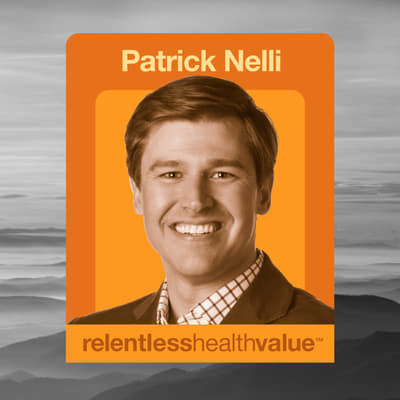
On the Relentless Health Value podcast in 2026, Nelli offered benefits leaders a seven-step roadmap for talking to finance. His starting point was almost comic in its restraint: open the conversation. Benefits teams understand a complicated field that most employers are not in the business of running. Finance teams understand budgets and risk. Each side becomes less useful when it treats the other as an annual approval gate.
Then comes the honest forecast. Nelli argued that employers should plan for medical inflation above ordinary consumer inflation if they leave the status quo untouched. A conveniently low assumption does not reduce cost; it merely schedules a surprise. His suggested long-run reference point was 7.7 percent, the historical average he cited over two decades. Put the true trend into the model, and the reason to consider alternatives becomes visible without theatrical persuasion.
The recovering CFO’s seven moves
- Start a continuing conversation between benefits and finance.
- Forecast medical trend honestly, above ordinary inflation.
- Offer a better alternative to passive price-taking.
- Use strategies with measurable evidence behind them.
- Align incentives and install safeguards.
- Optimize contracts, including direct arrangements.
- Guide members toward high-value options.
The rest of the roadmap follows the incentives. Choose proven strategies. Pay for the behavior you want. Put safeguards around unintended consequences. Contract deliberately. Help members find high-value organizations instead of assuming they will wander there unaided. It is less a manifesto than a sequence of management chores. This is precisely why it is interesting.
Nelli also turns the burden back on vendors. A polished promise should not be enough for a skeptical finance team. He argues that counterparties should put their fees at risk and connect payment to the employer’s goals. Aligned says it does so, placing its administrative economics behind outcomes rather than collecting another indifferent layer of fees.
Evidence earns the next chapter
In August 2026, Aligned announced a $20 million Series A led by Venrock. The financing brought its publicly reported total to $31 million after seed rounds. Money was only half the announcement. The company also released results from a program launched in 2025 with a large national employer.
Engaged members cost 12 percent less than a risk-matched national benchmark in the first year, a difference reported as $96 per member per month and validated by a third-party actuarial firm. Seventy percent of engaged members were classified as high risk. The company also reported strong access and experience scores. The cautious reading is that one year and one employer do not settle a large thesis. The important reading is that the thesis has begun submitting numbers.
For Nelli, that is the bridge between mission and management. Aligned’s stated mission is to increase America’s healthy years, an aspiration broad enough to fill a conference screen. The operating model underneath it is narrower: assemble independent providers, remove administrative friction, engage the people most likely to benefit, measure what happens, and accept economic accountability.
He remains fond of partnerships and plain pain points. His advice to companies without fresh capital is to be resourceful, build strong partnerships, and make sure the product addresses a real problem. His own family-favorite New York winter outing is the Radio City Music Hall Christmas Spectacular, a detail so wholesomely conventional it practically arrives wearing a scarf.
The more revealing quirk is intellectual humility. At the end of a detailed explanation of Aligned’s model, Nelli volunteered that the company still had much to learn and that he enjoyed conversations that helped it learn. There are founders who regard certainty as part of the uniform. Nelli’s scientific training suggests another posture: a model is respectable because it can be tested.
His career has been one long test of translation. Molecules into investments. Data into operations. A private company into a public one. Care quality into employer economics. Now the project is to translate a national contract back into something startlingly small: a person, a doctor, and enough time for the conversation to matter.