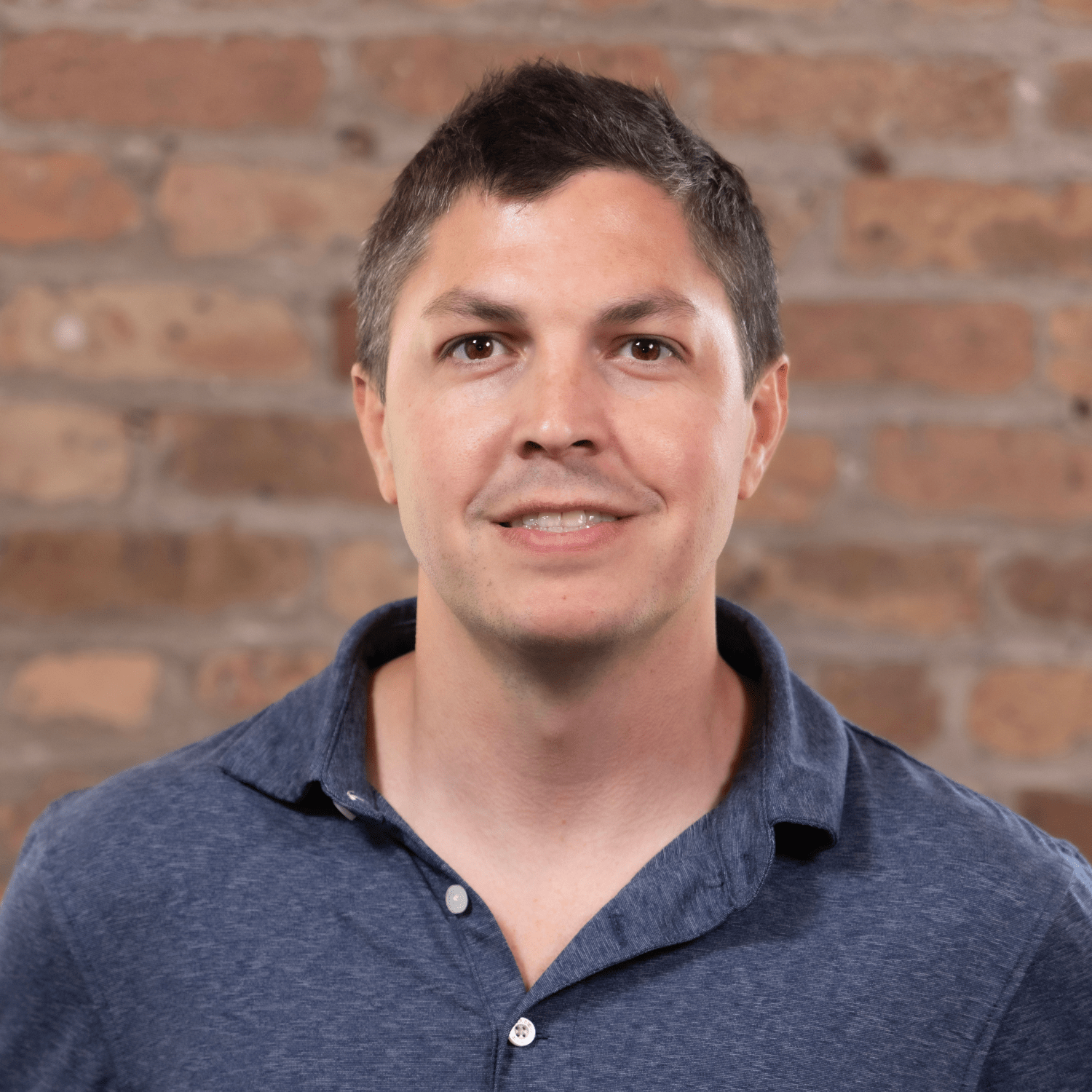
He built the tool he wished the surgeons around him already had.
In a research office at a Chicago medical center, someone was copying patient outcomes out of an electronic health record by hand. One field at a time, into a spreadsheet. Matthew Gitelis watched it happen and could not unsee it. He had spent his early career at BMO Capital Markets, moving between Chicago, New York and Toronto, working M&A and capital raises. On Wall Street, data of that value would never be moved by hand. In medicine, it was Tuesday.
That gap - the distance between how finance treated its data and how healthcare treated its own - became PatientIQ. He founded the company in 2016 while enrolled at Rush Medical College, running outcomes research on the side at institutions including NorthShore University HealthSystem and Midwest Orthopaedics at Rush. He was, briefly, three people at once: a med student, a researcher, and a founder. In 2019 he stopped pretending he could do all three and left medical school to run PatientIQ full-time.
What PatientIQ actually does
Strip away the jargon and it is a plumbing problem. Patient-reported outcomes - how a patient actually feels weeks and months after a procedure - are some of the most valuable signals in medicine and some of the hardest to capture. PatientIQ plugs into the electronic health record, automatically filters and enrolls the right patients, nudges them through digital care pathways, and collects what they report back. Then it does the part that finance takes for granted: it benchmarks. A surgeon can see how their results compare, an organization can see where it stands, and everyone gets numbers instead of hunches.
Gitelis is quick to say he did not do it alone, and the makeup of the team is the point. "We've brought together researchers, biostatisticians, physicians, software engineers and other professionals to solve this problem," he has said. It is a strange payroll - people who publish in journals sitting next to people who ship code - and that friction is the product.
The unlikely resume
Here is a detail that says more than any title: Gitelis is an author on more than 30 peer-reviewed publications, and he never finished medical school. He came from a medical family, took a detour through investment banking, then doubled back toward medicine because he wanted a bigger dent in the world than a deal sheet could give him. The research years were not a footnote. They were where he learned exactly which manual, archaic workflows were choking clinical innovation - and where he found his customers before he had a company to sell them.
By the numbers he now quotes, the bet has scaled: a network of more than 800 healthcare organizations across some 12,000 sites of care, supporting over 14 million patients, with north of 50 million patient-reported outcomes collected. In May 2022 the company raised a $20 million Series B, bringing total funding to roughly $26 million - capital he has said is aimed squarely at talent. "We are focused on strategic growth at PatientIQ. This means adding exceptional talent to our internal teams."
Why it sticks
The easy version of this story is "banker gets a conscience." The truer version is quieter. Gitelis did not invent a new science. He noticed that the tools already existed, that one industry hoarded them and another went without, and he spent a decade moving them across the fence. His pitch, stripped to a sentence, is almost cheeky: give the surgeon the same dashboard the quant already has. The audacity is not in the technology. It is in the assumption that medicine deserved it all along.