At 72, Patrick G. Ryan started another insurance company. He had already built Aon, spent decades buying and combining businesses, and helped Chicago try to land an Olympics. A comfortable retirement would have required very little explanation. Instead, in 2010, he founded Ryan Specialty. The choice makes more sense when you go back to a car dealership, where he had once noticed that selling a vehicle and arranging its insurance were two jobs being awkwardly performed by the same person.
Ryan's career has a recurring location: the gap between a customer who needs something and an industry that has made obtaining it unnecessarily difficult. The products change. So do the sums involved. His interest in getting the right person into that gap has lasted rather longer than most people's interest in their first profession.
Today he is founder and executive chairman of Ryan Specialty, having handed the chief executive's job to Tim Turner in October 2024. Aon remains the company that made his name familiar around the world. The second company makes his biography harder to close.
A business hiding behind the showroom
Ryan grew up around Milwaukee, with a father who ran a Ford dealership. His early working life included summer road construction, followed by Northwestern University and a 1959 graduation. Finance was part of his education; literature was another. It is an agreeable combination for someone who would spend a career reading both balance sheets and people.
He also sold personalized college scrapbooks to students. The venture earned him $8,000 in his senior year. Long before he had a corporate acquisition to organize, he had customers, a product and the practical problem of getting one to the other. The scrapbook belongs in his story because it gives the later insurance executive something more recognizable than a founding date: a student working out how to make a sale.
After college came Penn Mutual's Chicago office and work as a life insurance agent. The dealership business offered a more particular opening. A customer buying a car might also need financing and insurance. Asking a car salesperson to manage all of it left room for someone trained specifically for the financial part of the transaction.
In 1962, Ryan established a finance and insurance department at Dick Fencl Chevrolet in suburban Chicago. That contribution eventually took him into the Automotive Hall of Fame in 2019, in a class that also included Janet Guthrie and Sergio Marchionne. It is an unusual destination for an insurance broker. Then again, a dealership's paperwork can be as consequential to its business as the cars outside.
Pat Ryan & Associates followed in 1964. By 1968, the firm was selling $15 million in annual premiums. Ryan took it public in 1971, raising capital to expand beyond one line of insurance. The idea had acquired a company around it; now the company needed room to try other ideas.
One short name for a growing collection
The business expanded through acquisitions. Globe Life and four brokerage businesses joined in 1976; the James S. Kemper insurance agencies followed in 1981. In 1982, Ryan Insurance Group merged with Combined International. It was a substantial change of scale, joining his developing business to a much larger insurance organization.
The combined enterprise adopted the Aon name in 1987. The word comes from Gaelic and means unity. For a business assembled from other businesses, the name contained a useful ambition. An acquisition adds offices and customers on paper immediately. Getting the people in those offices to act as colleagues is a slower undertaking.
Aon's expansion through the 1980s and 1990s included Hudig-Langeveldt, Frank B. Hall and Alexander & Alexander. Corporate clients were operating across borders. Insurance brokers had a reason to follow them, bringing local knowledge into an organization that could serve a client in several countries. Ryan's dealership solution had addressed a small distribution problem. Aon addressed a geographical one.
By his 2008 retirement from Aon, the business had more than 500 offices in 120 countries and annual revenue exceeding $7 billion. Those figures describe the distance traveled from the original agency. They also suggest why buying companies was only part of the work. A collection of addresses needs relationships, shared expertise and some reason for customers to keep calling.
The bid that did not come home
Business success did not make every subsequent project cooperative. Ryan chaired and led Chicago's bid for the 2016 Summer Olympics, working alongside Mayor Richard M. Daley. The proposal put Chicago's parks, lakefront and existing venues at the center of an international sales pitch.
It was a different kind of negotiation. The bid needed financial guarantees, political support and the votes of the International Olympic Committee. Chicago had an organized campaign and prominent supporters. On October 2, 2009, it was eliminated in the first round. Rio de Janeiro won the Games.
Afterward, Ryan's team said it had received pledges from nearly 30 IOC members; Chicago collected 18 votes. The discrepancy supplied a rather sharp lesson in the difference between a promising conversation and a completed transaction. Ryan was accustomed to transactions. This one ended with other people holding the decision.
The Olympic bid belongs between his companies without becoming a tidy explanation for the second one. He said in 2010 that he had never intended to retire completely from insurance. Ryan Specialty was an undertaking he wanted to build on its own terms, with a distinct place in the market.
Starting again, with a different customer
Ryan Specialty began in 2010 with a focus on wholesale brokerage and underwriting management. Ryan said at the time that the business would avoid competing with Aon in retail brokerage, reinsurance brokerage and human resources consulting. Starting again involved choosing where to work as carefully as choosing to return.
The distinction matters. A retail broker works directly with a business buying insurance. A wholesale specialist helps that broker obtain coverage requiring particular expertise or access. A managing underwriter can develop and underwrite products using authority delegated by an insurer. Ryan's new organization would work with brokers, agents and carriers, supplying capabilities they could use for their own customers.
His thesis was that increasing complexity and risk would make specialist knowledge more valuable. Cyber exposures and complicated liability problems, for example, create questions that an ordinary policy may not comfortably answer. The second venture returned him to familiar territory: finding people who understood a particular problem, then building a way to bring their work to a wider market.
The All Risks merger, completed in September 2020, brought another group of brokers and underwriters into the organization. It also brought leaders including Nick Cortezi and Matt Nichols into senior responsibilities. As with Aon, a deal's lasting value depended on what the people who arrived could do together.
In July 2021, Ryan Specialty priced its initial public offering at $23.50 a share, with trading scheduled to begin on the New York Stock Exchange under RYAN. Half a century after his first firm's flotation, Ryan was taking another business to the public market. Few career timelines offer that particular anniversary.
“Find something you're passionate about, and do it passionately.”
Patrick G. Ryan
The name on the campus
Northwestern runs through Ryan's life from student enterprise to family philanthropy. He served 14 years as chairman of its Board of Trustees and received an honorary degree in 2009. Shirley Welsh Ryan, his wife and a fellow Northwestern graduate, is central to that relationship. Their giving is a family undertaking.
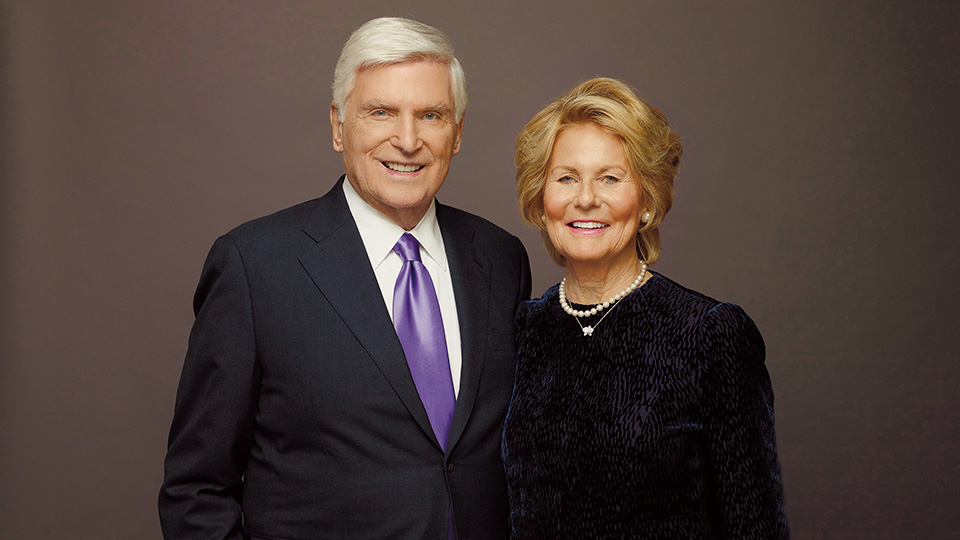
In 2021, the family gave Northwestern $480 million, the largest single gift in the university's history at the time. It supported research and education as well as the redevelopment of Ryan Field. Other gifts have supported faculty chairs, student access, the performing arts and athletic facilities. The campus association extends well beyond a football Saturday.
Welsh-Ryan Arena honors their parents. The Patrick G. and Shirley W. Ryan Center for the Musical Arts puts their names in another part of university life. Together, those buildings offer a more varied picture of the family than any single stadium photograph could provide.
There are Chicago ties beyond the university, too. United Way of Metro Chicago gave Ryan its Andrew J. McKenna Leadership Award in 2023. McKenna had been his friend for nearly 60 years. That detail brings a long business career down to a human scale: people who knew one another before the later titles and kept knowing one another afterward.
Another job after chief executive
When Tim Turner became Ryan Specialty's chief executive on October 1, 2024, he had worked with Ryan since the firm's founding. The succession put a longtime colleague in charge. Ryan became executive chairman, a role the company's 2026 proxy continues to record. The founder stayed involved while the daily leadership moved to someone else.
The arrangement fits a career in which recruiting people has repeatedly enlarged what Ryan could accomplish. His chairman's letter emphasizes empowerment and teamwork. These are easily printed words. In his case, they also describe an enduring operational requirement: specialist brokers and underwriters need enough authority to use the knowledge for which they were hired.
A second company, a public listing and a handover give Ryan several plausible endings. His work has declined to observe them. The student who sold scrapbooks, the agent who saw an opening in a dealership and the founder who returned at 72 all seem interested in the same next conversation: someone has a problem, and there may be a business in helping solve it.
More of the conversation
The companies, the campus and Ryan in his own words.