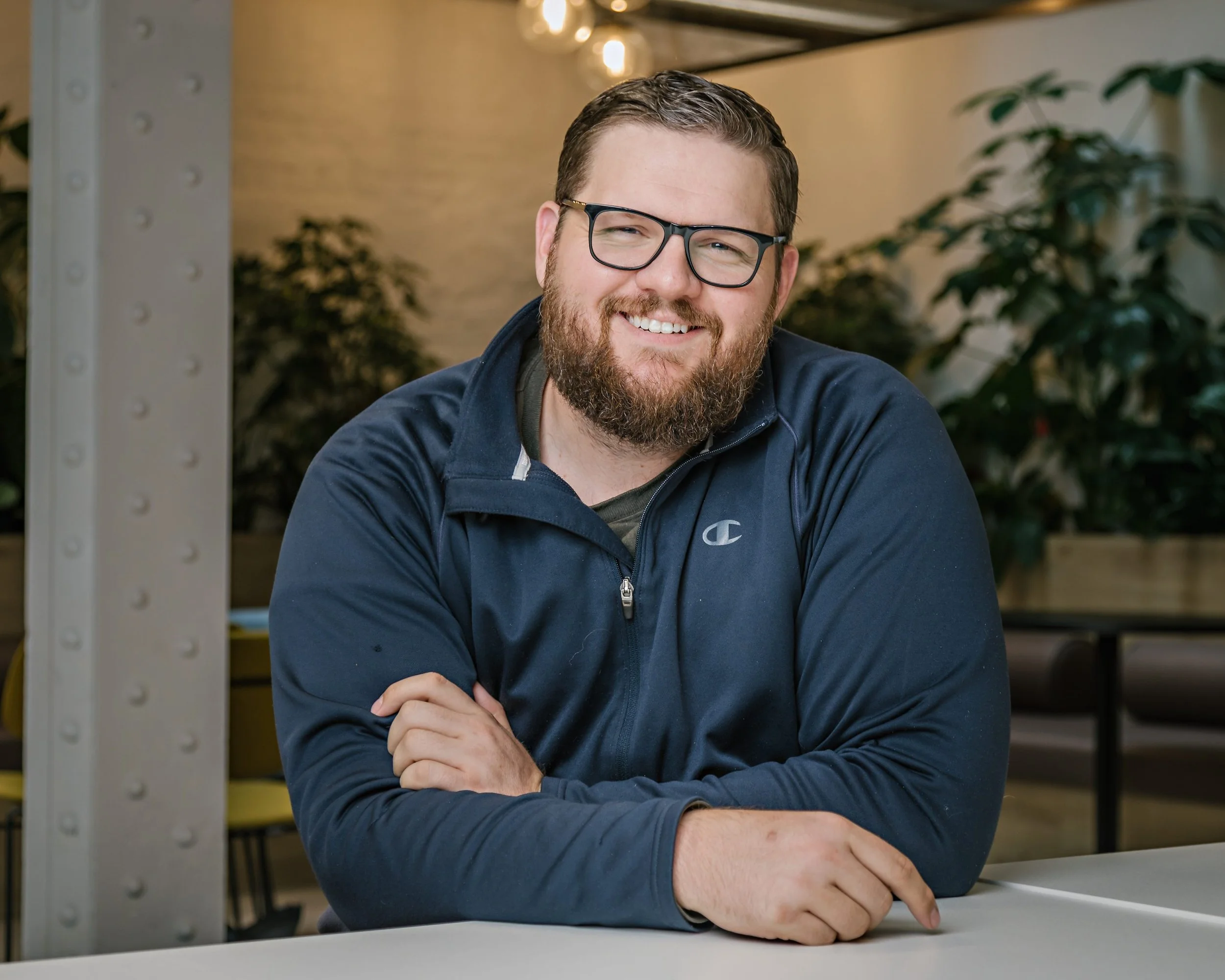
Patrick Campbell, founder of ProfitWell
Founder / Strategist
@Patticus - YesPress Profile

Patrick
Campbell

The guy who gave it away free - and sold for $200 million

Debate champion. NSA analyst. Coffee Master. Bootstrapped SaaS founder. He cashed out his 401k, built a free product better than the paid competition, and walked away with $200M. Now he's quietly trying to fix healthcare.

$200M
Exit to Paddle
30K+
Free Users
10yr
Bootstrap Run
$0
VC Raised
SaaS Pricing Bootstrapped Founder Speaker
EXCLUSIVE - Patrick Campbell sold ProfitWell to Paddle for $200M in May 2022 - then walked into an existential crash

He built something 30,000 companies relied on for free - then sold it for $200 million

On June 15, 2012, Patrick Campbell withdrew $10,000 from his 401k - enough for nine months of runway, after taxes - sat in an office alone, and started writing pricing content. No co-founder. No investors. No safety net. By the time Paddle wrote the check a decade later, three of the world's most valuable software companies - Canva, HubSpot, and Notion - were among the 30,000+ businesses using his free product.

The specific weirdness of ProfitWell was always the free part. Not freemium with a paywall, not a limited trial, not a loss leader - just free. Better-than-paid free. "The goal is customers saying 'I feel bad for not paying,'" Campbell explained. Lyft felt bad. Atlassian felt bad. Zapier felt bad. None of them paid. That was always the point.

Price Intelligently started as a consultancy charging $30,000 per engagement. It became ProfitWell when Campbell noticed the real leverage wasn't in telling companies how to price - it was in giving away the analytics so well that they needed the paid retention and optimization products that came after. The free product became a Trojan horse made of genuine value.

Pricing represents the exchange rate on value. Most companies pick a number, then ignore it for years - treating their most powerful growth lever like a parking spot they set and forget.

- Patrick Campbell

What made Campbell's voice credible wasn't the products. It was the data. ProfitWell's research desk - staffed by economists and data analysts - produced the kind of pricing studies that got cited in board decks. The finding that companies spend just 10-14 hours per year on pricing. The statistic that pricing updates happen every 2.7 years on average. The 7.5x multiplier that made pricing more impactful than acquisition or retention. These weren't opinion pieces. They were verdicts from the largest dataset of SaaS subscription metrics ever assembled.

By 2022, Campbell had 85 employees across three offices (Boston, Rosario Argentina, Salt Lake City), a network of eight SaaS podcasts, and an annual recurring revenue in the eight figures - all without a single round of venture capital. Then Paddle came calling with $200 million.

10yr
Bootstrap run, zero VC
$200M
Acquisition by Paddle
30K+
Companies on free product
8
SaaS podcast shows built
7.5x
Pricing vs acquisition leverage

From coffee grinder
to $200M

Age 14 - College
Starts at Starbucks, earns Coffee Master certification. Credits this as one of the four most formative career experiences of his life.
College - Bradley University
Wins a full speech and debate scholarship. Competes 40 hours a week, wins individual and team championships. Studies economics and math.
~2008-2010
Becomes an Intelligence Analyst Fellow at the NSA. Teaches himself Python to automate the tedious parts. Leaves frustrated by bureaucracy.
~2010-2011
Joins Google in Boston as a strategist. Gets passed over for promotion despite strong results. Describes it as "a golden prison." Leaves.
~2011-2012
Joins Gemvara, a Boston jewelry startup, as head of strategic initiatives. Discovers pricing strategy. The obsession begins.
June 15, 2012
Cashes out his 401k for $10,000 after taxes. Founds Price Intelligently as a solo founder with nine months of runway.
2012-2014
First nine months alone, writing deep pricing content. $130K in revenue in first half of operations, entirely inbound. Hires Peter Zotto.
2016
Rebrands to ProfitWell. Launches the free metrics product. Strategy: make the free tier better than anything competitors charge for.
2019-2021
Grows to 85-90 employees across Boston, Rosario, and Salt Lake City. Builds 8 podcast shows. ProfitWell Retain launches. Canva, Notion, HubSpot, Atlassian on the free tier.
May 2022
Paddle acquires ProfitWell for $200 million - cash + equity. One of the largest bootstrapped SaaS exits ever. Campbell becomes Chief Strategy Officer at Paddle.
2023-Present
Transitions to Strategic Advisor at Paddle. Relocates to Puerto Rico. Starts building a new healthcare company. Publishes 500+ hour research guides on patticus.com.

The man who made pricing a religion

7.5x
Pricing improvements deliver 7.5x more impact on bottom-line growth than equivalent improvements in acquisition or retention.
10hrs
The average company spends just 10-14 hours per year on pricing - less time than a quarterly all-hands meeting.
2.7yr
Average time between SaaS pricing updates. Most companies set a price at launch and revisit it approximately never.
75%
Less churn with value-based pricing vs. feature-based pricing, plus 30%+ more expansion revenue.

The argument Campbell made for a decade was simple: pricing is the most underleveraged growth lever in SaaS, and almost nobody treats it that way. Founders spend months on product, hire entire teams for acquisition, run elaborate retention playbooks - and then pick their price by checking what competitors charge or by asking what "feels right."

Campbell's data showed the result: the average SaaS company updates its pricing every 2.7 years, spends 10-14 hours annually thinking about it, and leaves enormous revenue on the table. His research wasn't fringe. It was cited in boardrooms, embedded in SaaStr talks, and cited back at him by founders he'd never met.

Growth Lever Impact Comparison (ProfitWell Research)
Pricing
7.5x
Retention
4.2x
Acquisition
1.0x

Relative impact on net revenue growth | Source: ProfitWell Research

What separated Campbell from the pricing consultants who came before him was the empirical spine behind everything he said. ProfitWell had the largest dataset of subscription metrics in the world - because 30,000 companies were giving them their MRR data for free in exchange for analytics. That's not a focus group. That's a census.

The doctrine had four commandments. First: freemium is an acquisition model, not a revenue model. Second: willingness to pay is not the same as current price. Third: churn is usually a segmentation problem in disguise. Fourth: the value metric - what you charge per unit of - matters more than the price itself.

At $3,550 an hour, Campbell still takes consulting calls. The price is not accidental. He invented the field of demand-based pricing for services. He is charging what the market will bear and watching what happens. Very on-brand.

He wanted to be a surgeon. Then he fainted.

The origin story that Patrick Campbell usually tells starts with an economics degree and a debate scholarship. The origin story he doesn't always tell starts earlier: a kid from a farm community north of Chicago who ran an animal cracker trading scheme in grades 3 through 5, a paper route, a lemonade stand, a recycling collection business - child capitalism in full bloom.

The plan in high school was cardiovascular surgery. Until he shadowed in a hospital, watched an actual cardiovascular moment, and passed out. Medicine was off the table. Debate was on it.

Bradley University gave him a full scholarship to compete 40 hours a week. He won. He graduated first in his class. He considered law school because debate people do. He considered a PhD because economics people do. He chose neither and went to work for the government instead, which is what you do when you've taught yourself Python and the federal government is the only employer willing to give you clearance.

I never wanted to be in entrepreneurship ever. The path here was just - the alternative was worse every time.

- Patrick Campbell

The NSA job was interesting until it wasn't. Google was lucrative until the politics swallowed the merit. Gemvara gave him the first real glimpse of pricing as a discipline rather than a guess. And then the 401k. And then the blank document. And then nine months alone.

  • 🐾
    Grade 3-5 side hustle: Ran an animal cracker trading scheme at school. First lesson in value creation and market-making, at age eight.
  • 🏥
    The surgeon who wasn't: Wanted to be a cardiovascular surgeon. Fainted during a hospital shadow. Career pivot, immediately.
  • Coffee Master: Worked at Starbucks from age 14 through college. Earned the Coffee Master certification - an honor fewer than 2% of baristas achieve.
  • 🔐
    NSA alumnus: Intelligence Analyst Fellow at the NSA. Taught himself Python there to automate the repetitive parts. Left when bureaucracy won.
  • 👃
    Born without smell: Congenital anosmia - no sense of smell since birth. Can taste everything fine. Has never smelled coffee, despite years of making it.
  • Diagnosed twice: Survived two cancer diagnoses - once while at Google, once two years into building ProfitWell. Rarely discusses it publicly.
  • 🏃
    The vacation that wasn't: Walked 31 miles on a treadmill during a vacation attempt because he couldn't stop working. The hotel probably called someone.
  • ⚖️
    Lost 100 pounds - twice: A detail he drops with characteristic bluntness. No elaboration. Just the number and the count.

He slept perfectly for two weeks. Then the crash came.

Campbell spent months interviewing 30 founders before accepting Paddle's offer. Half expressed regret about their own exits. He listened, triangulated, and decided the regret wasn't about the sale - it was about losing the mission. He had a theory: founders who sold and collapsed weren't missing the company. They were missing the problem.

He sold anyway. May 2022. The night the deal closed, Campbell describes "profound serenity" - the best sleep he'd had in a decade. Ten years of bootstrapped tension unwound in a single night. He became Chief Strategy Officer at Paddle. He had a budget, a title, and no more existential risk.

Two months later, the anxiety came back in a different shape. "You amplify the best and the worst of you in an exit," he said in interviews afterward. The clarity of purpose that had driven him since 2012 - the specific, observable problem of SaaS pricing - was gone. He was an executive at a company he hadn't founded. Important difference.

You amplify the best and the worst of you in an exit. I thought the anxiety was about the company. It wasn't. It was about the mission.

- Patrick Campbell

He transitioned from CSO to Strategic Advisor at Paddle in 2023. The polite version of the truth is that he needed space to find the next problem. The blunt version - which Campbell himself offers - is that he's not built for the executive track at someone else's company. He's wired for the blank document and the nine months alone.

Three of the fifteen founders who had most strongly discouraged him from selling later became drug addicts. He mentions this not as a cautionary tale about exits, but as evidence that the exit itself wasn't the variable. Loss of purpose was. That distinction matters, and he works hard to explain it.

He now lives in Puerto Rico, charges $3,550 an hour for the privilege of his opinion, writes 500-hour research guides on competitive intelligence and pricing strategy, and has started building a new healthcare company with his longtime collaborators Facundo and Peter Zotto. The next blank document is open.
The Campbell Canon

Pricing represents the exchange rate on value.

Freemium is an acquisition model, not a revenue model.

Most companies pick a price arbitrarily, then avoid revisiting it for years despite it being their most leverageable business metric.

Free products must be better than paid competition. The goal is customers saying "I feel bad for not paying."

We were willing to go to zero - because we're trying to build a big company.

Don't do something just to do something. Have an intent and once you are going to do something - go all in.

Things you didn't know about @Patticus

👃
Has never smelled anything - born with congenital anosmia. Spent five years at Starbucks mastering coffee he could taste but never smell.
🔐
Was an NSA Intelligence Analyst Fellow and taught himself Python there to automate the boring parts of intelligence work.
🏃
Tried to take a vacation. Ended up walking 31 miles on a treadmill because the absence of a problem to solve triggered unbearable anxiety.
💰
The $10,000 401k withdrawal that funded ProfitWell was everything he had. After taxes and early withdrawal penalties, nine months of runway - barely.
One of a tiny percentage of Starbucks employees to earn Coffee Master certification - an intensive program covering coffee origin, roasting, and brewing science.
📊
His free product was used by Canva, HubSpot, Notion, Atlassian, Lyft, Zapier, Wistia - companies collectively worth hundreds of billions. None of them paid.
🎤
Won both individual and team debate championships at Bradley University, competing 40 hours a week on a full scholarship.
🔨
Built the sound booths and call rooms in ProfitWell's Boston office by hand. Founder, CEO, and amateur carpenter.

The man who fixed SaaS pricing is now
trying to fix healthcare

Campbell's personal site describes his current mission with characteristic directness: "My team and I are working on building a new healthcare system." No pitch deck, no press release, no accelerator announcement. Just a sentence and a problem statement.

It fits the pattern. He found pricing because he worked at a company that didn't understand it. He built a free product because he believed the market was underserved. He sold when the problem was solved enough to hand off. Now he's found something broken at a different scale.

He's also doing what he always did alongside the main work: writing. The research guides on patticus.com run to 500+ hours of production per guide. "The Complete Guide to Competitor Intelligence and Strategy" is live. Others - on pricing, health optimization, relationships, and outsourcing - are in progress. They're the kind of content that gets saved, shared, and cited. Also very on-brand.

The newsletter, "PC's Recurring Thoughts," lands in inboxes with the density of someone who has a lot of opinions and the discipline to only publish the ones worth reading. The YouTube channel exists. The Twitter account (@Patticus) is active and pointed.

Research Guides in Progress
PublishedCompetitor Intelligence
UpcomingThe Last Pricing Guide
UpcomingHigh Output Health
UpcomingHigh Output Marriage
UpcomingGuide to Outsourcing
Each guide500+ hours research
Companies That Used ProfitWell Free
Canva
HubSpot
Notion
Atlassian
Lyft
Zapier
Zenefits, Wistia, Prezi
+ 30,000 more

Share this profile