At 21, Pari Singh walked into a Seedcamp gathering in a NASA T-shirt and proposed something deliciously unreasonable. Established engineering consultancies needed roughly twelve weeks to move a rocket engine from requirements to detailed design, he said. His small team could do it in two and a half hours. The pitch was not modest. Neither was the original plan: build a European SpaceX, with an unusually fast design process as the secret.
Singh had chosen mechanical engineering because he wanted to make physical things that mattered - rockets, aircraft, cars and nuclear systems. Industry gave him a less romantic education. At BAE Systems and BP, he watched bright young engineers inherit repetitive work: remake a model, reconcile a spreadsheet, repeat a simulation, chase the latest number through an organization. A profession built around invention could feel like digital manual labor performed in expensive software.
The rocket company was supposed to escape that fate. Instead, it exposed the same underlying problem. Designing an engine quickly was only partly a problem of physics. It was also a problem of keeping assumptions, calculations, requirements and tests connected as the design changed. The team built its own way of doing that. Investors kept noticing the method hiding behind the machine.
First, the rockets
Singh's path to propulsion started at Imperial College London. He graduated in 2016 with an MEng in Mechanical Engineering, after projects that neatly forecast his later obsessions. One literature review explored power systems for an initial human settlement on Mars. His final-year work moved into rocket design. The questions were large; the work was cheerfully concrete.
He began testing an early company idea while still a student. By graduation, he and Patrick Moniz were part of a four-person team, three of them Imperial mechanical engineers. They called it The Rocket Company. Advisers from NASA, the European Space Agency, defense companies and Imperial helped when the team got stuck. Singh and his colleagues had turned down conventional routes, including industry offers and funded doctoral programs. One member bought a one-way ticket to London.
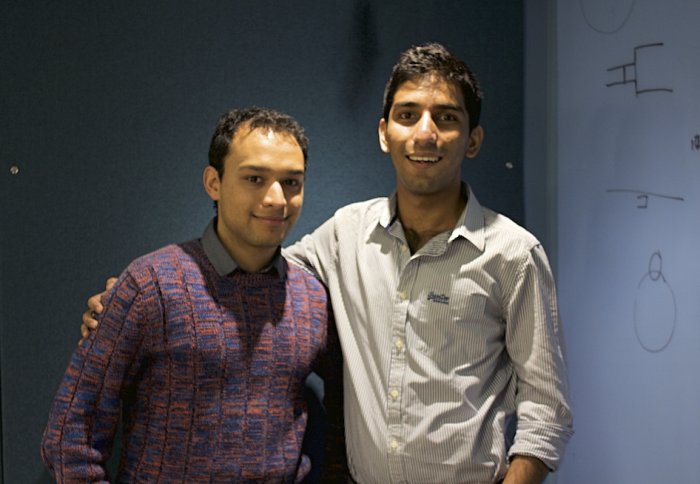
The team claimed its development process could be about twenty times more cost-effective than conventional commercial programs. The ambition was to prove the approach on a small engine and scale upward. But Britain offered limited access to the testing infrastructure and capital the project required. The practical obstacle forced a more useful question: if the team's design process was the unusual part, why keep it locked inside a rocket company?
Seedcamp had floated exactly that idea. Singh thought it was foolish. He wanted hardware, not a software company. Eight or nine years later, he could laugh at the resistance. The supposedly foolish suggestion had become the business.
The product inside the process
The Engineering Company, the venture's next form, developed software to accelerate baseline mechanical design. Forbes named Singh to its 2019 Europe 30 Under 30 list in Manufacturing & Industry. By 2023, the current version of Flow Engineering had emerged around a more focused entry point: requirements management for complex, fast-moving hardware teams.
Requirements sound bureaucratic because they often arrive as documents. In a modern vehicle, satellite or reactor, they behave more like live variables. Change the battery pack and heat behavior may shift. That changes capacity, packaging and center of gravity. Mechanical, electrical, software, regulatory and test teams all inherit a consequence. If their tools do not talk, people become the integration layer.
Anatomy of one “small” hardware change
Flow's proposition is to make those relationships visible. It connects requirements to tests, architecture and the tools where engineers already work. A change can carry its context instead of beginning a scavenger hunt. Singh likes to call the result a nervous system for the engineering organization: alive, cross-functional and able to register movement.
The company initially tried a bottom-up, product-led playbook familiar from software. It did not travel neatly into physical engineering. A requirements platform encodes how a company makes decisions, so the buyer is often a chief engineer, engineering vice president or CTO. Singh realized that Flow was selling a way of working as much as a tool. The lesson required him to walk into organizations he admired and tell their leaders that their process could improve - a socially complicated job for anyone, especially an engineer who began by preferring rocket hardware.
Speed, with consequences attached
Singh's favorite operating word is speed. He tells a story about three launch companies evaluating Flow. One pushed an urgent meeting from February toward September. A young American company moved from first conversation to a paid pilot in three weeks. A larger organization deployed Flow in four and a half weeks, comfortable with removing it if the experiment failed. The last approach was not careless. It made learning cheap.
That distinction matters in hardware, where failure can be costly and rigor cannot be decorated on later. Singh's argument is for short, aggressive design-build-test loops that reveal risks early. Requirements still matter. Verification still matters. They simply remain in motion with the product instead of waiting at either end of a giant schedule.
Flow's adoption at Rivian supplied a scale test. The deployment began with 40 users and, according to Singh, grew beyond a thousand within four months. By early 2026, the company reported more than one million requirements, one million test cases and 95,000 nightly API calls in that customer environment. The numbers describe a mundane but important form of infrastructure: every vehicle decision creates neighbors.
“Get on a plane” is Flow's unusually literal company value. Talk to the customer. Sit with the engineer. Find where the work breaks. It also captures Singh's evolution as a manager. His first hiring theory favored raw intelligence. His second favored experience. Neither was sufficient. He now places hunger, motivation and drive first, then intelligence. Flow had eight people when it raised the Series A after signing customers across space, nuclear, robotics and automotive. Singh says he wants a small, adaptable team, closer to a specialist unit than a large formation.
The engineer after the agents arrive
In October 2025, Flow raised $23 million in a Series A led by Sequoia, bringing publicly reported funding to $31.5 million. Patrick and John Collison of Stripe, David Helgason of Unity and Odyssey Ventures also participated. Sequoia's Roelof Botha joined the board. Flow moved its headquarters to San Francisco, closer to many of the hardware companies Singh believes are defining the iterative era.
The funding arrived as Flow's pitch widened again. Requirements had led to testing and architecture. Artificial intelligence made the next step orchestration: agents checking changes, tracing effects and keeping thousands of artifacts aligned. Singh imagines each engineer working with mechanical, electrical, systems, test and regulatory agents. The human role moves upward from repeated execution toward the design of rules, constraints and trade-offs.
He gives this shift a neat title: systems engineer becomes systems architect. It is a confident forecast, and a demanding one. An agent can inspect every change, but someone must decide what the system is for. Automation may remove the hunt for the latest number. It does not remove judgment about whether the number makes sense.
There is a pleasing wrinkle in Singh's own working habits. The founder building an AI control layer for physical engineering still thinks best with an Apple Pencil and a small iPad. He alternates between being locked into a sales, product or engineering problem and checking out for a long walk. The blank page helps him picture where the company must be in a year. He has tried the future and kept the pencil.
That combination - grand horizon, ordinary tool - has followed him for years. At 14, after making some money from a business he has never publicly detailed, Singh worried that he had sold out. For two weeks he thought about what he wanted his life to add up to. He arrived at a private equation: compare the universe where you existed with the one where you did not, then maximize the positive difference.
Rockets fit that equation. So do cleaner energy, safer transport and machines that extend what people can build. Flow is the less photogenic lever underneath them. Its work happens in requirements, traceability, interfaces and tests - the connective tissue that only becomes dramatic when it fails.
Singh once resisted becoming a software founder because hardware felt real. The irony has matured nicely. His software is concerned almost entirely with helping real things survive contact with complexity. The rocket remains in the story, only now it is one node in a much larger system.