The corporate origin story begins, unusually for beauty, with a subtraction. In December 2021, Shiseido removed three makeup businesses from its portfolio: bareMinerals, Laura Mercier and BUXOM. Advent International paid $700 million for the assets and placed them inside a newly formed company called Orveon Global. The name was new. Almost everything a shopper could recognize was not.
There was bareMinerals, which had turned a loose mineral powder and an enthusiastic television demonstration into a clean-beauty forerunner. There was Laura Mercier, the makeup artist's brand built around a “flawless face” rather than a mask of color. And there was BUXOM, younger and louder, with plumping gloss as its calling card. Orveon inherited products, employees, retail relationships and millions of people who already had opinions about all three.
That makes Orveon less like a conventional beauty startup than a renovation company. It does not need to persuade the world that makeup exists. It needs to decide which walls are load-bearing.
A portfolio with good bones
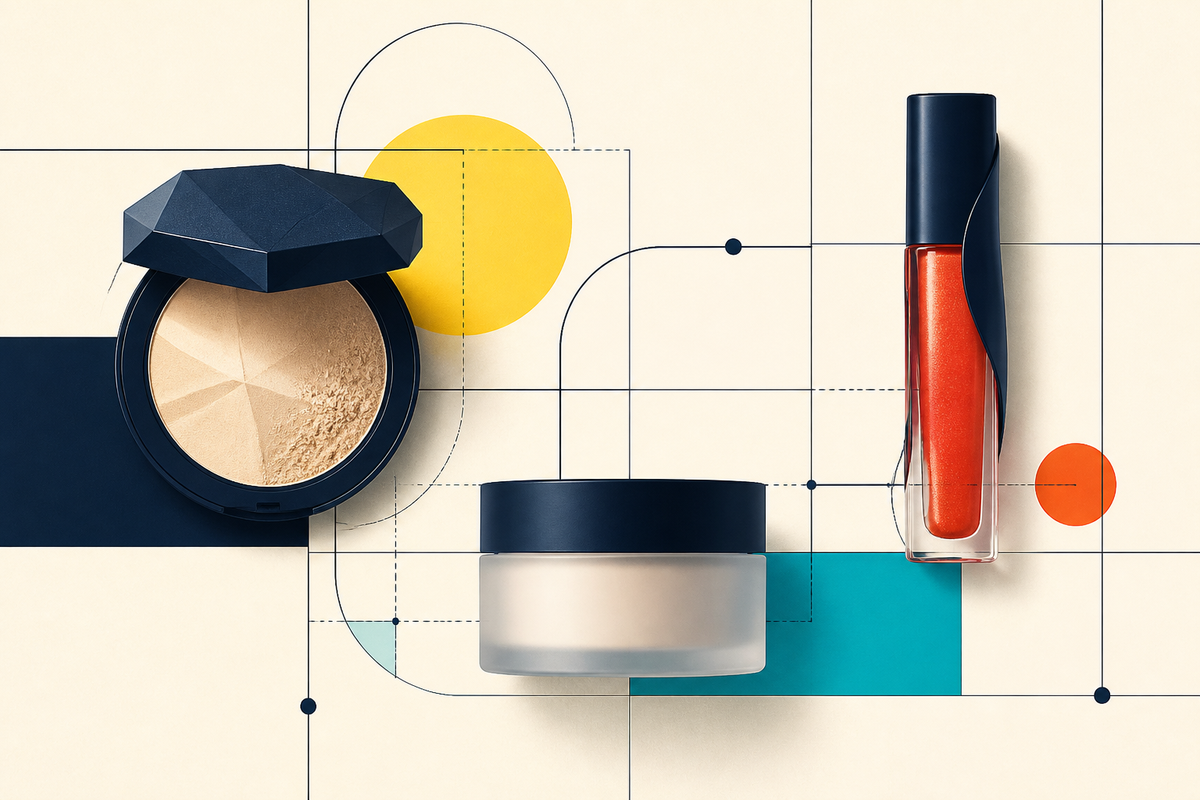
The obvious advantage is memory. Each brand owns a compact piece of the face and a recognizable point of view. bareMinerals speaks in minerals, skin care and ingredient consciousness. Laura Mercier owns artistry, complexion and the setting-powder ritual. BUXOM has a bolder voice and a tight grip on lips. A new brand might spend years and millions trying to claim one of those associations.
The disadvantage is the same memory. A hero product can become a museum label. A formula associated with an earlier retail era can feel old even when it still works. Beauty customers now discover products through creator videos, ingredient explainers, reviews, search and store associates; they expect shade breadth, fast delivery and a coherent answer on sustainability. Heritage gives Orveon a head start, then hands it a list of deferred maintenance.
There is a useful commercial discipline in that constraint. Orveon cannot treat every launch as a blank sheet, because a customer arrives with a reason for entering each store. The portfolio wins when innovation extends that reason: skin-care benefits that make sense beside bareMinerals foundation, color that belongs inside Laura Mercier's artistry system, or a new texture that still feels unmistakably BUXOM. It loses when the shared parent turns difference into a house style. The practical test is simple: remove the label, and the product should still know which brand made it.
The difficult brief is not “make three brands modern.” It is “make each modern in a different way.”
Orveon's response has been to separate personality from machinery. The personalities stay at brand level. The machinery - ecommerce, customer data, supply chain, retail education, international expansion and parts of product development - can be improved across the group. In 2023, then-CEO Pascal Houdayer said the company had stretched its product thinking from an inherited 18-month master plan toward a five-year pipeline. The aim was to move from small, calendar-filling releases to fewer ideas capable of changing how a brand is perceived.
The counter meets the cloud
The cleanest illustration came from bareMinerals on Amazon. The brand had long been sold there by resellers, which meant it benefited from demand without fully controlling presentation or customer strategy. In October 2023, it opened its own store in Amazon's premium beauty category and worked with commerce agency Envision Horizons to use Amazon Marketing Cloud signals, expand advertising beyond five top products and cross-sell the wider catalog.
The numbers are from a vendor case study, not an audited company filing, and they describe one U.S. channel over a short period. Still, they make Orveon's abstract promise tangible. The company did not invent a new foundation. It took stronger control of the shelf, used purchase signals to find relevant audiences and made it easier for an existing customer to discover a second product. The renovation happened around the jar.
This is also where Orveon sits in the market. It is smaller than conglomerates such as L'Oréal, Estée Lauder Companies and Coty, but broader than a single-brand indie. That middle position can be awkward: the group must fund global systems and retailer support without the same number of brands over which to spread the cost. It can also be useful. Three brands are enough to share expertise; few enough that the chief executive can still see the seams.
Who actually buys the plan
Orveon has two customer groups to satisfy. The first is the person buying a tinted moisturizer, loose powder or gloss. She may shop directly from a brand, through Amazon, at Sephora or Ulta Beauty, or at a department-store counter where the education comes with a human face. The second customer is the retailer itself. Orveon's reseller criteria emphasize prestigious surroundings, product sampling, informed associates and approved merchandising. The company is not simply shipping units; it is protecting the context in which a premium price makes sense.
That is why the industry's migration online has not eliminated stores from the plan. Makeup is stubbornly physical. Shade matching, finish and texture can be explained on a screen, but a trained adviser still shortens the distance between uncertainty and purchase. Recent Orveon hiring messages have stressed field sales and education even as many consumer companies trim such work. Ecommerce supplies data and convenience. Retail supplies theater, reassurance and a chance to touch the powder.
The product problems differ by brand. bareMinerals must broaden from a famous mineral foundation without making “clean” sound like an artifact of 1990s infomercials. Laura Mercier must translate an artist's philosophy for younger customers while keeping founder Laura Mercier close to creative and product work. BUXOM must use its lip authority as a platform rather than a cage. A shared dashboard will not answer those questions. It can, however, show where a repeat buyer goes next and whether a launch is earning its space.
The promise, and the paperwork
Orveon describes its mission as changing beauty for the better, with the planet treated as a stakeholder in ingredient, manufacturing and packaging decisions. The public language is ambitious. The less glamorous documents are more revealing: a supplier code covering labor, ethics, waste and intellectual property, plus modern-slavery statements describing global ingredient and material sourcing and human-rights due diligence.
For a cosmetics group, environmental work lives in formulation, ingredient sourcing, manufacturing and packages small enough to hide in a palm but complicated enough to mix plastics, mirrors, pumps and decoration. Progress is operational and product-specific; broad intent is not the same thing as a measured portfolio footprint.
That distinction matters. Orveon says it wants lighter environmental impact, but it does not publish the sort of detailed groupwide emissions and packaging scorecard that would let an outsider track the claim year by year. The credible version of the story will be told in specific packages, formulas and supplier changes - not in the adjective “sustainable.”
A retailer takes the controls
In January 2024, Orveon appointed Neela Montgomery as chief executive. Her résumé runs through Tesco, Otto Group, Crate & Barrel and CVS Health rather than a lifetime inside a cosmetics laboratory. The choice clarified the phase of the company. The first job was separation: take three global brands out of Shiseido and stand up a new organization. The next is retail execution - deciding where the brands show up, how inventory moves, what the customer sees and which investments compound.
Montgomery inherited a portfolio that can be understood in one sentence and operated only through thousands of details. Prestige beauty remains crowded. Charlotte Tilbury, NARS, Clinique, Fenty Beauty, Hourglass, MAC and Huda Beauty appear among the competitors in Orveon's own reseller documents. Independent brands can move quickly; conglomerates can spend heavily. Orveon has to turn its smaller scale into attention rather than limitation.
Its most defensible expertise may therefore be architectural. Keep the parts consumers cherish close to the brand: the voice, hero products, artist authority and community. Put the less romantic but expensive work onto a common chassis. Then use the data from each channel to make the next product page, store event and formula decision a little less speculative.
If Orveon succeeds, shoppers may never learn the parent's name. They will simply find the three brands easier to buy and easier to believe.
That is the quiet appeal of this experiment. The company is not asking a new generation to fall in love with a corporate collective. It is asking whether a collective can make old affection useful again. In beauty, where customers can be loyal to a powder for longer than executives stay in their jobs, that may be the more durable ambition.