The construction industry keeps its memory in unlovely places. A sign-in sheet curls at the edge of a desk. A certification sits in one folder while an inspection note waits in another. A supervisor knows which crew arrived, but an executive across town sees the answer after the week has moved on. Then comes a claim, an audit or a question about who was where, and the hunt begins.
Omer Slavin has spent much of his career shortening that hunt. He is the co-founder and CEO of BiltOn, the Brooklyn-based construction software company formerly called Beti. Its premise is plain enough to fit on a hardhat: connect the worker, the work and the record while the work is happening. The ambition behind it is larger. Once those small acts are reliably captured, a contractor can begin to see risk before risk becomes an incident report.
Slavin arrived at software by way of concrete, contracts and command. He is a fourth-generation member of a construction family. The family’s work in Israel stretched from prefabricated homes built for new immigrants in the 1950s to fuel stations, banks and thousands of housing units. He studied at Tel Aviv University, qualified as a lawyer in 2017 and managed residential building projects in Poland and Israel. Each chapter trained a different eye: the builder notices sequence, the lawyer notices proof, and the project manager notices what goes missing between the site and the office.
Four founders, one long apprenticeship
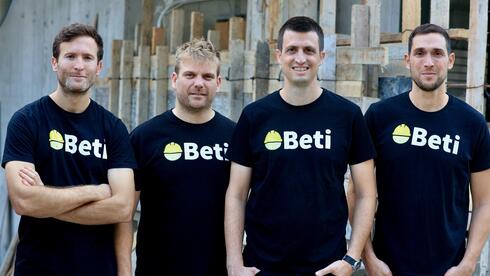
BiltOn’s founding team did not meet at a networking dinner. Slavin, Shir Mautner, Asaf Guter and Dekel Schwarzmann had served together as officers in Sayeret Matkal, an elite Israeli military unit. Slavin and Mautner later ran residential projects together. By the time the four started Beti in 2018, they already knew how one another behaved when plans met pressure. Startups talk rather freely about trust. This team had logged it before anyone wrote a cap table.
The company began with safety and site management. Its early customers worked in an environment hostile to decorative complexity: outdoors, against deadlines, among subcontractors and shifting crews. Slavin’s product doctrine followed the conditions. A system that asks a foreman for sustained attention has misunderstood the foreman. The interface must be brief; the record behind it can be deep.
For four years, Beti ran without outside funding, growing from customer revenue. That period gave the founders an unusually stern editor. Every feature needed to survive contact with a real project and a paying contractor. In 2022 the company raised an $11 million growth round led by PSG Equity. By then, it reported installations across 300 companies and 2,000 sites in Israel and the United States.
New York, with a clipboard
In early 2023, Slavin moved to New York to scale the American business. It was an apt destination. The city is a museum of construction ambition and a living encyclopedia of construction rules. It also offered a useful test: could a platform shaped in Israel adapt to American contractors, local regulations and the habit of storing official memory in thick jobsite binders?
Slavin attended a New York City Department of Buildings conference on innovation. What followed was neither a dramatic disruption nor a quick sale. BiltOn joined discussions and a limited pilot around digital construction safety documentation. Slavin later described the process as taking two years. The job was partly technical and partly educational: city officials needed to assess data integrity, security, privacy and professional reliability before a digital record could stand beside paper.
The patience paid off in an admirably specific number. Slavin said the pilot saved inspectors 40 minutes per inspection. In December 2024, the city made digital on-site safety recordkeeping an option for all construction sites. BiltOn was approved as a vendor in early 2025. The victory was less cinematic than a ribbon cutting. Forty minutes vanished from an inspection, and an old binder lost its monopoly.
There is a useful founder lesson in the episode. Selling into regulation means building two products at once. One is the software. The other is a shared language for judging the software. Agencies rarely object to efficiency; they object to being asked to trust a new form of evidence without a careful way to test it. Slavin’s legal training and field history meet neatly in that problem.
The rebrand was a product diagram
In October 2024, Beti became BiltOn and announced a $15 million Series B led by PSG Equity, with Titan Capital and 97212 Ventures participating. The name change acknowledged what the product had become. Safety remained central, but the platform now reached across workforce management, compliance, access control, tasks, handover and risk. BiltOn reported use by more than 1,200 companies on more than 3,000 worksites worldwide. It also said its annual recurring revenue in the United States had grown twentyfold since the 2022 round.
The company’s widening scope reflects a basic truth about a construction project: categories that look separate in a software menu collide in the field. An expired credential is a workforce issue until it becomes a compliance issue. A missing sign-in is an administrative nuisance until a claim makes attendance the central fact. A late observation is a workflow problem until the hazard it described is no longer theoretical.
The small-data route to a risk decision
Routine completed
Slavin’s preferred phrase for the destination is “predictive safety management.” The phrase risks floating away if separated from the mechanics. His version keeps its boots on. Credentials, pre-task plans, observations and access events become useful when they are attached to verified people and timestamps. Patterns can then move upward from one crew and one site to a portfolio view. An executive no longer has to wait for an injury count to learn that a routine is deteriorating.
This is also where artificial intelligence enters BiltOn’s story, though Slavin is notably preoccupied with the plumbing beneath it. In 2026, after speaking at an advanced construction analytics event, he argued that many general contractors still lacked consistent, high-quality field data. A prediction engine trained on patchy behavior is merely a confident guess. The unglamorous work is adoption: getting a busy person to complete the right action at the right moment.
A software company with dust on its shoes
The coherence in Slavin’s career is easy to miss if one looks only at job titles. Lawyer, builder, officer, project manager and software CEO can appear to be five biographies. In practice, each is concerned with operating under constraints. A site has a schedule and a budget. A regulation needs evidence. A team needs trust. Software has to make the required behavior easier than the workaround.
His public language returns often to the distance between field and management. That distance can be physical, as in a superintendent on a tower and an executive in an office. It can be temporal, as in a safety issue recorded Friday and reviewed Monday. It can be social, as in software designed by people who do not understand the crew asked to use it. BiltOn’s product thesis is essentially an attempt to compress all three.
There is no romance in a compliant daily log, which may be precisely why it offers an opening. Construction celebrates what rises into the skyline. Slavin has chosen to work on what accumulates quietly underneath: names, times, credentials, routines, observations, decisions. The evidence is ordinary until the moment someone desperately needs it.
His stated direction is to make safety more preventative than reactive and to expand BiltOn across the United States and beyond. The next chapter will depend on whether a system built from field reality can preserve its simplicity as its analytical ambitions grow. Software has an old tendency to become the complexity it promised to remove.
Slavin’s counterweight is biography. He has stood on both sides of the screen. He knows the executive’s appetite for a dashboard and the project manager’s impatience with another task. Between them sits the useful company: not a digital monument, but a reliable witness. The binder remembered what happened. BiltOn is trying to notice what is happening now.