The most expensive moment in a warehouse can last three seconds: a forklift rolls past a stop, a pedestrian appears from behind a pallet, and both keep moving because luck arrived first. The security camera records everything. Then the clip sits unwatched, useful only if luck fails next time.
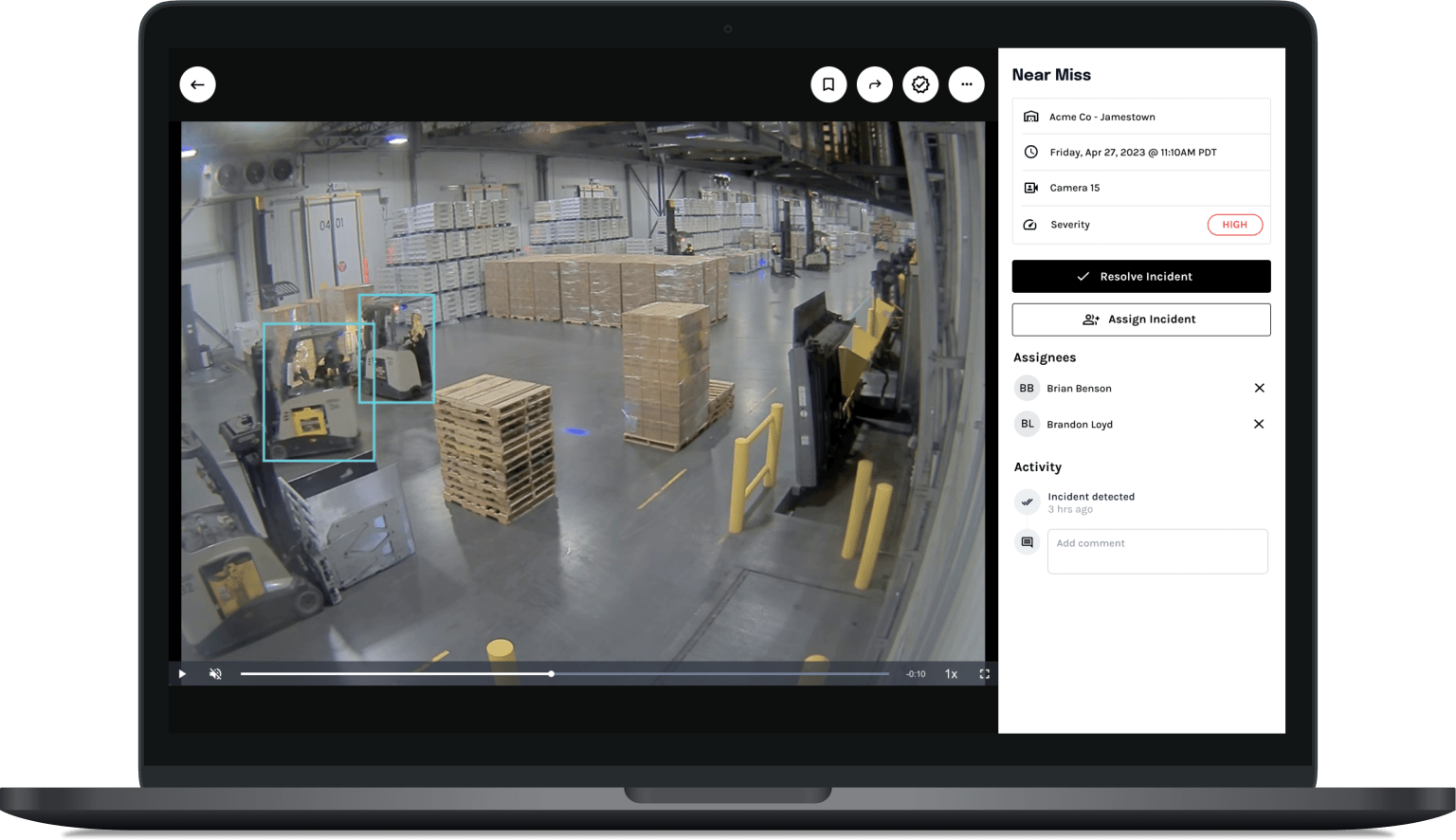
Voxel built a company around that wasted interval. Its software connects to cameras already installed in warehouses, factories, distribution centers and ports. An on-site computer analyzes video for events associated with injuries - speeding vehicles, missed stops, close calls, missing safety gear, blocked exits, spills and awkward lifting. The selected event reaches a cloud dashboard as a short clip, a count, a trend or an alert. A safety manager gets something better than another policy memo: evidence of where risk keeps repeating.
This is a narrow use of artificial intelligence, which is part of its charm. Voxel is not trying to write the safety manual or replace the supervisor. It watches the parts of an industrial site no person can watch continuously, then points the human toward the Tuesday-morning problem: repeated sharp bends at the receiving dock between 6 and 10, for example, or forklifts treating one blind intersection as a suggestion.
The product that workers do not have to remember
A revealing customer story comes from MSI, the building-materials distributor. It had previously tried wearable safety technology. The objection arrived before the analytics: people had to put something new on, and the device felt like surveillance. At MSI's large Orange, California, facility, Voxel instead used cameras that were already present. According to the company's case study, five days passed between contract signing and live video.
That is what failed first - adoption, not detection. And it is what changed the buying logic. MSI's leaders did not need a grand argument about machine learning; they saw a deployment that did not ask each employee to charge, carry or consent to another object every shift. The Orange pilot expanded to four additional sites. Within six months, MSI reported a 50 percent reduction in lost-time injuries and a 73 percent reduction in workers' compensation costs at that first facility. Those figures describe a site where Voxel was one of several safety initiatives, not a controlled experiment. They are still a strong clue about what low-friction tools can unlock.
The camera is only the wedge
The original 2021 product was easy to describe: vision models on an edge computer, plus a software dashboard. Four companies tested it; two became paying customers. Voxel had 11 employees and a $3 million seed round led by insurance-focused MTech Capital. Its ambition then was to become a “Risk OS” for the industrial site.
The current product looks more like that operating layer. Near-Miss Detection counts dangerous proximity between vehicles and people. Impact Boards give shift-specific views to supervisors. Actions assigns and closes corrective work. Executive Hub rolls performance across sites. Risk Insights, introduced in April 2026, sends a daily summary through the portal, email or text, explains when and where a pattern is growing, and suggests a response. Voxel has moved from “the camera saw a risky bend” toward “the morning shift keeps bending because pallets are staged on the floor; add risers and discuss lift mechanics.”
That move matters competitively. Intenseye, Protex AI, CompScience, Arvist and Lumana also sell forms of computer-vision safety. Wearables and proximity sensors solve adjacent problems. Conventional EHS systems such as Cority and Intelex organize audits, incidents and compliance workflows. Voxel's position is between the two: video as the raw sensor, site intelligence as the product, and corrective action as the ending. Its pitch is strongest when a company already has broad camera coverage and a safety team able to act on what surfaces.
“With the video clips and analytics from Voxel, we created a ‘Caught You Being Safe’ program.”Former Americold manager, in Voxel's customer case study
A surveillance product has to earn a different name
Computer vision in a workplace comes with a blunt question: is this for protection or discipline? A technically accurate detection system can still fail if workers believe every clip becomes a file with their name on it. Voxel says it does not use facial recognition and supports blurring faces and bodies. Its strongest customer accounts emphasize aggregate patterns and coaching rather than individual punishment.
Americold provides the useful example. Managers used clips of safe behavior for recognition, then treated poor lifting as a teaching moment. The company reported a 70 percent reduction in injuries and $1.1 million in annual savings at the featured site. Missed workdays fell from 288 to zero. At Carlex Glass, footage from 12 existing cameras led managers to add stop signs, redirect traffic and mark clearer pedestrian paths. It also exposed a spike in missing high-visibility vests around breaks and shift changes. In under three months, Carlex reported an 86 percent increase in vest compliance and fewer missed stops.
Notice what actually changed: signs, traffic flow, staging, training and conversation. The model did not make the plant safer by admiring its own confidence score. It made a repeated behavior visible enough for people to redesign the work.
Selected customer-reported reductions
Different customers, locations, periods and measures. These are case-study outcomes, not a head-to-head trial.
The cost is hiding in the old workflow
Voxel sells to enterprises through custom contracts rather than a public price card. The more useful cost comparison is visible in its customer stories. The Port of Virginia says its safety team cut footage-review time from roughly 145 minutes a day to 20 or 30, an 85 percent efficiency gain. It also reported a 50 percent reduction in truck speeding, along with smaller declines in missed stops and PPE violations. One Voxel customer site cited in the Series B announcement saved more than $2.2 million in direct costs over two years.
Those economics explain the company's cap table. Industrial manufacturer Rite-Hite, insurer Tokio Marine and insurance-tech investor MTech Capital have all backed Voxel. NewRoad Capital Partners led a $44 million Series B in June 2025. Ericsson Ventures made a later strategic investment; Voxel then said it had raised $64 million in total. This is software whose return is sold in claims avoided, time recovered and operations uninterrupted - not seats occupied.
The playbook worth stealing
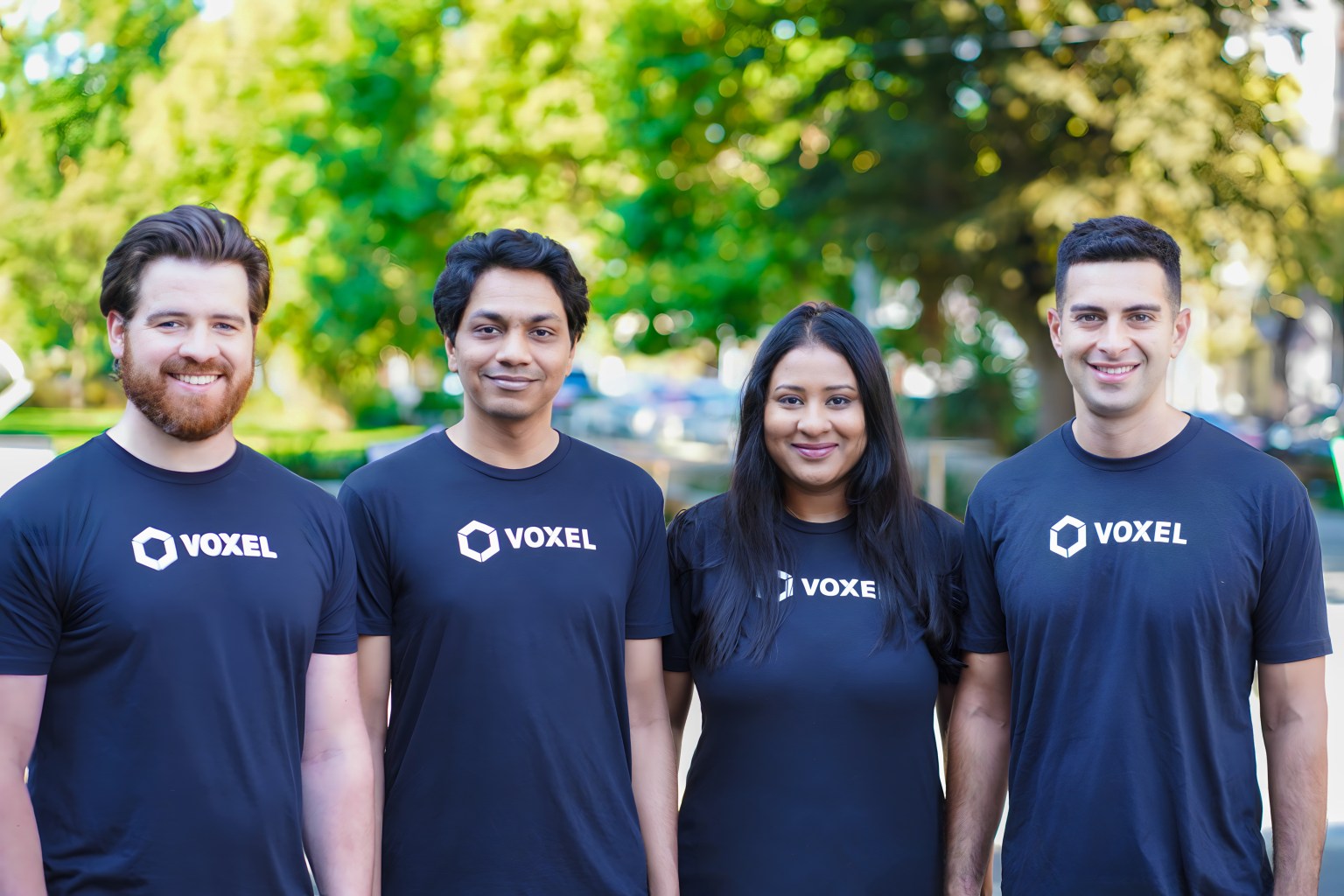
Voxel began in Troy Carlson's San Francisco garage in 2020. The founding group brought computer-vision, autonomous-vehicle and distributed-systems experience from places including Uber, Aurora and Google. By 2026, the company said it had about 90 employees and deployments at more than 250 sites. Vernon O'Donnell now leads it as CEO, while Carlson remains a co-founder on the leadership team.
The transferable idea is not “add AI.” It is to remove distance between a signal and the person who can change the process. A safety director does not need 10,000 clips. A dock supervisor needs the three patterns that deserve attention before lunch.
The approach will not work everywhere. Camera coverage can be poor. A model trained on one layout may need calibration in another. Unions, privacy rules and local culture can change what is acceptable; NSG's international rollout required different practices across countries. Most importantly, a punitive manager can turn a safety system into a surveillance system in one meeting.
- It fails when cameras cannot see the risky work or the chosen hazard is not visually observable.
- It stalls when the safety team has no time, authority or budget to act on findings.
- It loses worker support when clips identify and punish people instead of fixing repeatable conditions.
- It disappoints when a buyer expects injury statistics to prove causation after a short pilot.
Voxel's latest products suggest it understands the danger of becoming another dashboard. Executive Hub translates site events for corporate leaders. Risk Insights pushes a short daily brief to the supervisor. A 2026 referral partnership with Novara connects the detections to a broader EHS system. The company is also expanding internationally and reported a 65 percent average reduction in workers' compensation claims across customers on its company page.
The headline metric will always be injuries avoided, but the product lives one level earlier: a stop honored, a vest worn, a pallet raised, a blind corner cleared. Voxel's real invention is not a camera that watches harder. It is a management loop fast enough to make the almost-accident count.
Follow the signal