Breaking
CompScience founder Josh Butler turns workplace cameras into a hazard radar 50+ behavioral & environmental hazards detected on video $43.6M raised across seed, Series A & Series B Mission: prevent 1 million injuries by 2035 From self-driving cars to self-protecting factory floors CompScience founder Josh Butler turns workplace cameras into a hazard radar 50+ behavioral & environmental hazards detected on video $43.6M raised across seed, Series A & Series B Mission: prevent 1 million injuries by 2035 From self-driving cars to self-protecting factory floors
Founder / CEO · CompScience

Josh Butler

He was teaching cars how to see. Then a family member got hurt on a construction site, and he taught cameras how to keep people alive instead.

Computer Vision Workers' Comp Brown CS ex-Nio ex-Meta
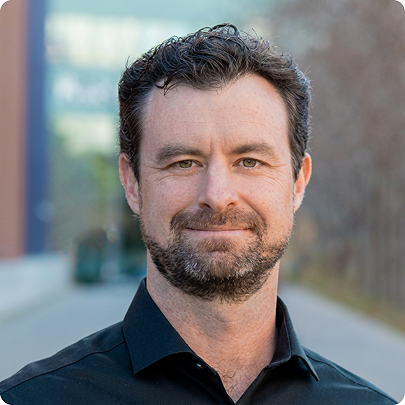
Josh Butler, founder and CEO of CompScience
The engineer who looked away from the highway and toward the loading dock.
The Dispatch

A camera you already own, watching for the moment before it goes wrong

Josh Butler runs CompScience out of San Francisco, and his product does something deceptively plain: it watches. Point ordinary cameras at a warehouse, a job site, or a kitchen line, and the software flags more than fifty behavioral and environmental hazards as they unfold - missing PPE, a body bent the wrong way, a forklift drifting where it shouldn't. The pitch reframes the security camera bolted to the wall as a hazard radar that never blinks.

The twist that makes investors lean in is the business model. CompScience does not just sell analytics; it bundles them into a workers' compensation insurance product. The insurer, in other words, is financially motivated to help you not get hurt. As Butler puts it, "We reward customers who are ready to lean in on protecting their workers." Safer floors mean fewer claims, and fewer claims mean everyone wins - a rare alignment in an industry built on paying out after the fact.

Butler reached this idea by an unusual road. He was building perception analytics for self-driving cars - software whose entire job is to stop a vehicle from hitting a human - when a family member suffered a career-ending injury on a construction site. The collision of those two facts became the company. The same vision stack that keeps cars from hurting people, he reasoned, could keep workplaces from hurting them too.

He likes to size the opportunity in IoT terms. "Video data is the next wave of IoT that is a thousand times bigger than telematics or wearables," he says, calling the broader market "a blue ocean opportunity to uplevel safety management across millions of businesses." Where others see grainy CCTV footage gathering dust, Butler sees a continuous stream of safety signal nobody has been reading.

The results customers report are concrete: incidents down around 35%, better compliance with safety regulations, and more than $30M in savings across the client base. CompScience now serves hundreds of enterprise customers spanning construction, manufacturing, warehousing, distribution and food service - the unglamorous places where most real injuries actually happen.
50+
Hazards detected
~35%
Incident reduction
$30M+
Customer savings
2035
1M injuries prevented by
Video data is the next wave of IoT that is a thousand times bigger than telematics or wearables.
Josh Butler
The Long Way Around

From the highway to the loading dock

Brown
Earns a Sc.B. in Computer Science, AI Systems - the academic grounding for a career spent teaching machines to perceive.
Meta
Leads analytics, partnerships and product, and grows a real-time AI API from $0 to $250M in revenue in 18 months.
Nio
Heads the L4 self-driving car platform team at Nio's Advanced Development Center, part of a $1B+ R&D bet on vision-based safety.
2019
A family member's construction-site injury redirects everything. CompScience is founded to point perception AI at the workplace.
2022
Closes a $6M seed round and starts scaling the camera-as-safety-system model.
2023
$10M Series A led by Valor Equity Partners; carrier partnerships with Nationwide and Swiss Re.
2025
Named to the CB Insights Insurtech 50 and raises a $27.6M Series B.
2026
Rolls out AI-generated job safety analysis tooling - work Butler says "couldn't have been built two years ago."
Why It Matters

Three ideas Butler keeps coming back to

001

The unread stream

Most workplaces are already wallpapered with cameras. Butler's insight is that all that footage is unread safety signal - the cheapest sensor network nobody was using.

002

Prevent, don't pay out

Traditional workers' comp writes a check after the injury. CompScience flips the incentive so the insurer is paid to stop the injury from happening at all.

003

Make work fit for humans

His stated philosophy - "making work fit for humans with transformative tech" - treats safety as a design problem, not a compliance checkbox.

"A blue ocean opportunity to uplevel safety management across millions of businesses."

"We reward customers who are ready to lean in on protecting their workers."

"Making work fit for humans with transformative tech."

The Strange Specific

The accident that rewrote a career

There is a version of Josh Butler who is still in the autonomous-vehicle business, tuning models so a car can tell a pedestrian from a lamppost at 60 miles an hour. That version is plausible. He had the resume for it - Brown, Meta, the lead role on Nio's L4 self-driving platform.

Then a family member was badly hurt on a construction site, the kind of injury that ends a working life. Butler had spent years on technology whose only purpose was to keep a moving machine from striking a person. The gap between those two worlds - cars that won't hit you, job sites that will - stopped being abstract.

CompScience is the answer he built. The company's stated north star is to prevent 1 million workplace injuries by 2035, and Butler frames the broader ambition as building "the AI control system for risk, so every organization can act with confidence and protect what matters most." It is a big number with a personal footnote.

1

He swapped highways for factory floors, carrying the same computer-vision stack from self-driving cars to warehouse cameras.

2

At Meta he grew a real-time AI API from $0 to $250M in just 18 months.

3

His whole pitch is reframing the security camera you already own as a hazard radar.

4

CompScience is built so the insurer is financially motivated to help you not get hurt.

Find & Follow

Where to read more