An exit interview has a peculiar advantage: the employee has already decided to leave. The uncertainty is over. Somewhere earlier in the story, though, were smaller clues. A role changed. A promotion did not happen. Training continued, but the work stopped making sense. Observatis is built around the possibility that an organization already possesses parts of that story, scattered across systems that rarely speak to one another.
- Connects engagement, performance, learning, pay and talent data.
- Works alongside existing HR and learning systems.
- Advertises a 10-day diagnostic with risk maps and action priorities.
The company calls its approach workforce intelligence. Its more interesting proposition is about timing. By the time a departure appears in a turnover report, the decision has been made. Observatis wants leaders to examine the conditions forming around employees while there is still something useful to change.
The records disagree
Think of an employee whose training record looks immaculate. Every course completed. Every compliance box ticked. A performance review might show a different picture: goals drifting away from what the role now requires. The compensation record introduces another question. Is the organization rewarding the contribution it says it wants? This is an illustrative situation, but it captures the problem Observatis addresses. Separate records can be individually accurate and collectively incomplete.
Its Workforce Empowerment Platform groups the work into five areas: engagement, performance, learning, compensation and talent. The intended result is a connected view of risk, readiness and alignment. Observatis describes itself as a layer over existing systems, bringing context to records an employer already maintains.
“The challenge isn’t data. It’s misalignment.”
Observatis · Workforce Empowerment Platform
There are established alternatives in this market. Culture Amp offers employee engagement tools; Workday Peakon Employee Voice combines listening surveys with retention insights and recommended actions. Observatis emphasizes analysis of existing behavioral, operational and contextual signals without requiring a new survey. Its distinction is the proposed method and breadth of connection. A buyer still has to test how well those connections explain a particular workplace.
A learning business changes the question
Founder and CEO Kishor Amberkar comes from the learning-software world. Learnsoft’s published webinars identify him as a co-founder and document his work explaining learning management, mobile access and talent development. That background helps explain why Observatis gives learning a prominent place in its retention argument. A course catalog is a record of available instruction. It does not automatically describe the capabilities a team needs next.
Observatis’s own account traces its experience to a learning business serving health systems and government agencies. Those environments give the distinction practical weight: learning can be tied to compliance, permissions and the ability to perform a role. The experience is relevant expertise. It should not be confused with a count of current Observatis deployments.
In March 2025, Observatis published its case for Adaptive Knowledge Intelligence, or AKI. It described a module intended to identify competency, engagement and satisfaction gaps, then assign targeted knowledge interventions. The complaint was specific: employees can be flooded with irrelevant content while the skills that matter remain underdeveloped. The proposed remedy is to connect learning to the moment and the job.
Ten days to choose an intervention
The most concrete entry point is Workforce Risk Intelligence, an advertised 10-day diagnostic. Its inputs are existing HR, learning and performance data. Its stated outputs include a retention signal map, hotspots by team or role, estimated financial exposure and an action blueprint. The short duration makes the proposition easy to understand: begin with a focused question and finish with priorities.
A diagnostic sprint.
A place to begin.
- 01 / ALIGN DATAHR, learning and performance records
- 02 / FIND PATTERNSPay, role fit, goals and behavior
- 03 / MAP EXPOSURETeams, roles and estimated financial impact
- 04 / PRIORITIZE ACTIONA leadership action blueprint
That is a diagnostic timetable, not a promise that retention improves in ten days. It points toward decisions that take longer to implement: adjusting role expectations, addressing a capability gap, reviewing compensation or investigating differences between managers. The value depends on what happens after the map is delivered.
The commercial offering combines workforce software with implementation and consulting. Observatis also lists AI engineering, big-data services, business intelligence and visualization. Its homepage describes a dedicated data scientist for each implementation and model selection suited to an organization’s data. That suggests hands-on analytical work alongside the software, rather than a dashboard that arrives already knowing every employer.
Pay sends a message
One of Observatis’s sharper observations is that compensation carries meaning. In its April 2025 writing, the company puts it plainly: “Pay isn’t just a number - it’s a message.” Reading pay alongside contribution and engagement asks whether reward practices match the organization’s stated priorities. The question can be uncomfortable precisely because the payroll system may be functioning perfectly.
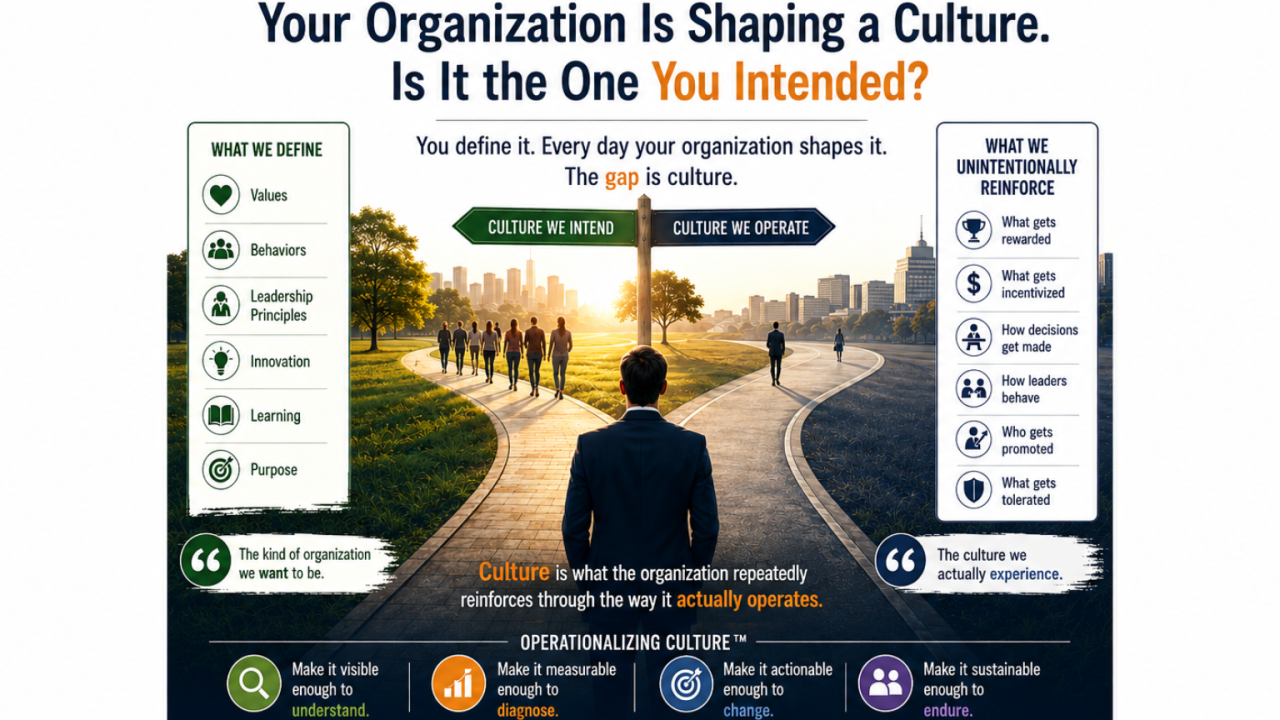
Its COLERIS framework extends that idea into a cycle: listen, understand, align, develop, reward, protect and adapt. The name draws on colere, the Latin root associated with cultivation. The useful detail is the recurring sequence. Culture becomes a set of questions about development, recognition, mobility and readiness that leaders revisit as work changes.
Borrow the question, then test the answer
A reader can copy the starting discipline without buying software. Pick one team and one question. Are people completing training for skills their work no longer requires? Are goals changing faster than roles? Bring the relevant records together, discuss the pattern with the people doing the work, choose an intervention and check whether the situation improves.
This is an interpretation of the approach, not a reported Observatis customer result. It also exposes its conditions. Records need enough quality and context to be useful. A statistical association needs investigation before it becomes an explanation. And leaders need the authority to change the work, rewards or development opportunities involved. If those conditions are absent, a more detailed map can leave the same problem untouched.
Observatis’s appeal lies in a recognizable organizational habit: collecting information faster than anyone decides what to do with it. The company offers a way to connect that information around a practical decision. The question worth carrying into the next meeting is small enough to fit on a sticky note: what should change because we know this?