There is a peculiar species of business artifact that is born in a conference room and dies in a shared drive. It is called the strategic plan. It arrives with verbs like leverage and activate, receives approving nods from the board, and then meets the people who must execute it. Those people have calendars, budgets, old software, rival priorities, and excellent questions. The plan, suddenly, looks less like a map and more like a souvenir.
Oak Lane has built a consulting practice in precisely that uncomfortable distance between approval and action. The Boston-based firm works with small businesses, nonprofits, corporations, funders, and public agencies. Its assignments vary - revenue plans, brand narratives, listening campaigns, leadership retreats, workflow redesign - but the recurring job is translation. A mission must become a message. A message must earn trust. Trust must survive a meeting. The meeting must produce a decision. The decision must fit inside an operating system that real people can use on Tuesday morning.
Founder and CEO Reginauld “Reggie” Williams came to this work through public policy, entrepreneurship education, community development, fundraising, and communications. He managed a $4.5 million capital-assistance fund that supported 300 small businesses across six Boston neighborhoods. He advised BIPOC entrepreneurs, worked in health innovation, led public-affairs work, and reviewed grants. This is not the usual consultant's tour through one industry, followed by a lifetime of slides about that industry. It is a tour through the many institutions that decide whether an idea gets money, permission, attention, or none of the above.

The acronym is the operating model
Oak Lane calls its method HOUR Strategy™. The letters stand for Human-Centered Design, Organizational Alignment, User Experience Strategy, and Revenue Operations. Acronyms are abundant in consulting, but this one reveals the firm's underlying bet. Growth is not a marketing problem over here and an operations problem over there. It is one problem viewed by four constituencies.
Start with the people living inside the problem.
Make roles, decisions, and priorities agree.
Map what stakeholders actually encounter.
Connect the mission to repeatable economics.
Consider what normally fails first in a growing mission-driven organization. It is rarely the ambition. The trouble begins when the development team, program staff, executive director, board, and community use the same words to mean different things. Oak Lane's services read like interventions at those fault lines: journey mapping when nobody agrees on the stakeholder's experience; listening campaigns when leadership has more assumptions than evidence; revenue mapping when the funding model has become a pile of habits; communications audits when every department has invented its own organization.
“We Build With, Not For.”Oak Lane's compact description of co-creation
That sentence marks the real change in posture. Oak Lane says it grew from years of helping under-resourced businesses navigate systems not designed for them. The lesson was not simply that these organizations needed better expert advice. They needed a firm willing to treat their lived knowledge as part of the expertise. The consultant stops being the person who disappears, thinks, and returns with the answer. The consultant becomes the person who designs the room in which an answer can be made and owned.
A workshop with receipts
Professional services tend to hide their prices behind the word custom. Oak Lane gives buyers a useful foothold. Half-day strategy sessions start at $1,500 to $3,500. Full-day intensives range from $3,000 to $6,500. Larger projects and executive-advisory retainers are scoped separately. A new client starts with a 20-minute discovery call, followed by a proposal or statement of work.
Published intensive pricing
Projects and ongoing advisory retainers are custom-scoped. Most sessions can be delivered virtually; in-person work is available by request.
More important, the workshops promise visible objects. “Rethink the Revenue Stack” ends with an audit of current income, options across earned revenue, grants, and partnerships, a tiered offer, and a 12-month plan. “Message to Market” produces brand pillars, a messaging hierarchy, a client or donor journey, and a 90-day content calendar. “Design for Delivery” maps workflows, decision rights, meeting rhythms, and two or three priority improvements. One sells a revenue map, one a language system, one an operating tune-up. All three turn a fuzzy management concern into something a team can inspect.
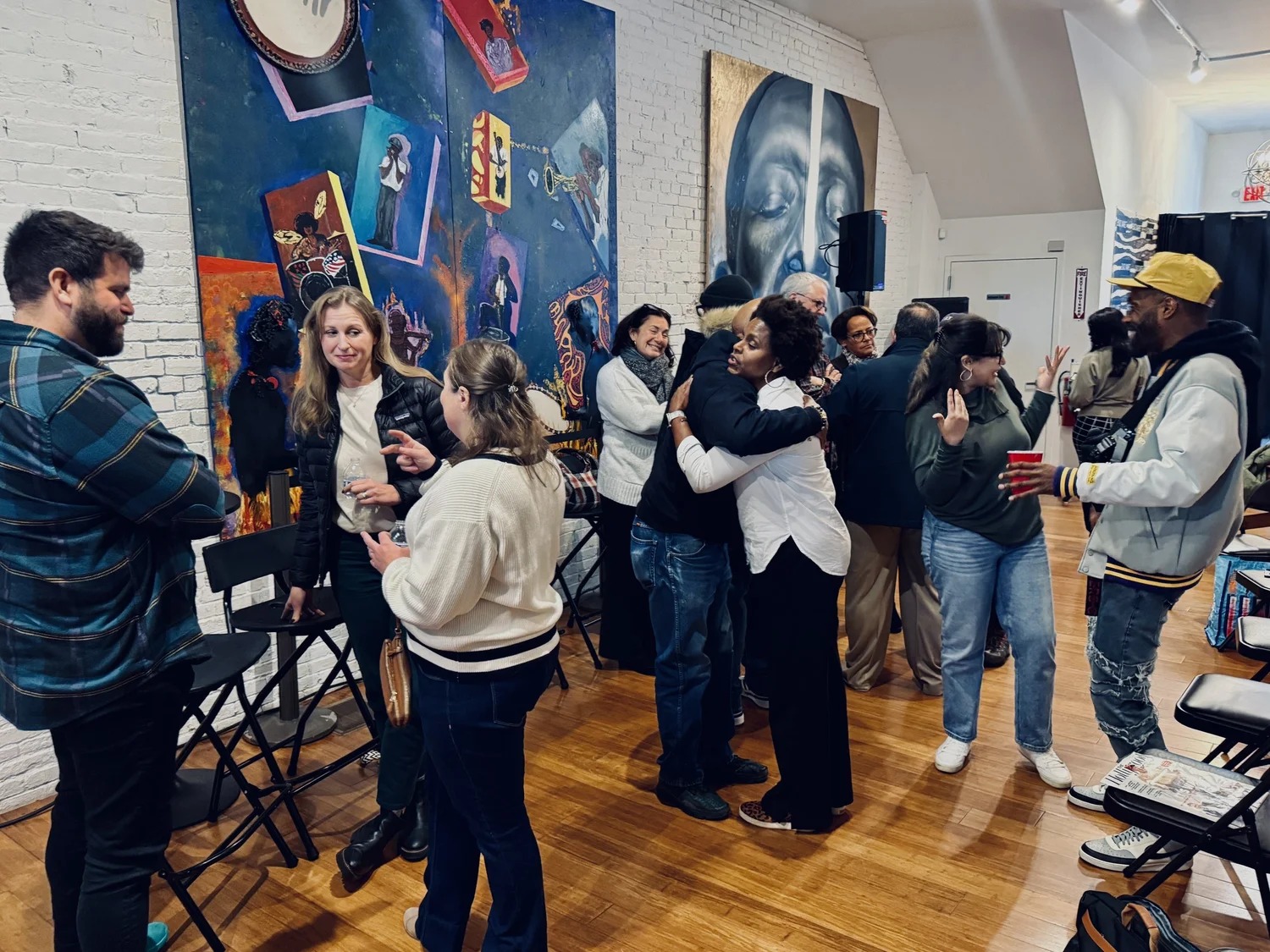
The customer is the complicated room
The client roster explains where Oak Lane fits. It includes the City of Boston's economic-opportunity office, Boston University, software company Aras, ArtsEmerson, Give Black Alliance, the Equality Fund at The Boston Foundation, and the Secret Society of Black Creatives. These organizations do not share an industry. They share an organizational condition: several groups hold different pieces of the outcome.
For Give Black Alliance, Oak Lane provided program research, event production, and strategic communications. For the Secret Society of Black Creatives, it supplied fractional leadership, program development, and fundraising strategy. The Equality Fund's executive director said the firm's communications work expanded capacity and community and helped attract new supporters. Oak Lane says Williams' broader work has trained more than 1,000 associates, helped produce a 23 percent increase in engagement after brand repositioning, and cut implementation time in half through operational reform. Those performance figures are the firm's claims, not a substitute for a client's own diligence. They do show what Oak Lane chooses to measure: adoption, engagement, and speed.
The firm competes with strategy shops, communications agencies, nonprofit capacity builders, executive coaches, and the tempting option of asking one exhausted employee to do all four jobs. Its distinction is not that nobody else runs workshops or maps stakeholders. It is the bundling. Brand, revenue, operations, and community engagement are treated as interacting systems. Oak Lane then assembles a project-based bench of strategists, designers, fundraisers, researchers, and event specialists around the assignment. Clients buy access to the relevant people without carrying a conventional agency's full overhead.
Three things worth stealing politely
HOUR gives clients a shared vocabulary and gives the firm a repeatable diagnostic.
A priced half-day is easier to approve than an undefined transformation.
A revenue map or 90-day calendar is easier to value than “strategic clarity.”
The copyable part is not the acronym. Anyone can arrange four nouns beneath four letters. It is the discipline around the acronym. Each workshop has a named audience, a defined question, and a list of outputs. The public price range filters the market. The case studies show the firm inside actual work, not merely beside a list of logos. Even the flexible team structure is part of the proposition: the client gets the specialist when the work requires one.
A useful constraint
This model fits leaders willing to share context, involve stakeholders, and participate in the work. It is a weaker fit for buyers seeking a commodity deliverable, a software product, or an outside expert to make a politically difficult decision on their behalf. Co-creation buys adoption, but it requires access and time.
Oak Lane is still a small consultancy, and that matters. The appeal is proximity to the senior people doing the thinking. The tradeoff is that bespoke, expert-led work does not scale like software, and a project-based bench must be assembled well. But for an organization with a strategy that keeps dying on the journey from board deck to daily behavior, scale may be the wrong first question. The first question is whether everyone is working from the same clock.