For twenty years, The Bay School of San Francisco had an awkward habit. When people questioned its unconventional, experience-first approach to education, the school defended itself. It was just as rigorous as the traditional schools, it said. Its difference was safe. Its difference could be explained away.
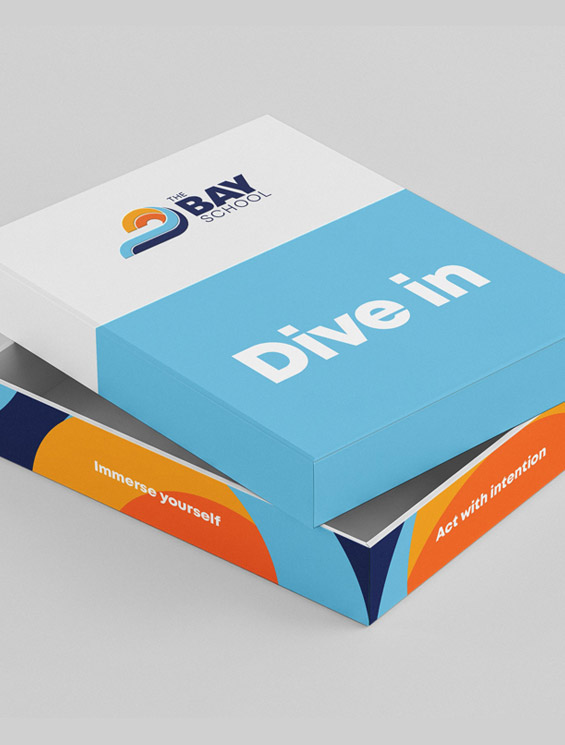
Mission Minded, the strategy and creative agency brought in to sharpen the school's admissions message, decided that the problem was not the message. It was the comparison. The Bay School was measuring itself against familiar local institutions when only a handful of schools nationwide shared its commitment to immersive learning. Once that changed, a copy assignment became a larger act of institutional nerve: new positioning, a visual identity, a website, admissions materials, and changes to admissions events. The school went on to exceed its ninth-grade enrollment goals in two successive seasons.
This is the small paradox at the center of Mission Minded. It makes logos, websites, videos, brochures, and campaigns, but its most consequential work often happens before anything visible exists. The agency finds the sentence an organization has been circling, softening, or failing to say.
A good cause still needs a reason to be chosen
Mission Minded was founded in San Francisco in 2002 by Jennie Winton and Zach Hochstadt. Hochstadt's premise was blunt: nonprofits deserved the same creative firepower as a Fortune 500 company. Winton brought the other half of the equation - the ability to help leaders close the gap between what their organizations were and what they needed to become. The firm later expanded into Denver and now works with team members and clients across the United States and Canada.
Its market is narrow by design: nonprofits, foundations, independent schools, colleges, and universities. These buyers do not usually suffer from a shortage of virtue. They suffer from a surplus of stakeholders and a shortage of sharp choices. A donor, parent, trustee, employee, student, or grantee may each need a different doorway into the same organization. The language that keeps everybody comfortable - excellence, impact, community, innovation - often leaves nobody persuaded.


Mission Minded starts with audience research, interviews, surveys, brand audits, and competitive analysis. It helps a leadership team articulate positioning, values, personality, and the experience the organization wants people to have. Only then does the work move into naming, visual identity, campaigns, websites, video, or launch. Its own BrandEquation framework makes the sequence explicit: values, personality, positioning, and experience all spring from the mission.
“They are not our consultancy, agency or vendor. They are our true partner.”Rich Levine, The Bay School
This is not the inexpensive end of the agency market
Mission Minded is unusually specific about cost. In a guide whose figures were refreshed in 2024, brand strategy and key-message development ran from $56,000 to $74,000 over six to eight months. Visual identity was $34,000 to $48,000. Websites started at $65,000. A strategic plan ranged from $75,000 to $120,000. A brand or fundraising video started at $45,000.
Published bands were refreshed in 2024; proposals are tailored and current fees may differ.
Those numbers make more sense when the deliverable is understood as coordinated decision-making. A logo can be bought cheaply. Agreement among a board, staff, leadership team, donors, and the people an organization serves cannot. Mission Minded's work is expensive when judged as artwork and easier to understand when judged as an intervention in fundraising, enrollment, or institutional direction.
The object is rarely the reason
At the University of British Columbia, the Faculty of Applied Science had a $300 million campaign centered on a building. The trouble was that many prospective donors did not want to fund buildings. Mission Minded shifted the frame from the structure to what would happen inside it: engineers, architects, planners, communities, and industry working together instead of in silos. The campaign became an argument for a new model of applied-science education.
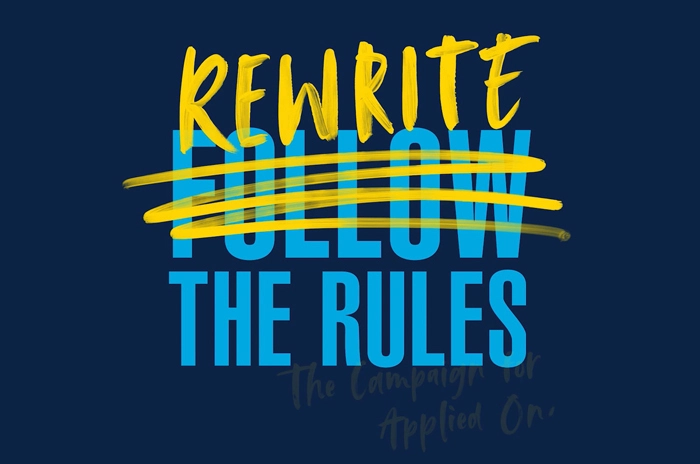
Save the Redwoods League faced a related problem. Its $120 million Forever Forest campaign launched into a tired-donor moment. Protection was worthy but familiar. The strategic turn was toward restoration: science now made it possible not merely to save what remained, but to grow back what had been lost. The campaign raised more than $139 million.
Elsewhere, Santa Barbara Foundation reported a 35 percent year-over-year increase in spring-appeal donations after new brand, message, and tagline work. Flint Hill School reached its highest enrollment in seven years. The International School of San Francisco addressed a wonderfully plain barrier hidden inside its former name: some families assumed they had to be French to attend.
The first thing to fail is often the comfortable story
The pattern across these projects is not that a clever line saved the day. It is that the original account of the problem failed first. Bay was not insufficiently traditional; it was insufficiently proud of being different. UBC did not need to make a building sound prettier; it needed to stop selling the building. Save the Redwoods did not need more urgency alone; it needed a larger picture of what urgency could accomplish.
The agency has applied the same candor to itself. In a public discussion about diversity, equity, and inclusion, Mission Minded described an early effort to hire a more racially diverse team that did not work. The founders examined their process with an outside adviser and talked about the miss instead of turning it into a tidy values statement. For a firm that tells clients to name the thing, this matters.
It also hints at when the Mission Minded model will stall. Research cannot rescue leaders who have already decided the answer. Stakeholder engagement becomes theater if nobody can make a choice. A strategy workshop will not survive if the organization wants fresh colors but refuses to narrow its claims. And a strong launch will fade if nobody owns the hundred small places where a brand becomes real: intake forms, fundraising scripts, admissions events, grant templates, and the way a leader explains a decision.
Good fit
A consequential transition, a fundraising or enrollment goal, leadership willing to choose, and a team ready to implement.
Poor fit
A cosmetic brief, no owner after launch, no time for stakeholder research, or a budget built for production alone.
You can copy the discipline without buying the engagement
The useful lesson is not that every nonprofit needs a six-figure rebrand. It is that communication problems are frequently decision problems in costume. Before commissioning a site, ask what the visitor must understand in one minute. Before designing a campaign, ask what changes because the donor gives. Before listing programs, ask which outcome the audience cannot get elsewhere. Then test the answers with the people who are not paid to agree.
A five-question copyable brief
- What are people choosing instead of us?
- What do we know about the audience that leadership may not?
- What single claim can we make credibly and competitors cannot?
- What must staff do differently after the launch?
- Which behavior - giving, applying, enrolling, returning - will tell us it worked?
Mission Minded sits in a useful corner of the market. It is more organizational than a design studio, more expressive than a management consultancy, and more specialized than a generalist agency. Its clients are institutions whose good intentions are already established but whose distinction is not. The agency's job is to turn moral seriousness into a choice someone can understand.
That is why the sentence comes first. The logo is the part everyone can see. The decision underneath it is the part that moves the money, the application, the board vote, or the enrollment deposit.