The first thing Thomas P. O'Neill III discovered about lobbying was that the meeting did not end when he left the room. It followed him down the steps of the State House. Reporters saw a former Massachusetts lieutenant governor walking out of City Hall on behalf of a client, and the sight became its own message. O'Neill could make an argument privately. The public would still invent the missing half.
His response, in 1991, was unusually practical: put communications inside the lobbying firm. Explain the interest. Find the public benefit. Give officials an idea they could defend rather than a favor they had to disguise. The phrase public affairs is bland enough to disappear on a business card. At O'Neill and Associates, it described a real redesign.
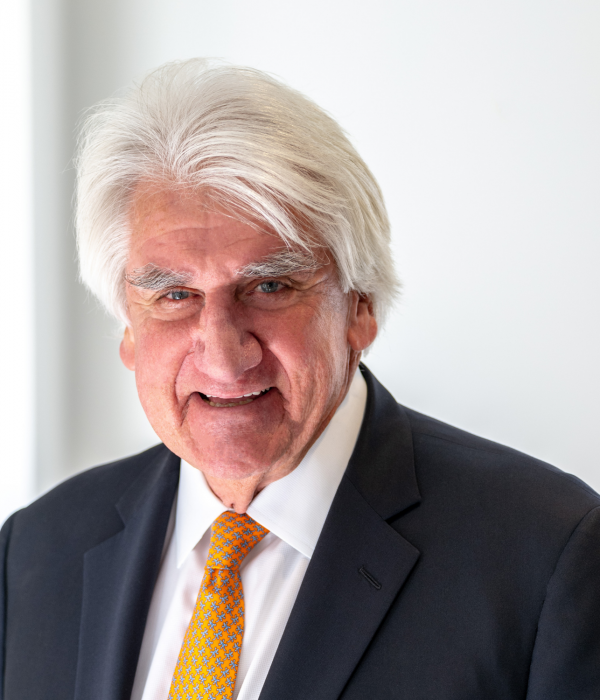
The downturn that sharpened the idea
O'Neill had already crossed from politics into business. After leaving office in 1983, he ran Bay State Investors, an advisory business that did well until the economic slide of the late 1980s and early 1990s. Government-relations consulting helped it through. But the old image of lobbying - arm-twisting, shin-kicking, a well-connected person appearing at the proper door - bothered him. It was too visible to be mysterious and too mysterious to be trusted.
So the new firm paired former officials and policy hands with people who understood news, marketing and public explanation. Its proposition was not that relationships no longer mattered. They mattered enormously. The proposition was that access without a coherent case was a wasting asset.
“We think we have changed the whole approach to government and lobbying by making it a communications business.”Thomas P. O'Neill III
Today the firm works from Boston and Washington, D.C., selling custom engagements rather than a product with a checkout button. Prices are private. The menu is clear: state and local lobbying, federal relations, legislative and regulatory monitoring, appropriations, permitting, community outreach, relationship marketing and litigation support. Public relations and crisis work now arrive through Seven Letter, the communications agency that absorbed O'Neill's strategic-communications practice in 2020.
The product is choreography
Consider a developer who needs a permit. The formal obstacle is a vote. The actual obstacle may include an anxious neighborhood, a conservation commission, a mayor who dislikes surprises, a local newspaper and a state agency with a separate clock. O'Neill and Associates maps that room, shapes a message, tests it with stakeholders and works the official process. The deliverable is coordinated movement.
The best illustration is Logan Airport's disputed runway. Massport argued that a new runway would reduce delays. Opposition from Boston officials and much of the congressional delegation, plus a court injunction that had lasted 28 years, kept the project stuck. O'Neill's team worked among Massport, the Federal Aviation Administration, the city, the delegation and the media. The result was not capitulation. It was a compromise: an FAA decision that allowed a path forward while imposing a mitigation package for safety, noise and neighborhood concerns. The injunction was later modified along the lines of that framework.
That distinction matters. The firm is most useful when the answer cannot be brute force. A government official needs policy cover. A neighborhood needs concessions it can see. A client needs progress. The consultant's craft lies in arranging an outcome each side can describe without wincing.

Big outcomes, unglamorous mechanics
The firm's case archive reads like a catalog of institutions that became complicated. For Puerto Rico's Tren Urbano rail system, O'Neill combined federal strategy with public meetings, media, presentations and outreach to business leaders. The reported outcome was a $306 million Federal Transit Administration grant agreement and a $300 million federal transportation loan.
For The Boston Foundation, the firm organized a 15-member coalition, ran advertising and built a web campaign behind education reform. Massachusetts passed a law and then won $250 million in federal Race to the Top funding. For National Braille Press, the mechanics were entirely different: recruit prominent participants, land media partners, build auction packages and make a crowded charity calendar notice. The 2007 gala raised $1.4 million.
Different clients, same underlying service: identify whose behavior must change, then give that person a reason and a route. Customers range from hospitals, universities and nonprofits to utilities, real-estate developers, financial firms, technology companies and transportation authorities. They hire the firm when a normal sales pitch reaches the edge of government procedure or public consent.
The split that clarified the business
In July 2020, O'Neill made a revealing choice. He kept control of the lobbying practice while the strategic-communications team joined Seven Letter, a Washington agency. The combined communications company started with more than 40 employees; O'Neill became an equity partner and the two organizations continued working together.
This was less a repudiation of the integrated model than a new way to house it. Government relations remained a relationship-heavy specialist business under the O'Neill name. Communications gained a broader agency platform. A client with a regulatory fight and a public narrative could still buy both, but the crafts had clearer homes.
Do not copy the contact list. Copy the discipline: map the decision, state the other side's constraint accurately, build a proposal that creates public value, and report often enough to catch a failing argument before it hardens.
There are limits. Translation cannot rescue a proposal with no legitimate public case. A warm introduction cannot erase statutory requirements. Community outreach begun after every decision has been made feels like theater because it is theater. And in a jurisdiction where the team has no working knowledge or durable relationships, the O'Neill advantage thins quickly. The model works best when the issue is negotiable, the facts can survive attention and the client is willing to change something.
That may be the firm's most useful lesson. Lobbying is often caricatured as the art of knowing one important person. O'Neill and Associates built its business on a fussier truth: important people operate inside systems, in public, with constituencies and memories. You do not merely reach them. You make it possible for them to say yes.