Nuno Almeida began with an idea for something people could wear. Wearable technology was attracting attention, and he wondered whether it could prompt a care worker or a family member about what someone needed next. It was a plausible starting point for an entrepreneur with a background in artificial intelligence. There was a device, a stream of information and the possibility of a useful nudge. Technology likes a problem that will fit on a wrist.
Then he noticed the notes. Care workers were already recording a great deal about their work. Managers were already reading through it. The difficulty lay in making that information accessible and useful. His attention moved from the proposed gadget to the interactions happening around it. The people doing the job had supplied a better brief than the fashionable technology had.
That change of mind became part of the origin of Nourish Care, the Bournemouth business Almeida founded. It also offers a useful introduction to its chief executive. His career contains aerospace, entrepreneurship and investment deals, but his recurring interest is the space between a clever system and the person expected to use it. That space can swallow an entire working day.
An astronaut takes a different route
Growing up in central Portugal in the 1980s, Almeida wanted to become an astronaut. His eventual work remained close to the machinery of that ambition. He researched computer science and artificial intelligence, joined university colleagues building a specialist aerospace and defence business, and moved to Britain as the work developed. The childhood destination changed; the interest in difficult technical problems survived.
His career included business development and management roles at Critical Software, as well as integration work with AgustaWestland. His education combined electronics engineering at the Instituto Superior de Engenharia de Coimbra with a master's in automation and robotics at the University of Coimbra. These are useful qualifications for understanding systems. Learning what another profession actually needs takes a different kind of study.
After selling his earlier business in 2009, he stayed in Dorset and considered his next move. He liked the county and wanted to build something with a more direct effect on people's lives. There was no requirement to keep following the previous industry's flight path. A successful sale had bought him the opportunity to ask a less tidy question about what he wanted his work to accomplish.
His personal introduction is more playful than a conventional executive biography. On his own website he calls himself an entrepreneur, father and “Reluctant Innovator”. He lists architecture, design, music and geostrategic affairs among his interests. It is an unusually broad reading list for someone whose working life would become closely associated with the details of everyday routines.
Three months on the other side of the screen
Almeida's research included volunteering with care providers and listening at sector events. In a 2023 interview, he described working undercover as a care assistant for three months. This was an entrepreneur putting himself in the position of the prospective user, before arriving with a product demonstration. He wanted to understand the job from the ground.
He has also described being good at maths and building things while surrounding himself with artists and misfits. The combination suits a design problem in which technical correctness is only one requirement. A system can work exactly as specified and still make its users miserable. Anyone who has wrestled with a stubborn form knows the distinction without needing a degree in robotics.
One commercial complication particularly interested him: the people using the software and the people receiving support were not necessarily the people buying it. A purchasing decision could therefore reward features that did little for the person holding the device. Almeida's response was to spend time understanding how the different participants worked together. The sales conversation could never be the whole design conversation.
Who buys it?
Who uses it?
Who lives with the result?
A person refuses to fit the form
In his 2018 essay Interactions that Matter, Almeida described a misunderstanding he often encountered when introducing Nourish. People expected a collection of checklists and care-plan templates. He wanted to discuss the individual encounter: what someone preferred, what had happened recently and what the next colleague needed to know. The unit of design was an interaction with a person.
His aerospace experience gave this argument an edge. He had heard the suggestion that methods used successfully in other industries could simply be carried across. He was uncomfortable with the assumption. Human preferences introduce a kind of complexity that a well-behaved numerical table cannot remove. His approach allowed workers to record relevant detail and influence what happened afterwards.
By 2019 he was explaining how Nourish adapted terminology and document structures to the organisations using it. A provider's established way of working could survive the arrival of new software. There is a modest courtesy in that decision. The incoming supplier acknowledges that useful knowledge was present before its arrival, and that a new licence does not automatically confer superior wisdom.
He put the service obligation succinctly: “We are an extension of their team.” Training and ongoing support mattered alongside the software itself. A product that enters somebody's working routine acquires responsibilities that a demonstration cannot show. The person who needs help after launch is still part of the design problem, even when the sales meeting has ended.
“We are an extension of their team.”Nuno Almeida · 2019
Four years before the first customer
Nourish traces its beginnings to 2011 and its first customers to 2015. The distinction matters. Four years sit between the initial idea and the first commercial deployment, a substantial interval in an industry that enjoys presenting discovery and success as adjacent events. The company's tenth-customer-anniversary reflections in 2025 looked back over a longer period of development and collaboration.
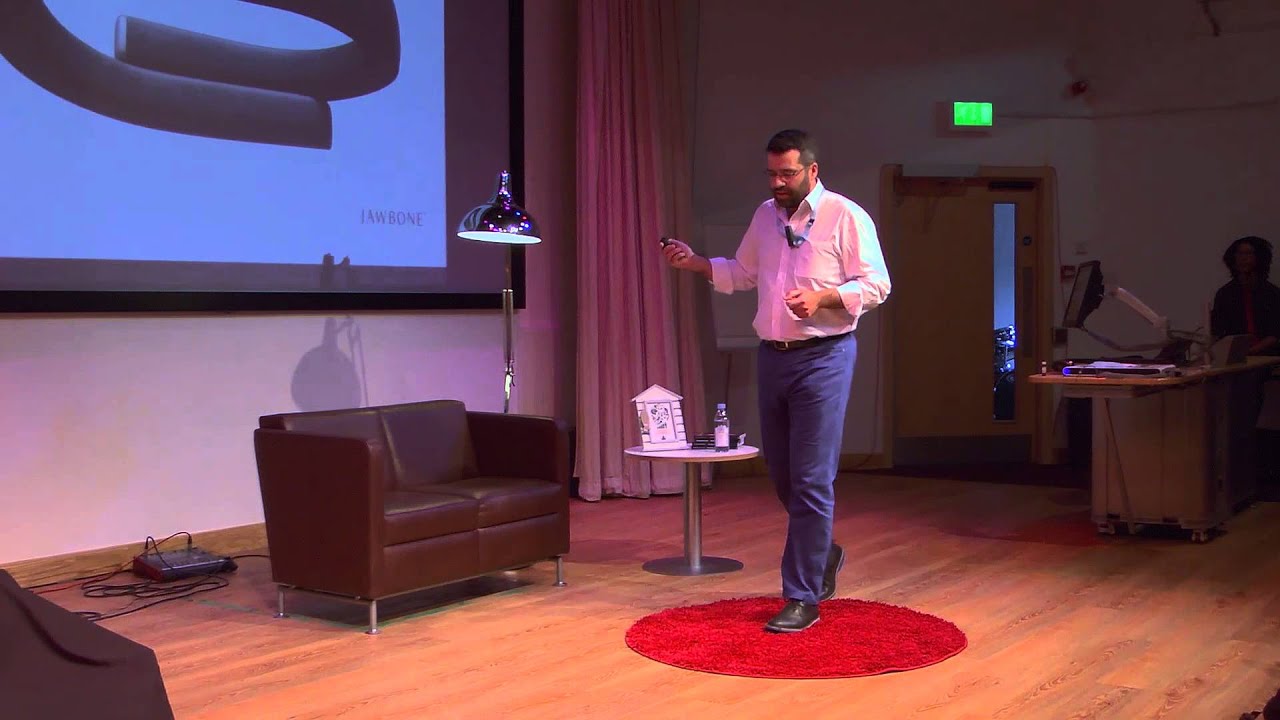
Almeida was making his argument publicly in 2015, too, at TEDxBournemouthUniversity. The talk connected technology with the organisation of support around an individual. A decade later, the central question remains recognisable: what becomes possible when the system pays closer attention to the person? The devices have become more capable. The question has retained its usefulness.
In March 2020, Nourish gathered 35 care providers at a Bournemouth hotel for its second Care Analytics Forum. That is a revealing scale of conversation: enough people to bring different experiences into the room, small enough for a supplier to hear particular problems. Almeida opened the discussion about the company's ambitions for information and insight. Product development continued as a conversation with practitioners.
Growing a company without losing the conversation
Investment from Livingbridge followed in 2022. The next year brought the acquisition of CarePlanner, whose software served more than 2,000 home care agencies at the announcement. Almeida's remit widened from the records and routines within a service to the coordination of work across the community. Different locations, visits and teams brought more moving parts into the picture.
The acquisition announcement promised customers continuing access to CarePlanner's functions and integrations, with a choice of combinations of products. This was expansion with an existing working day attached. For a founder interested in reducing friction, acquiring another business creates an immediate examination: can two product histories come together without making the customer perform all the joining-up?
Almeida had another concern about growth: the internal character of the company doing it. In his 2025 anniversary post, he singled out the collaborative work behind Nourish's public Culture Code. He described it as an attempt to capture what mattered about the business and carry it into management principles. The milestone he chose to discuss was organisational as much as numerical.
The code makes room for disagreement, candid challenge and learning from mistakes. It also acknowledges commercial success as a condition of reaching more people. Read alongside his product thinking, it suggests a consistent preference for participation. Colleagues need room to question decisions, just as users need room to explain how the proposed solution will fit their work.
The next technology gets the same test
On 18 August 2026, Nourish announced growth investment from Hg. Almeida would continue as chief executive and retain a significant shareholding, while Livingbridge would retain a minority stake. The founder who had once gone looking for a new direction in Dorset was still running the company, now with another investor supporting its next stage.
The announcement placed artificial intelligence on that agenda. Almeida described its potential to handle administration and bring relevant information to a worker at the right moment. The plan was expressed in terms of the time and attention it might release. Whether delivered by a wearable, an app or an AI tool, usefulness still had to arrive in the middle of somebody's actual job.
His wider work has included helping establish the Care Software Providers Association, bringing competing suppliers into discussions about standards and cooperation. It adds another dimension to his entrepreneurship. The system around a product can determine how useful the product becomes. Information trapped between organisations is a problem no amount of elegance inside one screen can solve.
Almeida's story has travelled from an astronaut's ambition to a rather earthly question: how do people make enough room for one another? He has approached it through volunteering, software design, customer support and the less photogenic work of building a company. The wrist device was allowed to give way to a better observation. As the tools change again, that willingness to look up from the technology may remain his most useful habit.