The trouble with a fitness app is that it has to know whether you have done any exercise. Crumb offered a cheerful bargain: move your body, collect rewards at local businesses. But the connection to the phone’s health data was holding up the first release. An attractive proposition had run into an unglamorous dependency.
- Interexy builds custom software and supplies engineering teams.
- Its revealing projects involve health devices, business platforms and financial infrastructure.
- The lesson for buyers: test the difficult connection before polishing the easy screens.
In Interexy’s account, Crumb’s internal team was struggling with a hybrid build. The consultancy narrowed the immediate task to native iOS, using Swift. Health integration took days; the first version arrived in five weeks. A separate services page puts the MVP budget below $20,000. Those are the developer’s reported results, tied to one particular assignment.
There is a useful business story hiding here. A founder buys development because something needs building. The more consequential purchase may be a decision about what to stop building, or which assumption to test first. That is a demanding way to judge a company whose menu includes almost every fashionable software category.
The work beneath the menu
Interexy offers mobile and web development, cloud systems, quality assurance, product design, AI and blockchain engineering. Customers can commission a whole project, hire a dedicated team or add specialists to their own staff. It sits in the custom software services market, alongside consultancies, specialist studios and the internal engineering department a customer might otherwise assemble.
These are different purchases. A startup might need a prototype and someone to turn a vague brief into requirements. An established business might need an engineer who can join an existing delivery process. A healthcare operator might need several systems to exchange information without making the clinical workflow harder. Calling all three “app development” conceals most of the work.
The company’s positioning becomes clearer when you look below its service names. Its published projects repeatedly involve a product that has to cooperate with something outside itself: a medical instrument, a customer database, an identity system. The interface is the visible part. The dependency determines whether the interface has anything useful to show.
A consultation needs more than a camera
Consider MedKitDoc, a business-focused telemedicine product. Interexy describes connecting medical devices through Bluetooth, building separate physician workflows and handling encrypted audio, video and patient data. The awkward question was how the experience should behave when a device connection went wrong. A remote consultation cannot assume that every instrument will politely remain connected.
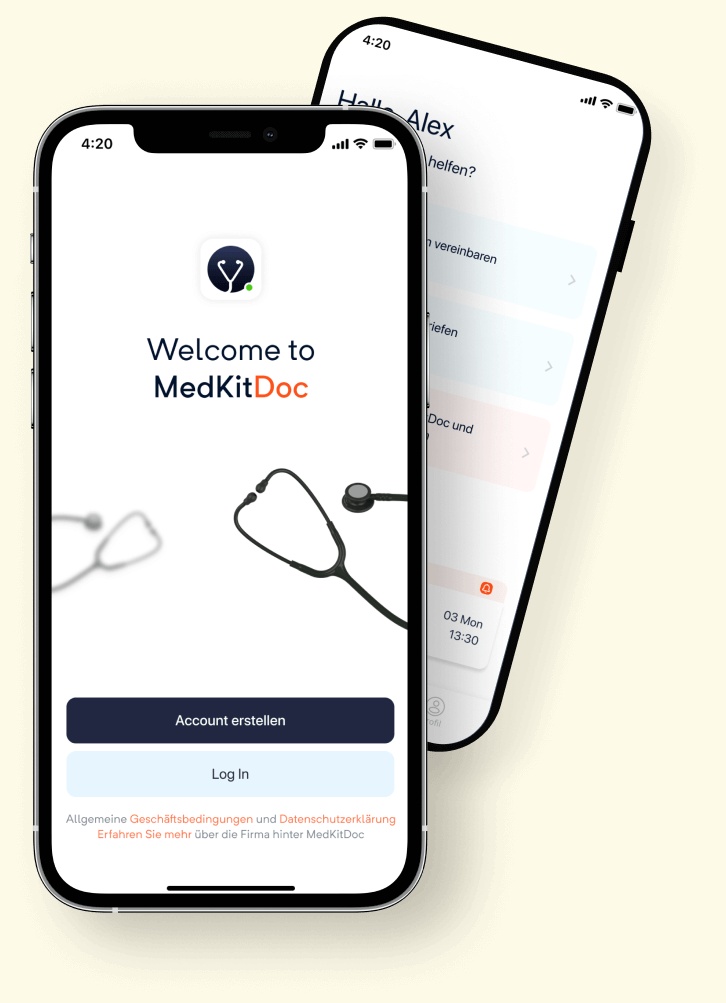
The reported MVP took four months, including specification and interface work. That schedule matters less as a promise than as a description of scope: a usable first product required planning the clinical journey and the hardware journey together. A pretty call screen would have addressed only a fraction of the assignment.
For a prospective buyer, this suggests a practical interview question. Ask a developer to walk through a failed connection, a missing measurement or an interrupted session. The answer will reveal more about its understanding than another tour of the happy path. This is an inference from the project, rather than a claim about clinical outcomes.
The design did not stay finished
Next Street brought a different kind of coordination problem. It wanted a multi-tenant platform connecting small-business owners with resources, including financing, advice and training. Interexy’s case study lists CRM integration, scheduling and security among the requirements. It describes a nine-person team and a 13-month project.
The client already had a design. Development still required changes, with the two teams revisiting the interface and adding features. That detail deserves attention. A design can look complete before anyone has reconciled the actual business rules. Interexy dates the official launch to September 2023 and reports a Los Angeles expansion in April 2025.
A design can look complete before anyone has reconciled the actual business rules.A lesson from the Next Street build
The significance is architectural as well as commercial. A multi-tenant service needs to support different organizations inside a shared system. Building for that arrangement calls for decisions about separation, configuration and access. A small-business owner sees a route to help; the developers must account for the organizations providing it.
What the hours actually buy
Interexy’s business model is contracted expertise. Clutch lists a $10,000 minimum project size and an hourly range of $25 to $49. Those figures offer a starting point for a conversation, rather than a price for any particular idea. Discovery, integrations, testing and maintenance change the amount of engineering a customer needs.
$10,000+ minimum project size
Scope determines the proposal.
Its technical breadth extends into less familiar territory. The REALTKN case describes an asset-tokenization platform with identity verification, wallets and exchange mechanisms. The published outcome says the application was being prepared for launch and refined using beta feedback. That is evidence of a development engagement; it does not establish investment returns or a functioning secondary market.
The decision worth copying
Co-founders Stan Sakharchuk and Eugene Mahnach lead the business. Mahnach describes himself as a “scientist turned Software Engineer turned Senior IT Consultant.” The company’s stated values include simplicity, persistence and partnership. For clients, those ideas become meaningful through mundane arrangements: who owns a decision, who flags a dependency and who can change scope.

Co-founder & CEO

Co-founder & COO
The transferable move is to identify the dependency that could sink the first release, then prove it works. Native development suited the fitness project’s circumstances. It would be an expensive reflex for a simple service already served by packaged software. Custom engineering earns its place when the workflow, integration or product economics justify owning the complexity.
Interexy’s most informative work gives a buyer something more useful than a slogan: specific questions to ask before buying development. Which connection is uncertain? What must the first version demonstrate? What happens when it fails? A good brief makes those questions difficult to avoid.
Open another tab
Explore the work and the people behind it.