The bill was half a million dollars. Ruckus Media Group, a maker of children’s interactive entertainment, could not pay it. KiwiTech had done the software work. The ordinary ending to this story would involve a collection letter. Instead, KiwiTech accepted a convertible note and eventually took a majority stake in the customer. A broken payment arrangement became an experiment in ownership.
- KiwiTech builds software for startups, enterprises, and public bodies.
- Its startup program accepts cash plus equity for development work.
- Founders preserve cash, but the ownership they surrender has a future price.
The episode appears in a 2014 Washington Business Journal report reproduced in KiwiTech’s newsroom. Its significance is the change in perspective. A developer usually wants the invoice settled. A shareholder wants the business to become valuable. KiwiTech found itself occupying both positions, then began making that combination part of its offer.
First, somebody has to build it
Founded in 2009, KiwiTech sells the work behind a digital product: discovery, design, software engineering, testing, maintenance, and expansion. A founder can arrive with an idea and need a prototype. An established company can arrive with applications that need modernization. The practical deliverable is working software, supported by people who can keep changing it.
Its service menu stretches across mobile and web applications, APIs, cloud infrastructure, DevOps, cybersecurity, AI, and blockchain. Those are crowded markets. Plenty of consultancies can assemble an application. KiwiTech’s more distinctive proposition is that, for startups entering its program, the engineering relationship can also become a financial relationship and an introduction to mentors and investors.
The customer list spans very different worlds. KiwiTech names World Bank, McKinsey, Accenture, P&G, Elsevier, and Springer among its clients. Its startup work reaches across healthcare, finance, education, and other sectors. The company sits between a software consultancy and a startup support network, with different reasons for each customer to walk through the door.
The arithmetic under the pitch
KiwiTech’s startup FAQ supplies an unusually useful example. Suppose a development project costs $50,000. Under its typical cash-and-equity arrangement, the startup pays $25,000 in cash during the project. KiwiTech receives the remaining $25,000 in equity value at the company’s current valuation. Half the fee becomes ownership. That distinction matters when somebody hears “50/50.”
The company describes a typical stake of 1-5% accumulated over two to five years. These are published program descriptions, with individual terms still to be agreed. A founder evaluating the offer needs to compare the full development price, the valuation used for the equity, and the work included. A smaller cash payment alone cannot settle that comparison.
The economic attraction is straightforward: cash kept in the bank can fund operations while the product gets built. The cost is ownership. If the business becomes valuable, equity issued for development may prove expensive. For a founder who can comfortably pay cash, or wants to keep engineering entirely in-house, a conventional contract may be the better fit.
“They started as our development partner, they became our investors”Hugh Barton, LVH CEO and co-founder, in a KiwiTech-published testimonial
The backlog becomes a window
For the buyer, the useful comparison is between complete offers. What will each partner deliver, who will maintain it, and how much ownership will remain after later fundraising? A cash discount becomes meaningful only when those other terms are on the table.
There is another asset inside a development relationship: observation. Engineers see how a founder responds when a feature takes longer than expected, requirements conflict, or a release needs narrowing. That proximity can reveal habits a pitch deck leaves out. It also makes the relationship more demanding. Vendor selection and shareholder selection become connected decisions.
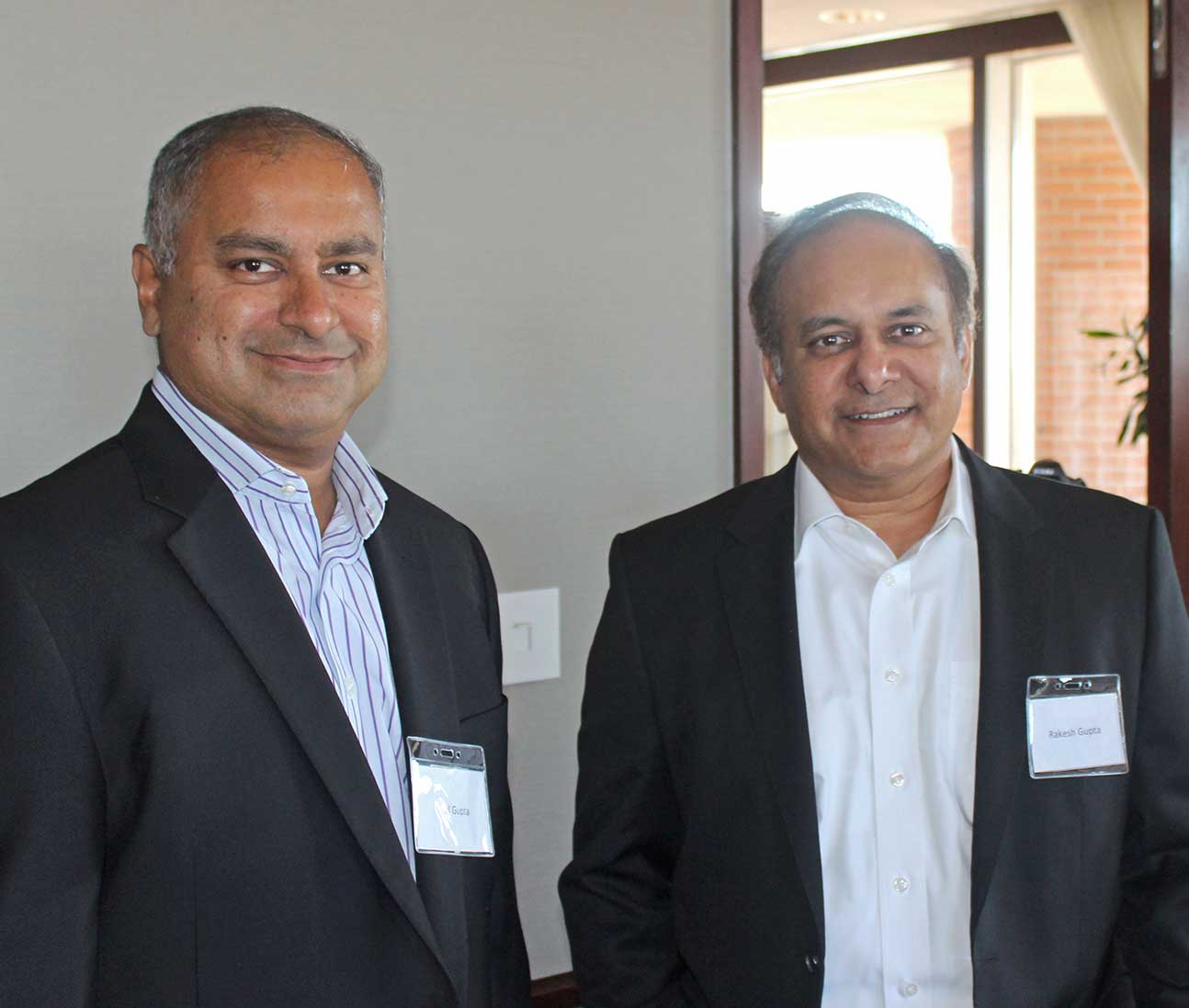
The 2014 account described six to twelve months of prior development work as a form of extended diligence. It also reported the closing of a $2.5 million Kiwi Venture Partners fund associated with Neal and Rakesh Gupta and Carl Grant. That was a related investment vehicle, rather than a financing round for the software company.
Today, KiwiTech’s startup program says it typically does not invest directly in startups. Its offer centers on technology resources, introductions, mentoring, and pitch opportunities. The distinction is useful: a developer accepting equity and an investor wiring cash solve different problems. Founders still need to work out who will finance the rest of the business.
Beyond the startup stage
Some of KiwiTech’s work is refreshingly unglamorous. One published case describes a Texas city seeking to identify, track, and manage inventory across about thirty departments. KiwiTech was chosen to replace the existing arrangement with a mobile-driven system. Think about the coordination problem before thinking about the app: many departments, shared operational needs, and records people must actually use.
Another case concerns a scientific research publisher. The task was to make both legacy and newly published content accessible on phones and tablets, including for visually impaired users. The founders’ earlier business, Aptara, operated in publishing services. That history gives this work a specific context: digital transformation can mean making an enormous existing catalogue usable on a smaller screen.
Engineering is the service. The startup network adds another reason to stay.
A larger bench, a longer relationship
In January 2025, KiwiTech announced a Global Network Partner relationship with Techstars, offering its portfolio companies engineering, mentorship, and strategic support. In December, it announced an alliance with Soft Suave Technologies to expand engineering delivery. Soft Suave’s own company history describes a KiwiTech acquisition, and legal reporting identifies a majority stake.
KiwiTech’s current homepage reports more than 800 portfolio startups and 2,500 products delivered globally. Those are company counts, useful as a picture of ambition rather than a measure of investment returns. Its AI offering now includes generative tools, agentic workflows, and predictive modeling. The technologies change; the central commercial question remains the relationship between delivery and ownership.
What can another founder copy? Put the financing conversation beside the product conversation early. Agree on scope, acceptance criteria, ownership of the code, and the valuation of any shares before the backlog grows. KiwiTech’s origin offers a memorable reason: an invoice can become an investment. It is better when everyone understands that possibility before the bill arrives.