A student preparing for a medical admissions exam might need two months of practice. The software offers a whole course, paid upfront. Nothing has crashed. The checkout works. Yet the product has misunderstood the customer. In OnGraph’s account of its work for GradReady, this ordinary mismatch became an engineering assignment: introduce monthly access, then revoke it when the subscription expires. A pricing decision had become a permissions problem. That is a useful place to begin with OnGraph.
- Custom web, mobile, AI, and cloud engineering for businesses.
- Client work includes GradReady, MutualArt, and wellbeing platform Pirkx.
- White-label platforms offer a starting point for familiar business models.
- Clutch lists $25-$49 hourly rates and a $5,000 minimum project size.
The company’s website offers an almost comic abundance of possibilities: voice agents, marketplaces, research panels, food delivery, blockchain. The interesting question is what holds that menu together. Look closely at its projects and a pattern appears. OnGraph gets involved where a business needs software to follow its particular rules, including the inconvenient ones.
Before the bots, there were books
Founder and CEO Nitin Gupta’s company began in 2007 with three people, one in the UK and two in India. Its own history records 30 people by 2009, when it launched CoinJoos, a consumer business for the Indian market. This engineering supplier had tried being a retailer itself.
CoinJoos sold books, movies, and music online. HomeShop18 acquired it in 2011. A later securities filing describes a $207,814 immediate cash payment, with additional milestone-linked amounts of up to $831,255 for employees joining the buyer. Those figures describe the CoinJoos transaction, not a funding round for OnGraph.
The episode gives the company’s product work some texture. Selling software development and operating an online shop expose different problems. A retailer discovers that inventory, payment, and customer expectations must agree with one another. A beautiful interface cannot negotiate that agreement.

The checkout was working. The offer wasn’t.
GradReady’s case study supplies the telling details. Alongside the subscription change, OnGraph describes replacing a basic exam experience with timed sections and a common Australia/Melbourne timezone. Free-trial registrations attracted spam; middleware blocked suspicious request patterns. Event reminders moved into automated email.
These changes reveal several different kinds of friction. A student needed shorter access. An exam needed a shared clock. A registration form needed to distinguish useful traffic from rubbish. The work crossed billing, assessment, security, and communication because the customer experience crossed them too.
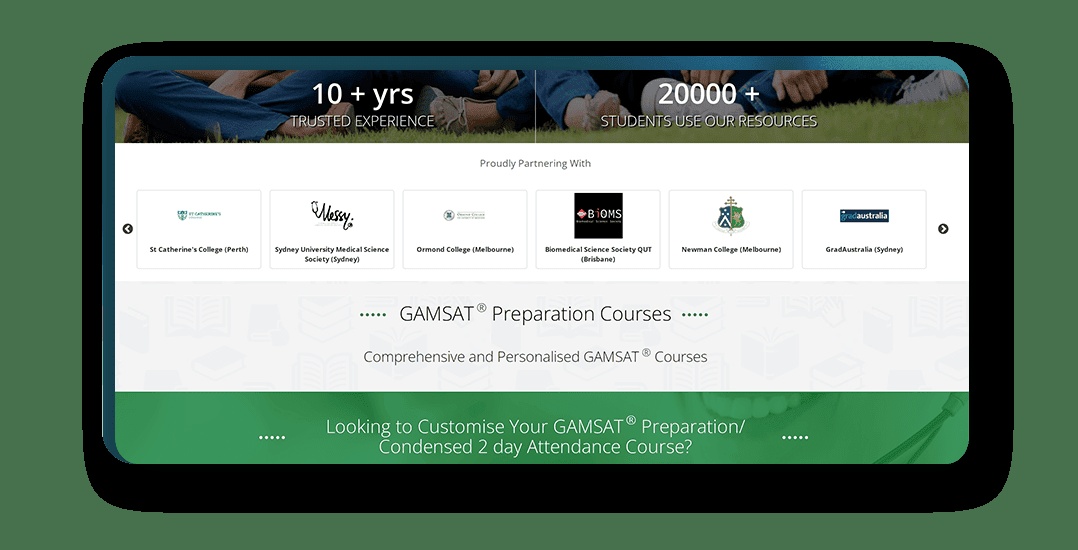
The copyable lesson is to start with a specific moment of frustration. “Make our learning platform better” is a sprawling brief. “Let someone buy one month of revision” creates a testable piece of work. The distinction matters when paying another company to interpret your intentions.
An art auction meets the deployment queue
MutualArt’s problems lived further backstage. OnGraph’s case study describes manual deployment, infrastructure management, performance, and cloud costs as concerns. Its response included Terraform to describe infrastructure in code, Packer to produce machine images, and Jenkins to automate builds, tests, and deployment.
Other pieces handled less glamorous necessities: AWS Lambda resized images; monitoring and security services watched the application; managed databases reduced administrative work. For an art platform, picture delivery and reliable releases are part of the product even when visitors never learn the names of the tools.
Pirkx presents a related assignment: inconsistent infrastructure replication and manual deployment processes. OnGraph describes using AWS CloudFormation among its remedies. Across these projects, the recurring job is making an operational procedure repeatable. The technology varies with the existing system.
A shorter route through familiar problems
OnGraph also sells reusable starting points. Its white-label catalogue spans taxi services, streaming, food delivery, fitness, and AI agents. Buyers can customize a platform and put their own brand on it. The commercial logic is straightforward: reuse the common machinery, then spend engineering effort on the differences.
Market research is a more focused example. OnGraph offers project management covering bids, survey distribution, and invoices, alongside panel management for recruiting and segmenting participants and distributing rewards. Its September 2026 survey-software article examines the handoffs between questionnaires, programming, testing, and final data. This is a business with plenty of opportunities for a missing instruction to become an expensive mistake.
Its AI voice-agent offering follows the same operational theme: booking appointments, updating a CRM, and sending texts through connected workflows. The useful buying question is whether the agent can complete your actual task, with your systems and exceptions. A convincing voice is only the opening act.
The price of handing over the brief
OnGraph occupies the space between assembling an internal engineering team and buying a finished subscription product. Its business includes paid development, technical staffing, support, and configurable platforms. Alternatives include another development agency, your own hires, or an existing application if its rules already fit.
$5,000+ minimum project size listed on Clutch. Scope, staffing, and ongoing costs need a project-specific agreement.
Delivery still needs supervision. One Clutch reviewer reported postponing an MVP after major bugs and adding essential features alongside fixes. Their advice was better expectation management around complex features. That experience argues for staged acceptance tests, a named decision-maker, and explicit launch criteria.
“Give them as much information as possible from the beginning”A client’s advice in a Clutch review
A reusable platform makes sense when the core workflow fits. Extensive exceptions can consume that advantage; custom development demands time from the buyer as well as the builder. OnGraph’s most persuasive examples begin with a precise operational need. Bring that precision to the brief. Ask for the demonstration where a subscription expires, a release fails, or a respondent arrives twice. That is where the interesting software starts.