Thirty-five acquisitions ought to look like progress. For one consumer-products and distribution company, they also looked like about nine different platforms. The businesses had been bought; their information had yet to become a coherent business. Quarterly reporting involved manual work, inconsistent data and an uncomfortable question: could anyone trace the figures back to where they began?
- Exusia connects fragmented enterprise data and makes it usable.
- Its work runs from strategy through engineering to ongoing support.
- Globant acquired the firm in September 2024, when it employed about 400 professionals.
35 acquisitions. Nine platforms.
In Exusia’s account of that engagement, an ineffective enterprise resource planning consolidation was already causing financial and reporting problems. The failure was visible in the reports. The repair reached into the architecture: centralize the data, standardize how it arrives, and build a reusable framework for supplying it to the people who need it.
The resulting platform included a catalog and data lineage, the ability to follow information through its transformations. Exusia reports that the client could produce consistent quarterly reporting and trace fields and logic to their sources. The platform also provided a foundation for future acquisitions. Buying the next company would not require inventing the entire reporting approach again.
This is a useful way into Exusia. Its website speaks the contemporary language of AI, cloud and digital transformation. Its customer work reveals a more concrete occupation: connecting systems whose differences have become expensive.
The trouble underneath the dashboard
Consider a second case, involving a wealth-management firm. Customers were complaining about inconsistent information across reports. That created a risk of losing clients and financial advisers, alongside regulatory reporting concerns. Exusia assessed the processes behind important data elements and implemented a platform to measure, monitor and report quality against user-defined rules.
The company says complaints declined. The interesting mechanism is that quality became a repeatable process, something checked before a customer encountered the discrepancy. A handsome dashboard cannot reconcile two definitions of the same field. Someone must establish what the field means and check whether the incoming data respects it.
A national healthcare catalog project makes the scale clearer. Exusia describes feeds from more than 100,000 organizations, with technical assets disconnected from the business dictionary. Its framework linked business terms to technical metadata and visualized lineage. The work was partly about moving information and partly about making its meaning legible.
A handsome dashboard cannot reconcile two definitions of the same field.
A pilot has to survive production
Exusia packages delivery as a five-step C-Suite Playbook. Assessment establishes gaps and requirements. A proof of value tests the architecture and delivery model. A minimum viable pilot goes into production. The foundation expands through prioritized projects. Managed services then support the resulting applications and platforms.
- 01Assess
- 02Prove value
- 03Ship pilot
- 04Expand
- 05Support
The distinction between a demonstration and a production pilot matters. Exusia’s execution materials specify testing environments, user acceptance testing, a production deployment and a data catalog. Enterprise delivery adds automated releases and wider governance. These are the obligations that appear after a promising prototype meets a real organization.
In a US healthcare integration project, Exusia combined an enterprise data platform and warehouse with Azure migration, clinical rules tooling and automated build, test and release processes. Its case study reports average project delivery efforts falling from 9–12 months to 3–5 months. That is a result from one engagement, rather than a timetable every buyer should expect.
Architecture before the shopping list
Exusia works across Microsoft Azure, AWS, Google Cloud, Databricks, Snowflake and Ab Initio, among other technologies. Its stated approach puts architecture and client goals before tool selection. It also describes testing technologies in its own cloud labs and supplying reusable frameworks, including for open-source engineering.
The competitive proposition is practical: advice, implementation and operation can sit within one engagement. Buyers comparing Exusia with a large systems integrator, a specialist consultancy or their own engineers should examine who will own each handoff. Familiar vendor names alone do not settle that question.
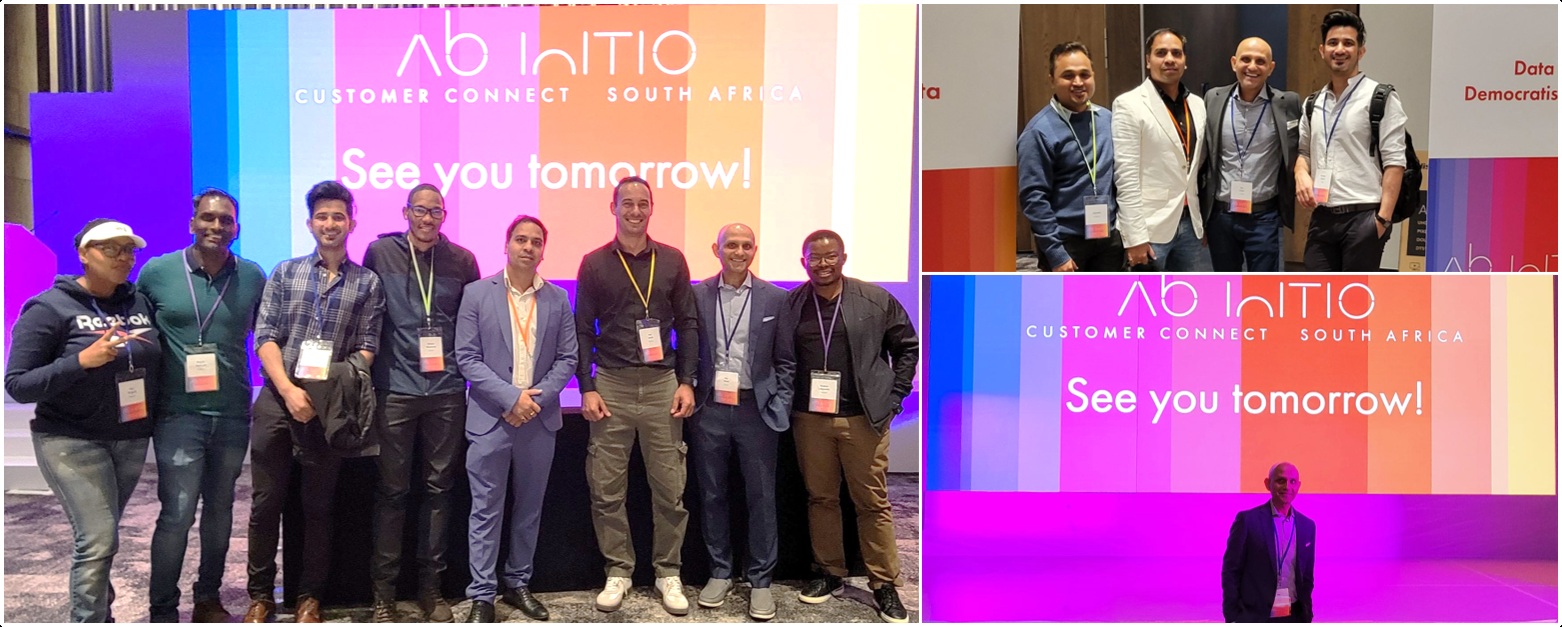
The business model follows the work: enterprise consulting, engineering delivery and ongoing managed services. Support can include operational monitoring, fixes, quality remediation and coverage up to 24/7. For a buyer, the cost exercise should include migration, licenses, cloud consumption and operations alongside the implementation budget. The cheaper build is not automatically the cheaper system to run.
The specialist gets a bigger stage
Exusia began in New York in 2012. Company materials identify Trevor Silver as its founder; a Connecticut court opinion records Trevor and Amy Silver founding the business, with Amy serving as CFO. Inc. ranked Exusia No. 18 on its 2016 list, followed by appearances in 2017 and 2018.
Globant acquired Exusia on September 26, 2024. The announcement described 400 professionals across India, the United States and South Africa, with more than 80% of revenue coming from the US. Silver said the firm had been looking to “scale and expand our core offerings to our clients.” The deal supplied a larger organization around an established specialty.
A consulting firm also has to reproduce its expertise across teams. Exusia describes an internal training academy and cross-technology instruction spanning cloud platforms and open-source tools. Its published values put delivery and reputation at the center of client relationships. Those are company commitments; a prospective customer can make them testable by asking to meet the people who will actually build and support the system.
Borrow the sequence
The useful lesson is to start with a business decision that needs better data. Map the systems and definitions behind it. Prove value with a bounded project. Put that project into production before extending the pattern across the enterprise. Decide who will maintain it while the architecture is still being drawn.
That sequence depends on cooperation: access to source systems, agreement about definitions and people willing to own the outcome. Without those conditions, a catalog can become another inventory and a migration can carry the original confusion into a new environment. Exusia’s cases make the goal refreshingly concrete: a report whose numbers people can follow, explain and use.