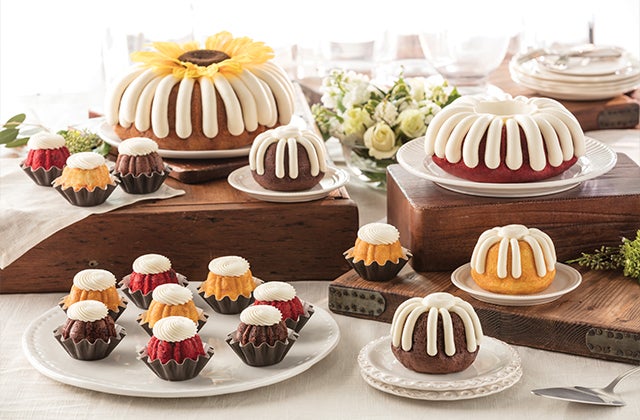
The hole is the point. In a display case crowded with cupcakes, cookies, sheet cakes and elaborate layer cakes, a Bundt is recognizable before anyone reads the box. It is a ring with deep ridges, finished at Nothing Bundt Cakes with thick cream cheese frosting piped into white petals. The shape looks familiar, almost domestic. The finish looks like someone planned ahead.
That combination has carried a business from two friends’ Las Vegas kitchens to 803 locations across 45 states and Canada. Restaurant Business, citing Technomic, reported that the chain produced about $982 million in U.S. system sales in 2025, up more than 15 percent, while adding 120 bakeries. In March 2026, KKR agreed to buy the company from Roark Capital in a transaction reported at more than $2 billion including debt.
The numbers make this sound like a finance story. It is also a story about narrowing the menu until the constraint itself becomes useful. Nothing Bundt Cakes does not need to be the place for croissants before work, sourdough at lunch or a custom fondant dragon by Saturday. It needs to be the place people remember when a birthday has snuck up on them.

A frosting problem becomes a format
Dena Tripp brought a Bundt cake to Debbie Shwetz’s house in 1997. Shwetz had a cream cheese-and-butter frosting, but the usual flat layer-cake technique did not suit the fluted ring. Their solution - generous vertical strokes following the cake’s ridges - became a visual signature. They spent roughly six months refining the pairing before opening their first bakery in Las Vegas in 1998.
Neither founder arrived with the résumé of a pastry mogul. Tripp had worked as a court reporter and banker; Shwetz was not a professional baker. That outsider status may have helped them see the Bundt less as one item in a pastry case and more as an entire category. The company started franchising in 2007, after nearly a decade spent turning recipes, decorations and hospitality into a teachable routine.
“When we first started Nothing Bundt Cakes, a lot of our consumers had no idea what a Bundt cake was.”Dena Tripp, co-founder
The brand now keeps a stable family of flavors - Chocolate Chocolate Chip, Red Velvet, Lemon, White Chocolate Raspberry, Classic Vanilla and others - then rotates seasonal and limited-time ideas around them. OREO cookies, REESE’S Peanut Butter Cups, HEATH toffee and SNICKERS bars have all entered the ring. This is novelty with guardrails: the ingredient changes, but the consumer never has to relearn what the store is.
One pan, five jobs
The menu’s quiet trick is portion architecture. Bundtinis are bite-size cakes sold by the dozen. Bundtlets are personal cakes that can be boxed alone, bundled or stacked into a gift tower. The regular Bundt serves about eight guests, the Big Bundt about 18, and a tiered version about 26. One production vocabulary stretches from an afternoon treat to a wedding table.
Sizing solves a classic bakery problem: cakes are episodic purchases. A family does not need a birthday cake every Tuesday. A personal Bundtlet, however, can be a snack, a thank-you or a small indulgence. A dozen Bundtinis can land in a conference room without plates becoming a project. The company takes a low-frequency centerpiece and finds smaller, more frequent reasons to sell it.
Decoration extends that logic. Ribbons, toppers, candles, serving packs and themed designs let a standardized cake appear specific to a graduate, a new employee or a holiday. Corporate buyers can add company-color bows and logo quote cards. The cake stays operationally familiar while the packaging does the personalizing.
Birthdays, weddings, showers, graduations, holidays and the strategically vague “just because.”
Client gifts, referrals, employee appreciation, meetings and group catering.
Pre-sale Bundtlet fundraisers give schools and nonprofits a simple, recognizable item to move.
Bundtlets and loyalty offers turn a celebration brand into an ordinary-day habit.
The franchise is the other recipe
Nothing Bundt Cakes is predominantly a franchise system. Local owners operate bakeries; the parent supplies the brand, training, recipes, technology, marketing and operating standards. Its public franchise page lists an initial investment range of $483,600 to $699,700. The company has said more than 90 percent of its bakeries are female-owned, a striking echo of its origin with two mothers baking for friends and family.
A focused menu is friendly to franchising. Fewer core formats can mean training that is easier to repeat, equipment that is easier to specify and customer expectations that are easier to police. Local operators then add the human layer: remembering a favorite flavor, supporting a school fundraiser, delivering to a nearby office. The system standardizes the cake while allowing the welcome to feel local.
Private equity accelerated that machine. Levine Leichtman Capital Partners bought a majority stake in 2016 and invested in marketing, point-of-sale technology and digital ordering. Inc. reported that EBITDA grew fivefold during the firm’s ownership. Roark Capital acquired the 390-unit company in 2021, when the system generated roughly $470 million in annual sales. KKR’s reported 2026 deal arrived after the unit count had more than doubled.
Those figures are system sales - purchases across franchised and company bakeries - not the franchisor’s own revenue. The distinction matters. The value of the parent company rests on royalties and other franchise economics, plus the durability of a network whose owners fund much of the store-level growth.
Digital convenience, analog emotion
The business sells sentiment, but increasingly delivers it through software. Customers can order online or in the app for pickup and delivery. Bundtastic Rewards replaced punch cards in 2024, awarding 10 Joy Points for each eligible dollar and offering rewards from extra frosting to a dozen Bundtinis. Catering through ezCater, added in 2023, opened more office and corporate demand. Thanx supports the loyalty and app layer.
This solves two frictions at once. The first is practical: custom bakeries can require consultations, long lead times and uncertainty. A national menu, local inventory and familiar visual language make ordering less risky. The second is emotional: a supermarket cake may be convenient but can look anonymous. Nothing Bundt Cakes charges for the middle ground - ready enough for short notice, dressed enough to look intentional.
Fundraising turns the same infrastructure outward. Participating bakeries let schools, teams and nonprofits pre-sell Bundtlets, then order only what supporters have already claimed. The format avoids the awkward economics of unsold inventory, while each individually boxed cake is easy to distribute. The company requires a $500 minimum for the current program, and pricing varies by bakery. It is a sales channel, certainly, but it also puts the local operator inside the ordinary civic calendar: band trips, hospital drives, youth sports and classroom projects.
The loyalty design performs the opposite maneuver. Fundraising gathers many buyers around one cause; Joy Points gather one buyer across many small occasions. Members earn on cakes, retail items, gift cards, eligible delivery and fundraising purchases. A birthday Bundtlet creates an annual ritual, while low-level rewards such as extra frosting or a buy-one-get-one Bundtlet give customers a reason to return before the next family celebration. The company is effectively teaching a special-occasion customer to behave a little more like a coffee-shop regular.
A crowded market, an uncrowded position
The alternatives surround it. Grocery bakeries win on price and convenience. Independent bakers win on customization and craft. SusieCakes and regional cake shops compete for celebrations; Crumbl and Tiff’s Treats chase shareable gifting; Sprinkles made cupcakes into a specialty chain; Edible Arrangements delivers a different kind of edible gesture.
Nothing Bundt Cakes sits between grocery and bespoke. Its advantage is not that nobody else can bake a Bundt. It is that the company has spent decades teaching customers to associate one shape, one frosting gesture and one pastel-box experience with a dependable social offering. Restaurant research named it America’s Favorite Chain for two consecutive years, including top marks for hospitality, food, appearance and takeout. Yet management said U.S. brand awareness was only about 25 percent in early 2026.
The cake is the object. The business is the transfer of thoughtfulness from one person to another.
That gap explains the ambition. CEO Dolf Berle has discussed growing toward 3,000 domestic units, far beyond today’s footprint. The opportunity is geographic whitespace and more frequent occasions. The risk is familiar to every rapidly expanding food franchise: a handcrafted promise can fray when openings outrun training, supply or operator quality. Cream cheese frosting is not a moat if the experience varies from box to box.
For now, the company’s discipline remains visible. It uses collaborations for headlines, software for convenience and franchises for reach, but keeps returning to the same ring. There is something almost comic about a $2 billion valuation gathering around an empty center. There is also a practical lesson in it: a business does not need to fill every space. Sometimes it needs to make one space unmistakably its own.