A restaurant company can conceal a surprising amount of trouble behind a laminated menu. John Maguire learned to look past it. He looks for the portion customers stopped ordering, the fixture nobody repaired, the employee who was trained to take an order but not to notice a guest. His career has moved through bread, ice cream, burgers, pizza, biscuits and cookies, yet the assignment has remained remarkably consistent: find the gap between what a brand says and what a customer actually receives.
The route began in Weymouth, Massachusetts, and at Kansas State University, where Maguire earned a degree in bakery science and management in 1987. It is a wonderfully practical credential. Bread is chemistry with a deadline. Temperature, time and handling matter; confidence does not persuade dough to rise. That education gave him a language for restaurant operations before he had the title for it.
At 26, he received an early test. Au Bon Pain put him in charge of helping repair a 17,000-square-foot commissary beneath Boston's Tobin Bridge. The facility supplied salads, juice and baked goods to cafes without kitchens. It was, by later accounts, a mess. Maguire's lesson was not merely that a production line could be rearranged. A damaged operation had to be persuaded to change, one person at a time.
The education of an operatorBread at scale
Maguire joined the bakery-cafe business that became Panera Bread in 1993 and stayed for 19 years. His jobs tracked the unseen architecture of a growing chain: commissary operations, bakery supply, company stores and joint ventures. By 2008 he was executive vice president and chief operating officer. Panera's operating creed, as he later summarized it, concentrated on three things: hire strong people, sell food that people crave and create a place where they want to spend time.
Simple sentences are often expensive to execute. A bakery-cafe can have good bread and still lose the morning because the line stalls, the coffee station clogs and lunch prep begins late. Maguire spent two decades inside that tension. Scale had to make thousands of experiences consistent without sanding away the reason anyone cared.
“The only thing that matters for our success is the next time a Friendly's guest comes to our restaurant they have a great experience.”John Maguire, during the Friendly's turnaround
A name becomes an assignmentMaking Friendly's friendly
In 2012, shortly after Friendly's emerged from bankruptcy, Maguire left Panera to become its president and CEO. The appointment had a hometown pull. He had grown up with Friendly's in Massachusetts and remembered what the chain felt like before years of cost cutting made the food weaker, the rooms shabbier and the service, rather awkwardly, unfriendly.
He went to focus groups. At one session in New Jersey, a woman dispensed with the polite fog. The people were not friendly, she said. The food was mediocre. When something broke, nobody fixed it. Maguire remembered the relief in the room. Someone had finally told the truth.
The response was gloriously unromantic. Friendly's recertified and retrained its workforce, then effectively rehired the staff; about 95 percent stayed. Restaurants were remodeled. The menu was cut back after an analysis showed that one-third of its items generated 97.4 percent of sales. Fajitas departed. The Fishamajig returned to haddock. Breakfast toast became thicker. Burgers went back to fresh beef. The Fribble milkshake was once again made with real ice cream.
Maguire could be blunt about the before picture. “Friendly's dirty little secret was that it wasn't very friendly,” he told an industry audience. The joke worked because it admitted the failure instead of polishing it. In a television campaign, he asked customers to give the chain another chance and offered to tear up the bill if they left disappointed. For an executive, it was an unusually literal warranty.
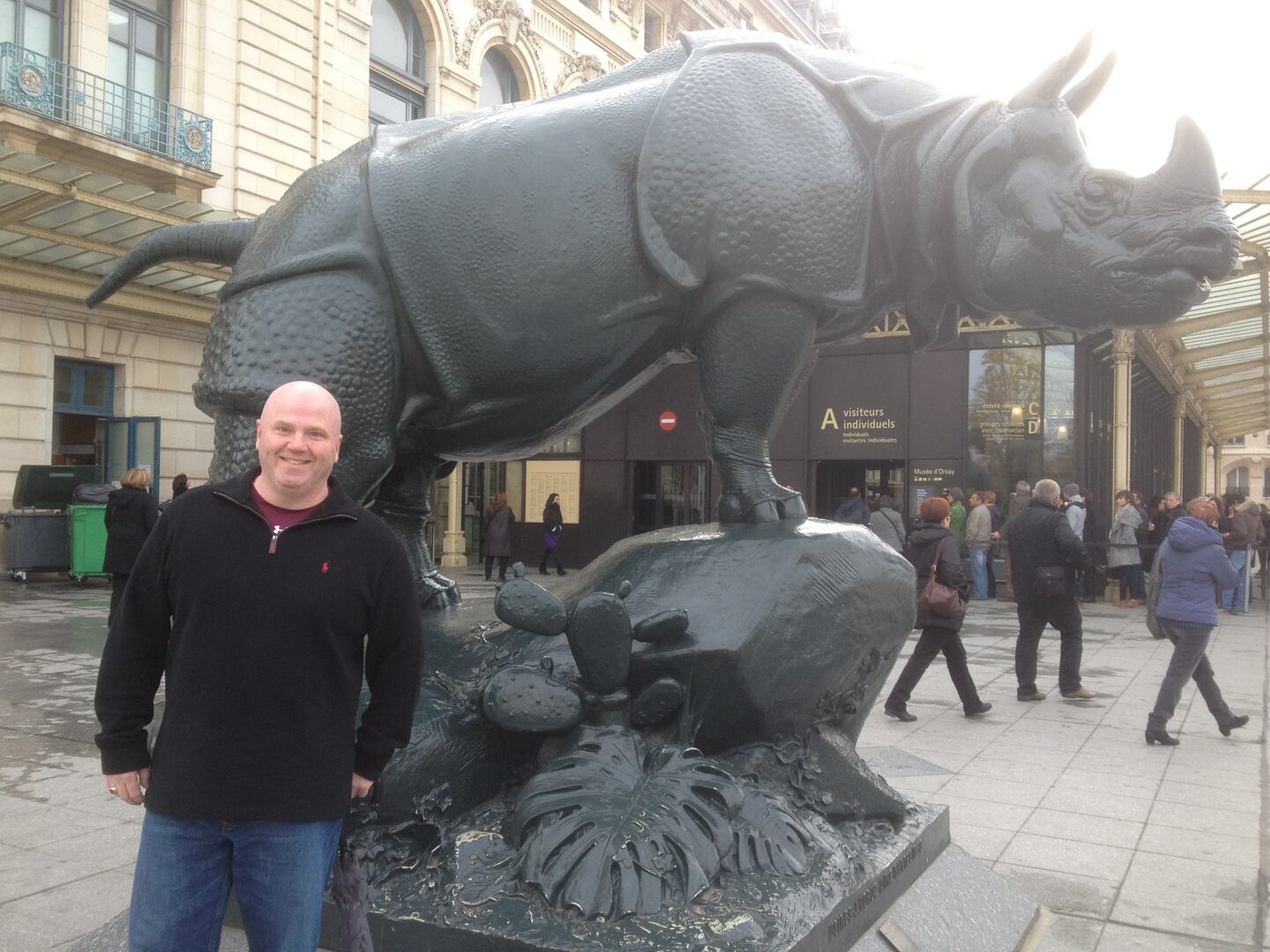
The personal details fit the geography. He has said that he buys Dunkin' coffee partly because growing up in Weymouth meant growing up on Dunkin'. He named Chatham, where he spent childhood time, as his favorite vacation spot. His snack vice is gummy bears. These are modest loyalties, but legacy restaurant brands are built from precisely that material: the places and tastes people carry around long after the receipt disappears.
During the turnaround he also developed a friendship with Friendly's founders Prestley and Curtis Blake, then approaching 100. He called them mentors and had lunch with them regularly. There is a shrewdness in consulting the people who remember the original promise. Nostalgia is useful when it supplies evidence, not when it becomes decor.
Across the menuBurgers, pizza and biscuits
In 2016, Maguire added the president and CEO job at Johnny Rockets while continuing to lead Friendly's. The two brands remained independent, but the double role widened his view from a regional New England institution to an Americana diner concept with hundreds of restaurants in 28 countries. He left both in 2018 and joined MOD Pizza as chief operating officer, responsible for operations as the fast-casual chain moved beyond 380 locations.
Four years later, Cracker Barrel appointed him president of Maple Street Biscuit Company, a 50-unit breakfast-and-lunch brand it regarded as a growth vehicle. Then, in 2023, Levain Bakery called. Maguire described the job as a return to his bakery roots and kept an advisory connection to Maple Street. After three decades, the degree on his wall had become current again.
Panera Bread, from operating roles to executive vice president and COO.
Friendly's president and CEO, leading a post-bankruptcy reset.
Johnny Rockets president and CEO, alongside the Friendly's role.
MOD Pizza chief operating officer.
Maple Street Biscuit Company president.
Levain Bakery CEO, with a board transition scheduled for October 31.
The returnA cookie large enough to carry a company
Levain presents a delicate operating problem. Its six-ounce cookie is both product and folklore, famous for a craggy exterior and soft center. The first Upper West Side shop was tiny, the sort of place where a queue becomes part of the architecture. Expansion can turn that intimacy into a theme, and a theme is no substitute for the smell of something actually baking.
Under Maguire, Levain kept its stores company-owned. On the East Coast, cookie dough was mixed and shaped at a Long Island commissary, delivered refrigerated rather than frozen, and baked in each shop. Breads, brioche and other goods were made from scratch on site. “We're a working bakery,” he said, describing a production process customers can watch. It is theater only because the work is real.
Levain's store count during Maguire's tenure
Eight net additions over roughly three and a half years, with all locations company-owned.
The company grew from 11 bakeries to 19 during his three-and-a-half-year tenure. E-commerce came to represent about a quarter of sales. Catering arrived. Maguire saw room in specialty beverages, already more than a tenth of store sales, and in the parts of the menu overshadowed by the cookie: blueberry muffins, loaf cakes, bread, rolls and savory uses of brioche dough.
“We really believe in cookies,” he said. “But there's a lot of space in a couple of other areas.” The sentence contains the operator's recurring puzzle. A successful thing creates the money and permission to try adjacent things. It also creates a duty not to become distracted by them.
October's handoffThe next pair at the table
In August 2026, Levain announced that chief commercial officer Lorna Sommerville and chief operating officer Taya Stenson would become co-CEOs. Maguire is scheduled to move to the board on October 31. The symmetry is appealing: Pam Weekes and Connie McDonald founded Levain as two friends in 1995; two women will lead its next chapter. Maguire plans to remain close enough to help without occupying the chair.
His tenure can be counted in eight additional bakeries, new channels and future openings. The more revealing measure is continuity. Levain still wants every new shop to feel connected to a neighborhood. It still bakes on site. The cookie remains comically large and structurally improbable. Growth did not require the company to pretend it had invented a different pleasure.
That restraint may be the least photogenic skill in the restaurant business. Openings produce ribbon cuttings; subtraction produces a shorter menu and fewer excuses. Across Maguire's jobs, the recurring work has been deciding what deserves repetition. At Panera it was a system capable of supporting growth. At Friendly's it was the handful of dishes and rituals customers still missed. At Levain it was the sight and smell of a working bakery. The formats changed, but the discipline remained: expansion begins with knowing exactly what must survive it.
Maguire's long route back to an oven makes a persuasive case for operational memory. At Friendly's, he remembered the restaurant as a guest. At Levain, he remembered bakery production as a student and operator. In both places the past offered a standard, not a costume. Fix the broken thing. Keep the beloved thing. Give people a reason to return next Tuesday.