There are executives who arrive for the ribbon cutting, and executives who arrive after the credit line has been frozen. Joe McGuire belongs to the second tribe. In January 2008 he walked into Not Your Average Joe's as chief financial officer. The Massachusetts restaurant company had suffered a theft of customer credit-card data only months earlier. Its lender had stopped further borrowing. It had yet to show a profit. The menu promised comfort; the balance sheet offered very little of it.
McGuire had already learned that a business can grow impressively and still run out of room. At Tweeter Home Entertainment Group, he had been finance chief during a long expansion from a $60 million regional retailer to a $900 million company operating in 26 states. He helped raise capital, handled public reporting and worked through acquisition after acquisition. He later became the chief executive charged with shrinking the same enterprise. Most careers make expansion and contraction look like opposing disciplines. His made them adjacent offices.
The connection between high-end televisions and mustard-crusted chicken is not obvious. Both, however, are discretionary purchases delivered through expensive physical spaces. Both depend on staff who can turn a product into an experience. Both become fragile when leases, labor and customer traffic fall out of rhythm. McGuire's subject was never really the television or the dinner. It was the machinery that allowed someone to sell either one tomorrow.
The view from the finance chair
McGuire joined Tweeter's senior ranks in 1996 as chief financial officer and chief information officer. His brief covered accounting, administration, information systems, investor relations and the money required for growth. It was a wonderfully compact way of saying that almost every nervous system in the company led to his desk. During his broader CFO career, he says he guided companies through an initial public offering and follow-on offerings and completed more than 22 acquisitions.
The company went public and spread across the map. Between 1999 and 2004, McGuire's professional biography says, Tweeter led its industry in operating income as a percentage of sales. Yet public-company success has a rude habit of converting every triumph into next quarter's expectation. By 2005, declining sales and profits had made the expansion map look less like an achievement and more like a field of obligations.
Tweeter's board named McGuire interim CEO in May 2005 and made the job permanent that August. He closed more than a third of the stores, left unprofitable regions and cut corporate overhead in half. Chapter 11 became the mechanism for managing lease liabilities, followed by a going-concern sale to a private-equity fund. The reshaped company had 102 stores in 17 states and about $500 million in revenue. It was smaller, and it was generating cash.
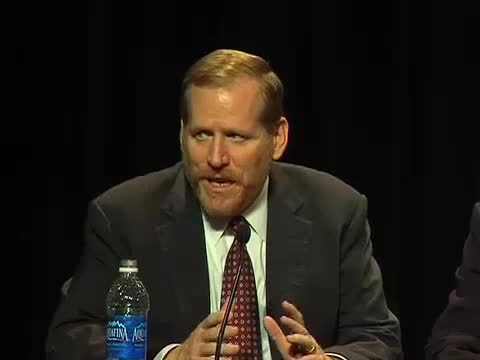
Earnings-call transcripts preserve a useful detail from the period: McGuire could be dryly funny without making the numbers less serious. After walking an analyst through an unusual expense comparison, he promised that the company would keep coming up with something new every quarter, just to keep the analyst on his toes. It is not a joke that would survive a comedy club. In a quarterly call, it is practically a custard pie.
“If you can keep your head when all about you are losing theirs...” That's Joe McGuire.Patrick Reynolds, former colleague
Former colleagues remember the same mixture. One called him honest, direct and fact-based, with a sense of humor that stayed intact when chaos did not. Another, a self-described sales person reporting to an expert finance person, recalled a boss who supplied resources, held the team to strategy and then let people do their jobs. The praise matters because the circumstances were poor enough to test it.
Profit arrives without a trumpet
At Not Your Average Joe's, repair began with the unglamorous list. Settle the breach. Restore liquidity. Make operations produce cash. McGuire's account says the credit-card matter was settled by the end of 2008. In 2009 the company became cash-flow positive. In 2010 it recorded its first net income and cut leverage in half. These are plain statements with a great deal of midnight hidden inside them.
In 2012, a private-equity investment recapitalized the business for growth. The chain doubled in size over the next six years, according to McGuire. That sentence is the hinge of the story. He had seen growth become a burden at Tweeter. At the restaurant company, the repair work came first, then new capital, then expansion. Order is not everything in business, but it is more useful than charisma.
Restaurants can make finance appear impolite. A guest wants a warm plate and an unhurried evening; nobody wishes to contemplate table turns or food costs between the bread and the entree. Yet hospitality rests on arithmetic with a pulse. Cash determines whether the oven is serviced, whether the next payroll clears and whether the host at the door still has a place to stand.
That truth grew brutal in the winter of 2021. With indoor dining in Massachusetts limited and patio weather gone, Not Your Average Joe's temporarily closed four restaurants in the state and another in Maryland. Ninety-six Massachusetts employees were furloughed. Their benefits continued. McGuire told local reporters that reopening would depend on customer behavior and the performance of the other restaurants. There was no theatrical forecast because the useful answer was conditional.
Cash flow is a dry phrase until it determines whether the dining room opens tomorrow.
The episode revealed the difference between optimism and operating. Optimism says the doors will open again. Operating asks how long the remaining locations can support the promise, what happens to benefits and what evidence should trigger the return. McGuire spoke the second language. It may sound colder, but it is the one that gives optimism a budget.
Bedford and the meaning of “again”
By 2025, McGuire was appearing in public as chief executive, and the vocabulary had changed again. Not Your Average Joe's was preparing a restaurant in Bedford, Massachusetts. At a June licensing meeting, he said the chain then had 14 locations, half of them in the state. The proposed opening date depended on construction and other familiar uncertainties. Caution did not prevent the plan; it simply declined to decorate it.
The Bedford location opened on September 27 in a shopping center space that had struggled to keep a restaurant. Residents had spoken warmly during the licensing process. The company chose the Bedford Food Bank as its opening charity and directed a portion of checks to it during the launch. After years in which restaurant news so often meant closure, a new set of doors carried more narrative weight than doors usually can.
At the same meeting, McGuire addressed alcohol service with characteristic bluntness. Employees are trained, guests who appear 35 or younger have their identification checked, and serving a minor costs the employee the job. He acknowledged that the rule was harsh and said the company had not had an issue in more than a decade. Compliance, in his telling, was neither a slogan nor an aspiration. It was a rule with a consequence.
There is an appealing temptation to recast every finance executive as a secret philosopher. McGuire's public record suggests something more practical. He is an operator who has learned the price of confusing momentum with durability. At Tweeter, scale did not cancel weak stores or lease liabilities. At Not Your Average Joe's, recovery created the right to grow, but not the right to forget.
His career also resists the tidy romance of the founder. He did not invent either brand. He inherited systems already crowded with choices, loyalties and mistakes. Stewardship begins in the middle of somebody else's sentence. Its victories are often grammatical: a period placed after a crisis, a semicolon before the next attempt.
The Bedford dining room is one such attempt. Customers arrive for a burger, scallops, pasta or a glass of wine. They do not need to know about an old breach, a frozen borrowing line, a long-ago electronics prototype in Las Vegas or a winter of furloughs. In fact, their ignorance is part of the accomplishment. The machinery is working when hospitality feels effortless.
Somewhere behind it sits the arithmetic: less triumphant than a ribbon, more durable than one. McGuire has spent decades attending to it. The numbers do not tell the whole story. They decide whether the story gets another evening.