An hour is an unusually ambitious thing to sell. You can sell a machine, a box of paper, a bottle of ink. An hour requires everything to cooperate. The order must arrive, the equipment must behave, and somebody must know what to do when it does not. Noritsu’s history begins to make sense when you look past the photograph and notice the clock.
- Noritsu America supplies professional photo printers and pharmacy automation.
- Software, consumables and technical service surround the machines.
- Its useful business lesson: an old industry can leave you with skills another industry needs.
The hour was the product
In 1951, Kanichi Nishimoto invented an automatic washer for photographic prints in Japan. It was a modest beginning for a company that would help make waiting for photographs feel intolerable. The QSS-1, developed in 1976, gathered photo processing into a minilab. Noritsu America followed in 1978, the original business’s first overseas location.
The minilab changed the relationship between a shop and its customer. Processing could happen close to the counter. Speed became something a retailer could promise, rather than something a distant laboratory might eventually deliver. A machine was also a business proposition: bring production inside, and sell the convenience.
Then the market changed. Noritsu Koki’s account of its history describes a substantial contraction in the 2000s as photography shifted toward digital technology. That account concerns the original group, but it explains the commercial pressure behind this family of businesses. The demand that had supported an industry was changing. Equipment expertise did not disappear with it.
Today, the American operation presents three connected businesses: photo and commercial printers, pharmacy automation, and technical services. The family resemblance lies in the work. Each involves getting complicated machinery to produce consistent results for a customer who has somewhere else to be.
The printer still has work to do
Noritsu has kept several routes to a photograph open. Its QSS 3904G and 3901G systems produce silver-halide prints. Its Green series takes the dry inkjet route. Those are different production choices for a lab, with different equipment and operating requirements. A buyer needs to match the machine to the work coming through the door.
The Green IV offers a particularly entertaining specification: a 12-inch roll-paper path and a print length of up to 69.2 inches. A holiday panorama can become a physical object of mildly inconvenient proportions. An available dual-roll configuration also reduces the need to stop and change paper. The detail matters because a lab sells formats and finished products, not simply square inches of output.
Software deals with the less photogenic side of the counter. EZ Controller manages orders, changes print sequence and accommodates urgent jobs. Its color-management tools help align screens and prints; AccuSmart handles image adjustments. The point is to give a lab control over the queue as well as the picture.
Commercial printing extends the menu. Noritsu’s 931-BL offers full-bleed output for items such as cards, photo books and calendars. The company also lists binding and creasing equipment. For a retail lab, that makes the equipment conversation a merchandising conversation: what else can be made on site, and will customers pay for it?
A different kind of small package
Pharmacy automation may seem an eccentric companion to a photo printer. Look at the production line, however, and the connection becomes less mysterious. Orders enter a system. Machines produce individual packages. Software and people check the result. Reliability has consequences beyond a pleasing finish.
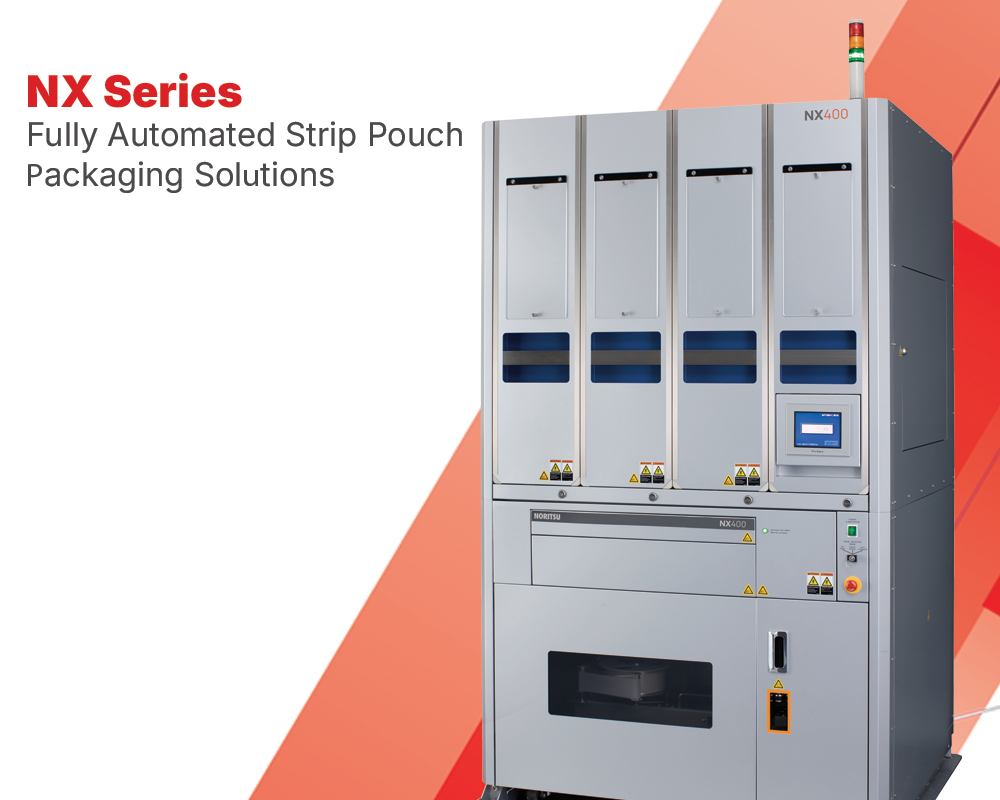
Noritsu’s NX range packages medication into strip pouches. The current lineup includes machines with 100, 204 and 400 active cassette slots; all three list a maximum dispensing speed of 55 pouches per minute. Capacity, floor space and the medications a pharmacy handles help determine the appropriate configuration. A larger cabinet is not automatically the more useful cabinet.
The NV verification products image and archive pouches. LittleBots offers another format, blister-card packaging. NexusRx connects order management, packaging, verification and reporting. Noritsu describes checks for issues such as duplicate prescriptions and cycle mismatches before production starts. These are product capabilities, not a promise that software removes the need for professional oversight.
- 01Manage
the order - 02Package
the dose - 03Image &
verify - 04Archive &
review
Medicine Express provides a concrete example. In Noritsu’s published case study, president Emily Powers describes an earlier system that could not keep pace with growth. A promised verification product was delayed during the pandemic. The pharmacy eventually selected two NX4000 packagers, tray stations and an NV3 verifier; nearby technicians helped make the choice attractive.
“The system just couldn’t keep up with our growth.”Emily Powers / Medicine Express
Noritsu-published customer account
The transition had a cost in effort. Staff initially ran old and new systems together, and some facilities were reluctant to abandon familiar blister packs. Medicine Express subsequently reported 15% lower labor and a 66% reduction in multidose-cycle production time. These are one customer’s results, rather than a forecast for every pharmacy.
Reported by Medicine Express in a Noritsu case study.
The part you buy after the machine
Noritsu’s support offering gives the story its practical center. A brochure for photo-lab service agreements describes preventive maintenance, hotline access and payment options, with agreements tailored to service needs and budgets. For a business owner, this puts the repair bill into the planning conversation before something breaks.
Anne and Arlen Moke of Photography Unlimited describe owning five Noritsu printers over 25 years, each with a service agreement. Their account singles out phone support and a long-serving engineer. Familiarity is useful here. A person who knows the equipment can be part of the operating system, even if no brochure lists that person beside the processor.
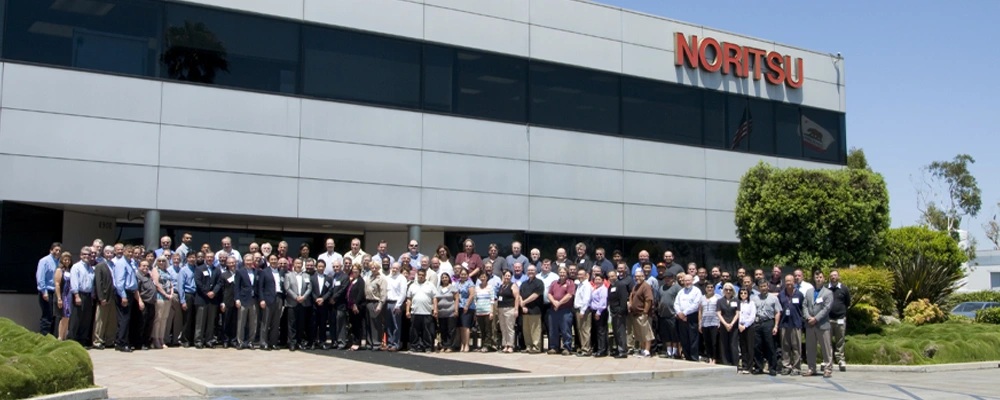
UnitedRx’s account adds an instructive detail. It adopted NX400 machines, NexusRx and visual verification after struggling with aging equipment and fragmented data. Noritsu recommended consistent medication-canister arrangements across six machines. That is an unglamorous form of design: make the next station familiar before an employee reaches it.
The same account also describes a Noritsu machine that needed replacement after attempted repairs. Reliability is tested by what happens when the equipment misbehaves. UnitedRx’s reported experience shows why service belongs beside throughput in a purchasing decision.
Buying the whole working day
Noritsu’s business model brings together equipment, software, consumables and ongoing service. Its online store sells supplies such as ink, paper and cleaning materials, with prices behind a login. The customer relationship can continue long after installation because production continues to consume materials and require attention.
Its competitive proposition is that combination. A photo buyer can consider alternatives such as Fujifilm or Epson systems; a pharmacy can compare packaging suppliers or keep its existing process. Noritsu asks buyers to consider the support surrounding the hardware. Whether that combination is worthwhile depends on the customer’s actual workload.
The purchase decision should count installation, integration, training, transition labor, supplies and maintenance alongside the machine. If volumes are low, space is scarce or the workflow does not fit, automation can add expense without relieving the busiest part of the day. A demonstration should use representative orders and include the checking and handoff stages. Maximum machine speed measures only one piece of the job.
Noritsu has also changed its boundaries. America acquired a medical-imaging business in 2019, then announced its sale to Imperial Imaging Technology in December 2022. The latter announcement said it sought a buyer with the understanding and ability to develop the business. That chapter belongs in its history; the current corporate site emphasizes printing, pharmacy automation and technical services.
There is something worth copying here without buying a printer or a packager. Examine the capabilities your business has built while doing its ordinary work. Noritsu’s technicians, equipment knowledge and service processes have applications beyond the photo counter. An industry can change its habits. The skill of helping a customer finish the day remains remarkably transferable.